
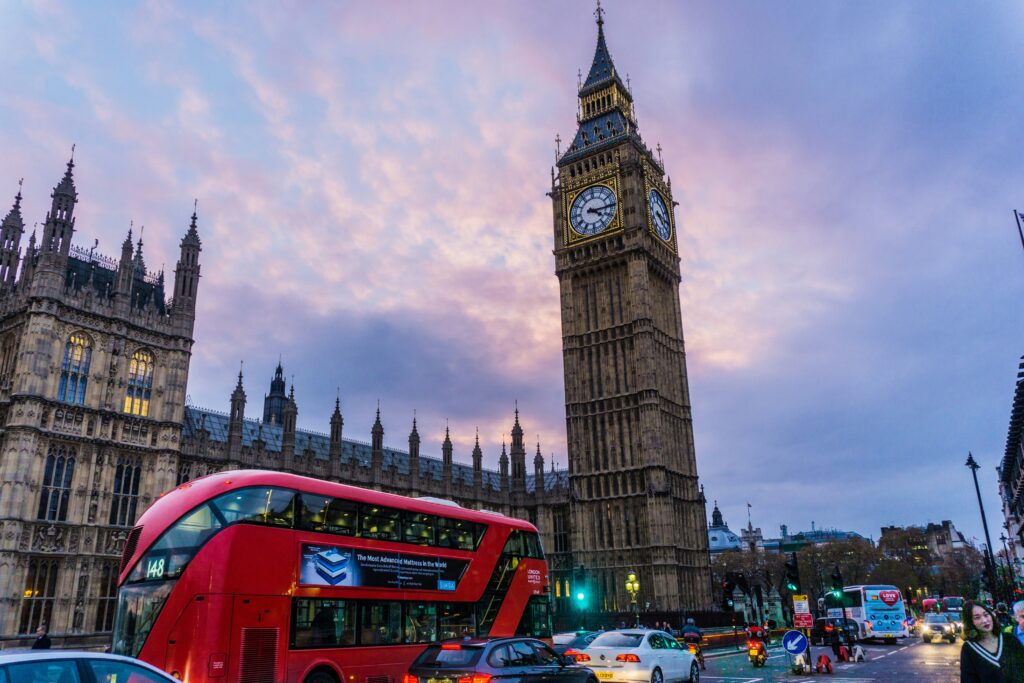
London Travel Guide: Everything You Need to Know
London is one of the great world cities and one of the most inexhaustible travel destinations on earth. No single visit covers it. The city contains some of the finest museums in the world, all free to enter. It has more Michelin-starred restaurants than any city outside France. Its neighborhoods range from the medieval lanes of the City to the Georgian terraces of Notting Hill to the Victorian covered markets of Borough and Brixton. London has been reinventing itself for over 2,000 years and it has not stopped.
This London travel guide covers everything first-time visitors need to know: the essential landmarks and museums, the best neighborhoods to explore, where to eat and drink, how to navigate the Tube and the bus network, the best time to visit, and the practical details that make one of the world’s most complex and rewarding cities feel manageable from the first day.
London’s greatness comes from its accumulated layers. Roman walls, medieval churches, Georgian squares, Victorian rail termini, Modernist tower blocks, and 21st-century glass towers occupy the same streets in a density of historical compression found nowhere else in northern Europe. The city also functions as a genuinely global cultural capital, drawing artists, chefs, architects, and musicians from every continent in a concentration that keeps it perpetually creative.
According to Visit London’s official tourism website, London welcomes over 30 million international visitors annually, making it one of the most visited cities in the world. The city’s position as a global hub for finance, culture, fashion, and gastronomy gives it a relevance that purely historical cities cannot match.
The British Museum is one of the greatest museums in the world and one of the few where free entry genuinely applies to almost everything. The Rosetta Stone, the Elgin Marbles, the Lewis Chessmen, the Lindow Man, the Sutton Hoo helmet: the collection represents 2 million years of human history in a single institution. The Great Court, redesigned by Norman Foster with its extraordinary glass and steel roof, is one of the finest interior public spaces in London.
Plan a minimum of three hours and be selective. The museum is vast and attempting a comprehensive visit produces museum fatigue rather than appreciation. The Ancient Egypt galleries and the Roman Britain collection are consistently outstanding. Pre-booking a time slot online is free and recommended to avoid peak period queues at the entrance.
The Tower of London is a thousand-year-old fortress on the north bank of the Thames that has served as a royal palace, prison, mint, menagerie, and treasury throughout its history. The Crown Jewels, housed in a dedicated vault within the tower, are the most visited attraction within the complex and include the Koh-i-Noor diamond and the Imperial State Crown worn at coronations. The Yeoman Warders (Beefeaters) who guard and guide within the tower give some of the most entertaining and historically rich tours available anywhere in London.
Tower Bridge immediately adjacent to the tower is London’s most recognizable bridge. The Victorian Gothic towers contain a glass-floored walkway 42 meters above the Thames that gives extraordinary views in both directions along the river. The Engine Rooms below contain the original Victorian steam engines that powered the bascules until 1976.
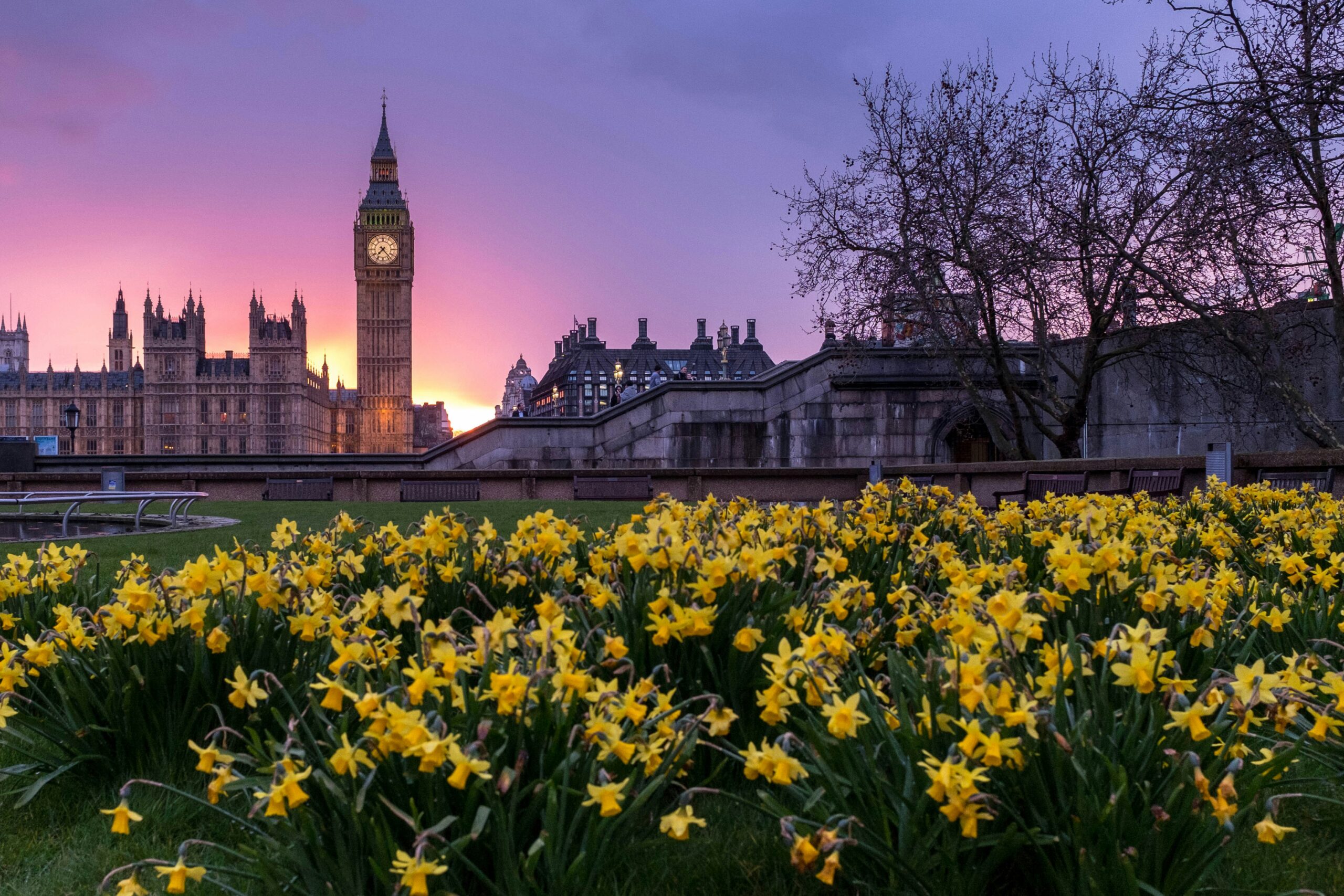
The London skyline from the Thames at golden hour. St Paul’s Cathedral on the left, the City’s financial towers in the center, and the South Bank’s contemporary towers to the right frame one of the great urban river views in Europe.
The Palace of Westminster and its iconic Elizabeth Tower (housing the bell known as Big Ben) define the London skyline from the Thames in the way that no other building does. The Gothic Revival palace was built in the 1840s after fire destroyed the medieval original and remains the seat of British parliamentary democracy. Tours of the interior are available when Parliament is not in session and provide access to the Central Lobby, Westminster Hall (the oldest surviving part of the medieval palace), and the debating chambers.
Westminster Abbey across the road from the palace has been the coronation church of English and British monarchs since 1066 and contains the tombs of seventeen monarchs as well as Poets’ Corner with memorials to Chaucer, Shakespeare, Dickens, and hundreds of other literary figures.
The Tate Modern occupies a converted Bankside power station on the South Bank and is the most visited modern art museum in the world. The permanent collection is free and includes works by Picasso, Matisse, Rothko, and Warhol in a building whose industrial scale suits the ambition of the art within it. The turbine hall, a 35-meter-high nave running the length of the building, hosts large-scale installation commissions that have consistently been among the most talked-about art events in London.
The South Bank walkway connecting Tate Modern to the Southbank Centre and the National Theatre is one of the great urban walks in London, with views across the Thames to St Paul’s and the City that have been painted and photographed for centuries.
Hyde Park and the connected Kensington Gardens form an 250-hectare green space in the center of London that serves as the city’s living room. The Serpentine lake for rowing and swimming, the Diana Memorial Fountain, Speakers’ Corner where public oratory has been permitted since the 1860s, and the Serpentine Galleries with their free contemporary art exhibitions are all within the park. Cycling through the royal parks on a sunny London morning is one of the most pleasant experiences the city offers.
Shoreditch is London’s creative center, where the street art, independent coffee shops, concept restaurants, and vintage clothing markets that define contemporary London culture are most concentrated. The Brick Lane area contains the city’s most famous Sunday market alongside the best Bangladeshi curry houses in Britain. The Old Spitalfields Market and the Truman Brewery complex host markets throughout the week. Columbia Road Flower Market on Sunday mornings is one of the best free experiences in London.
Notting Hill is the most photogenic neighborhood in London, with its pastel-painted Victorian terraces, the Portobello Road market running through it every Saturday, and the independent bookshops, cafes, and wine bars that line the streets around the market. The Notting Hill Carnival in late August is the largest street festival in Europe and transforms the neighborhood into an extraordinary celebration of Caribbean culture.
Borough Market under London Bridge is one of the oldest and finest food markets in Britain, with traders selling artisan bread, cheese, charcuterie, fresh produce, and prepared food from over 100 stalls. The surrounding streets of Bermondsey contain an extraordinary concentration of independent restaurants, wine bars, and the famous Maltby Street Market that operates on weekends with a more local atmosphere than Borough. The White Cube gallery in Bermondsey is one of London’s most significant commercial art spaces.
- Fish and chips: the national dish in its most recognizable form. Proper fish and chips uses fresh cod or haddock in a light beer batter, with thick-cut chips and malt vinegar. Rock and Sole Plaice in Covent Garden and The Golden Hind in Marylebone are among the most celebrated chippies in central London
- Full English breakfast: bacon, eggs (fried, scrambled, or poached), sausages, baked beans, grilled tomato, black pudding, and toast. The definitive British morning ritual, best eaten at a proper cafe (known as a caff) rather than a hotel restaurant
- Pie and mash: a working-class London institution. Minced beef pie with mashed potato and liquor (a green parsley sauce). M. Manze in Borough is the most historic surviving pie and mash shop in the city
- Afternoon tea: sandwiches, scones with clotted cream and jam, and small cakes served with tea. Available at dozens of hotels and tea rooms throughout the city at prices ranging from accessible to extraordinary
- Chicken tikka masala: arguably Britain’s most popular restaurant dish and a genuinely good indicator of the quality of London’s Indian restaurant scene, which is the finest outside the subcontinent
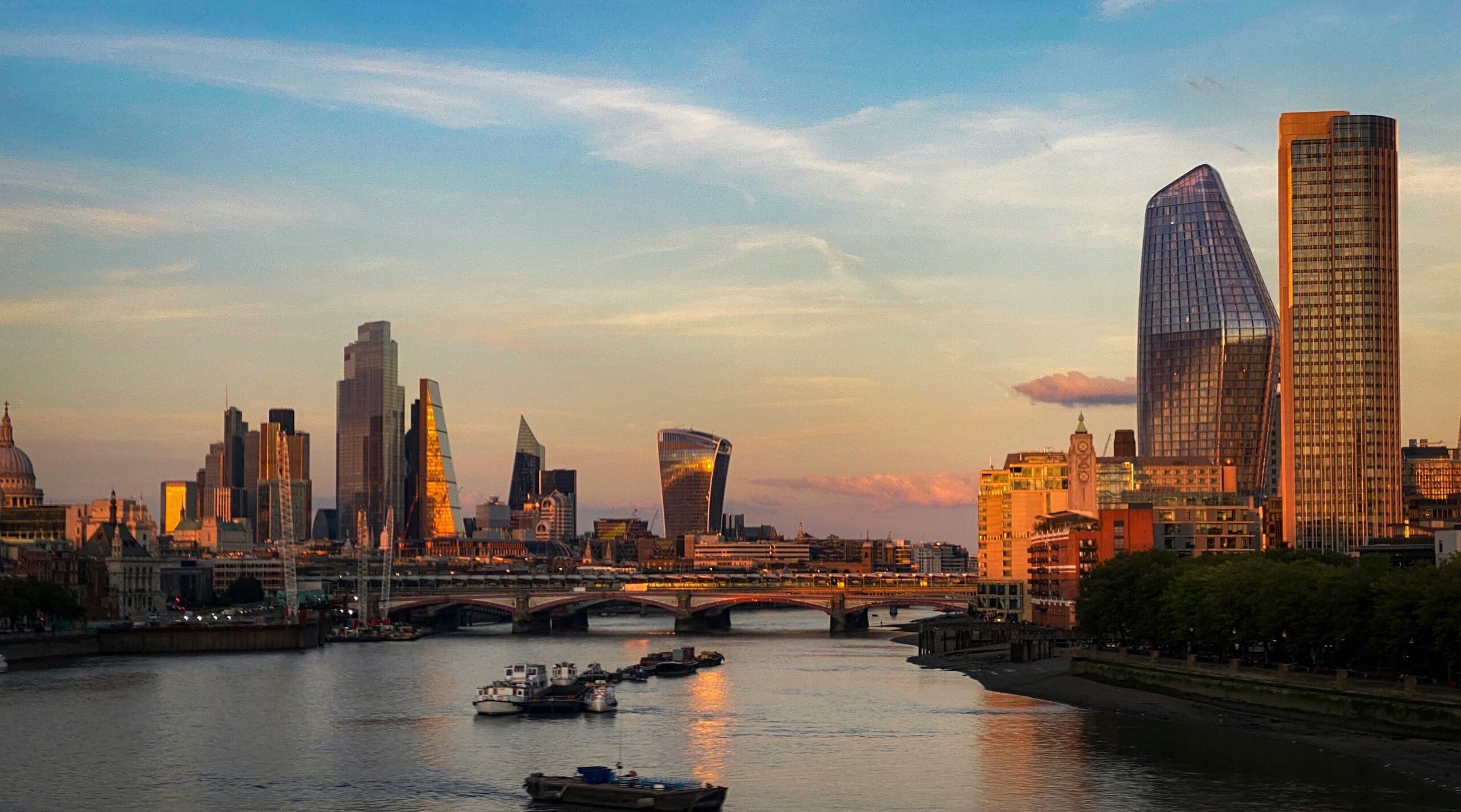
Big Ben and the Houses of Parliament at sunrise in spring, with daffodils in the foreground. The Palace of Westminster has been the seat of British parliamentary democracy since the 13th century.
| Period | Weather | Crowds | Notes |
|---|---|---|---|
| April to June | Mild, variable | Moderate to high | Best overall conditions |
| July to August | Warm, 18 to 26C | Very high | Peak season, school holidays |
| September to October | Mild and clear | Moderate | Excellent conditions, lower prices |
| November to March | Cold, grey, rain | Low | Cheapest, Christmas season atmospheric |
May and June are the best months to visit London. The city is at its most beautiful in spring, the parks are full of blossom and daffodils, the days are long, and the weather is reliably mild without the peak summer crowds and prices. September and October are equally excellent, with warm clear days and significantly reduced visitor numbers from the summer peak.
December is worth considering despite the cold. London at Christmas is genuinely magical: the lights on Oxford Street and Regent Street, the ice rinks at Somerset House and the Natural History Museum, the Christmas markets at Southbank and Hyde Park, and the carols in the churches create an atmosphere that is unique to this city at this time of year.
- Underground (Tube): London’s subway system is the oldest in the world and one of the most comprehensive. An Oyster card or contactless bank card gives the best fare. Avoid peak hours (8am to 9:30am and 5pm to 7pm) on the Central, Jubilee, and Northern lines
- Buses: London’s red double-decker buses cover areas the Tube does not reach and give a dramatically better view of the city. The number 11 bus route from Liverpool Street to Chelsea passes many major landmarks above ground. Payment is Oyster or contactless only
- Walking: central London distances are consistently shorter than they appear on maps. Westminster to the Tate Modern is a 25-minute walk along the Thames. Most visitors underestimate how walkable the center is
- Santander Cycles: the bike-share scheme covers central London with docking stations every few hundred meters. Excellent for riverside cycling along the Embankment and through the royal parks
- Black cabs and Uber: both widely available throughout the city. Black cabs are famously knowledgeable but expensive. Uber is generally cheaper and available via app
- London’s major museums are free: the British Museum, National Gallery, Tate Modern, Natural History Museum, Science Museum, Victoria and Albert Museum, and National Portrait Gallery all charge no admission. This represents an extraordinary cultural resource available to every visitor regardless of budget
- Book popular attractions in advance: the Tower of London, Warner Bros Studio Tour, and London Eye require pre-booked tickets in peak season. Walk-up queues can be significant
- Use contactless payment everywhere: London is almost entirely cashless. Contactless bank cards and mobile payment work on all public transport, in most restaurants and shops, and at market stalls
- Stand on the right on escalators: the convention of standing on the right and walking on the left on Underground escalators is enforced through social pressure. Blocking the left side during rush hour will produce immediate and unambiguous feedback from Londoners
- The weather is genuinely unpredictable: a light rain layer carried at all times is the single most useful preparation for a London trip regardless of season
London rewards repeated visits more than almost any city in the world. The traveler who visits once sees the landmarks and the famous neighborhoods. The one who returns begins to understand the city’s texture: the local pub that has been there since the Victorian era, the market that operates only on Tuesday mornings, the viewpoint from a park hill that no guidebook mentions but that gives the best view of the skyline at dusk.
This London travel guide gives you the foundation. The city will provide everything else, in the typically understated London way: without announcement, without explanation, and without the slightest concern for whether you noticed.
Ready to Plan Your London Trip?
Discover more Europe guides, destination tips, and travel itineraries on Tripfavor.
Explore Tripfavor →