
Tulum Travel Guide: Everything You Need to Know
Tulum sits on the Caribbean coast of Mexico’s Yucatan Peninsula, where the Mayan ruins of one of the last inhabited cities of the Maya civilization look out over the turquoise sea from a limestone cliff. Below the ruins, the beaches stretch north and south in that particular shade of Caribbean aquamarine that photographs struggle to reproduce. Behind the coast, the jungle conceals hundreds of cenotes, the sacred freshwater sinkholes that were the lifelines of Maya civilization and are now among the most extraordinary swimming and diving experiences in the world.
This Tulum travel guide covers everything visitors need to know: the archaeological zone, the best cenotes, the beach clubs and jungle hotels, how the town has changed in recent years, the best time to visit, and the practical details that make navigating one of Mexico’s most rapidly evolving destinations straightforward and rewarding.
Tulum offers a combination that exists nowhere else in Mexico: Maya ruins on a Caribbean cliff, world-class cenote swimming, a developed wellness and design hotel scene, and easy access to some of the finest Caribbean beaches in North America, all within a 2.5-hour drive of Cancun’s international airport. The town has grown rapidly over the past decade and the character has shifted from quiet backpacker destination to a significant international tourism hub, but the natural assets that made it famous remain extraordinary.
According to UNESCO’s World Heritage listing for Sian Ka’an, Tulum has become one of the fastest-growing tourism destinations in the country, with visitor numbers increasing significantly each year as the new Tulum International Airport and the Maya Train railway improve access to the region.
The Tulum Archaeological Zone is the most visited Maya site in Mexico and one of the only Maya cities built directly on the Caribbean coast. The site was inhabited from around 1200 AD until the arrival of the Spanish in the 16th century and served as a major trading port for jade, turquoise, and cacao. The main structure, El Castillo, sits at the highest point of the cliff with a view over the Caribbean that the Maya priests who used it as a lighthouse would have seen identically.
The combination of well-preserved Maya architecture and one of the most dramatic natural settings of any archaeological site in the Americas makes Tulum genuinely extraordinary. The beach below the ruins is accessible from within the site and swimming here, looking up at the temples on the cliff above, is one of those experiences that stays with travelers for years.
- Entry: approximately 80 pesos (around $4 USD)
- Opening hours: daily 8am to 5pm
- Best time: arrive at 8am before the tour groups from Cancun and Playa del Carmen arrive at 10am
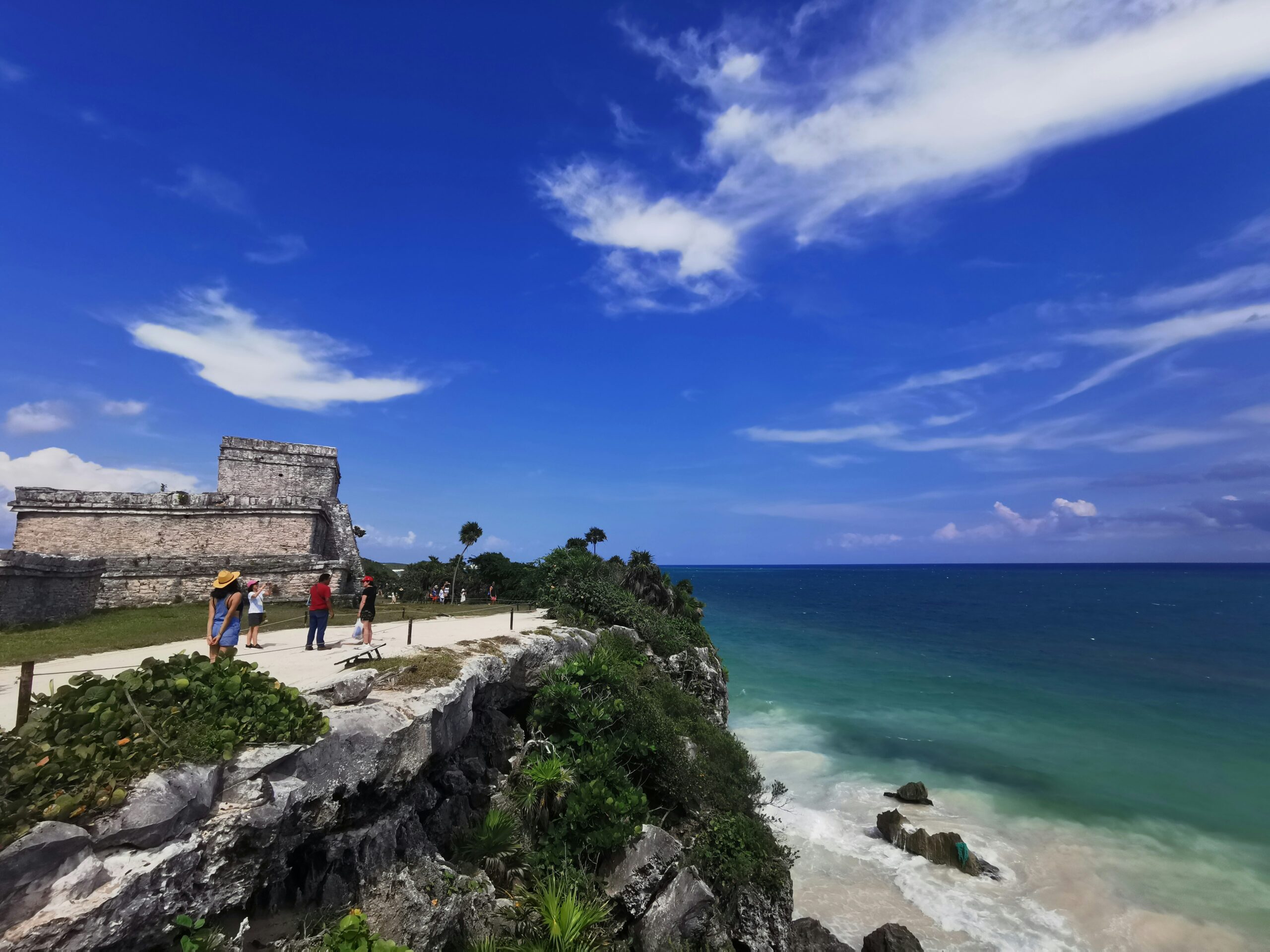
The Tulum Archaeological Zone on its Caribbean cliff. This was one of the last inhabited Maya cities and one of the only ones built directly overlooking the sea.
The Yucatan Peninsula sits on top of the world’s largest underground river system. When the limestone ceiling of these underground rivers collapses, it creates a cenote: a pool of extraordinary clarity and color fed by freshwater from the jungle above and connected to the underground river network below. The Maya considered cenotes sacred portals to the underworld and made offerings at their edges. Today they are the most extraordinary swimming and snorkeling environments in Mexico.
- Gran Cenote: the most accessible cenote near Tulum, 3 kilometers from the ruins. A partially open, partially cave cenote with extraordinary turquoise water, stalactites, and excellent snorkeling. Arrive early as visitor numbers are capped
- Cenote Dos Ojos: a cave cenote system with two interconnected pools linked by an underwater passage. One of the finest snorkeling and freediving cenotes in the Yucatan. The name means Two Eyes, referring to the shape of the two openings from above
- Cenote Calavera: also known as the Temple of Doom. A small, deep cenote with three openings in the ceiling through which visitors jump or lower themselves into the crystal-clear water below. More adventurous than Gran Cenote
- Aktun Chen: a cave and cenote system 20 kilometers south of Tulum that combines a guided cave walk with cenote swimming in a natural park setting. Excellent for families
- Cenote Angelita: a freediving cenote famous for its halocline layer where freshwater meets saltwater, creating a mysterious cloud-like effect at around 30 meters depth. For experienced divers only
Tulum divides clearly into two distinct areas with very different characters and price points. Understanding this division before you book accommodation is one of the most important decisions of a Tulum visit.
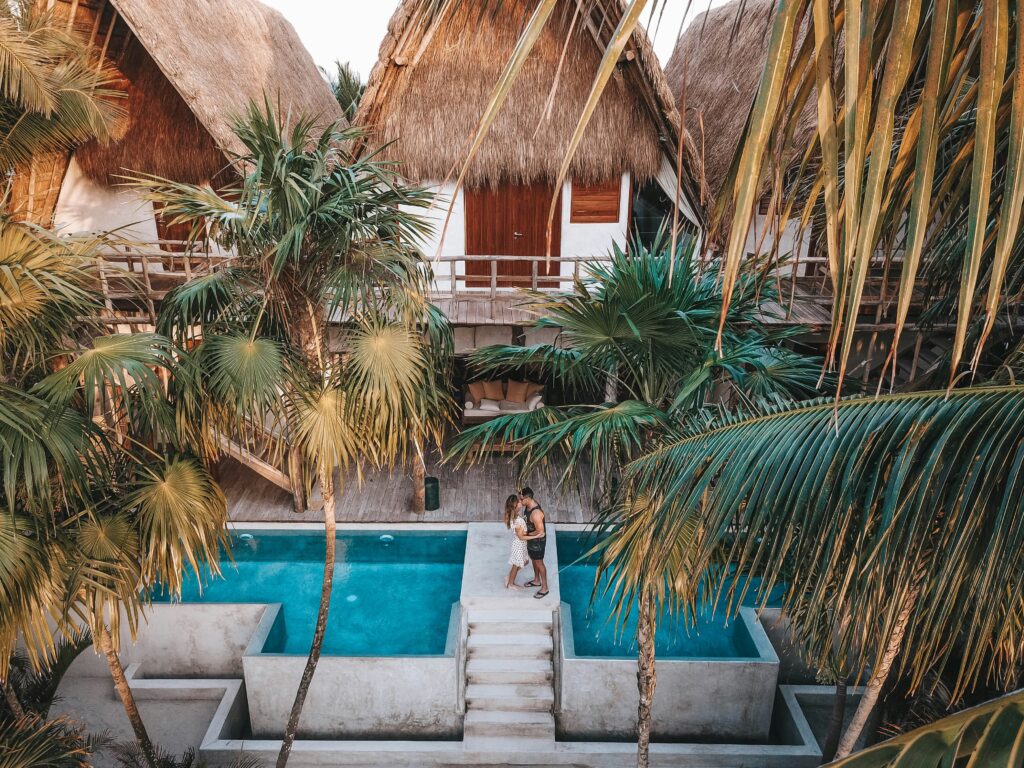
The Zona Hotelera is the beach strip running south from the ruins along the Caribbean coast. The road is lined with boutique eco-hotels, beach clubs, wellness centers, yoga studios, and restaurants that have made Tulum famous in international travel media. The aesthetic is consistent: thatched-roof palapa structures, natural materials, outdoor showers, and a studied rusticity that coexists with room rates that can exceed $500 per night.
The beach clubs along this strip charge day fees for access to their beach and facilities, typically $30 to $80 per person which is deductible against food and drink purchases. Papaya Playa, Ahau, and Nomade are among the most celebrated. Public beach access is also available at several points along the road.
Tulum Pueblo, the town itself, sits 2 kilometers inland from the beach zone and has a completely different character. The Avenida Tulum, the main street through town, is lined with local restaurants, taco stands, juice bars, bike rental shops, and the practical infrastructure of a real Mexican town. Accommodation here is significantly cheaper than the beach zone and the food is dramatically better value.
Many experienced Tulum travelers base themselves in the town and rent bicycles to reach the beach and ruins, eating in the town and using the beach club day fees for beach access. This approach gives access to the Tulum experience at a fraction of the beach zone cost.
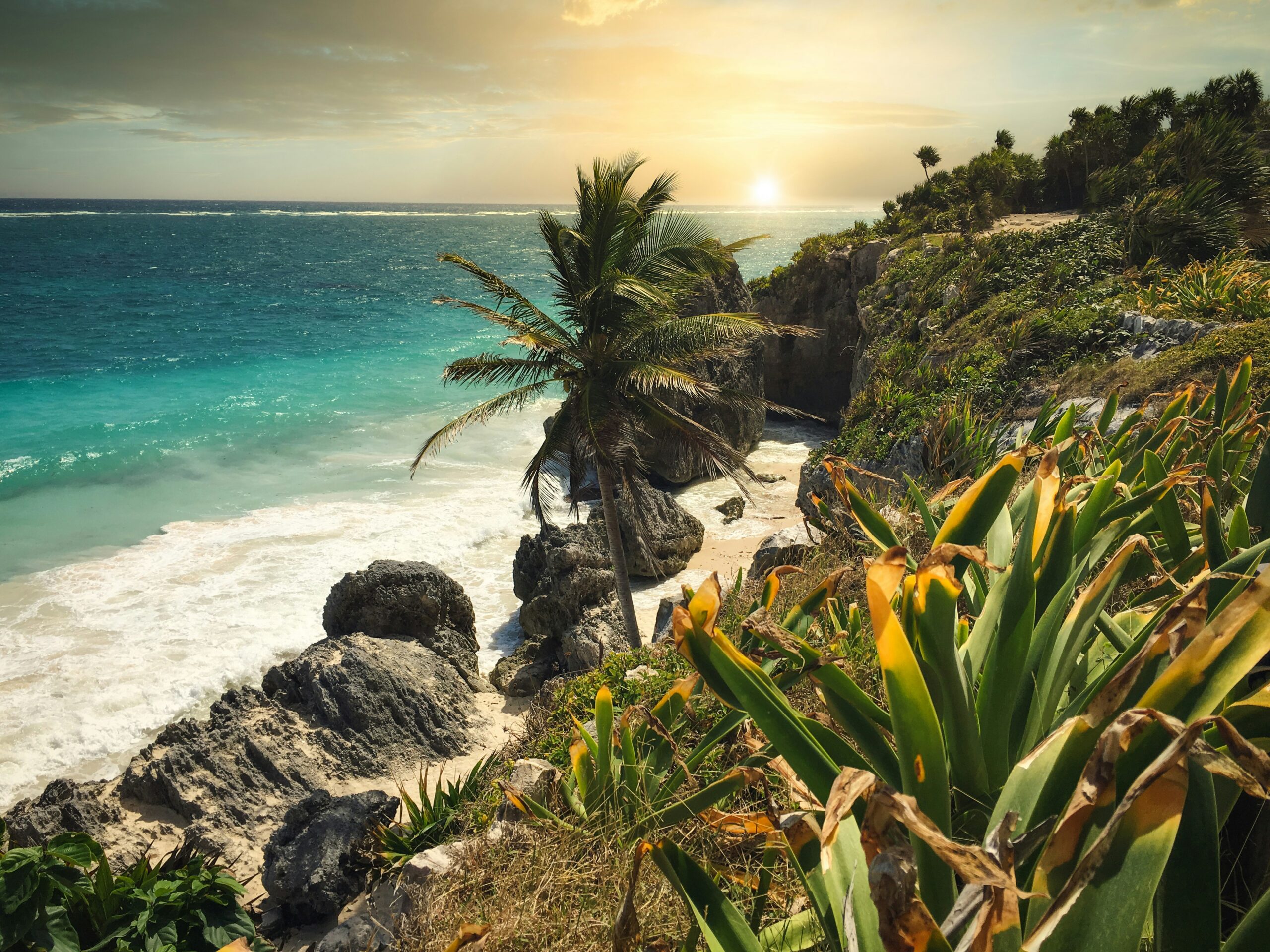
The Caribbean coast at Tulum at sunset. The turquoise water, limestone cliffs, and jungle vegetation create a landscape unlike anywhere else on the Mexican coast.
The beaches at Tulum are among the finest on Mexico’s Caribbean coast. The water is warm, clear, and turquoise, the sand is white, and the backdrop of jungle and ruins gives the beaches a character entirely different from the resort strips of Cancun and Playa del Carmen.
- Playa Ruinas: the beach directly below the archaeological zone, accessible from within the ruins. Small, beautiful, and genuinely extraordinary with the temples on the cliff above. Crowds depend on the time of day
- Playa Paraiso: a wide, calm beach popular with families and those who prefer swimming to beach club culture. Accessible by bicycle from the town
- Beach club beaches: the organized beaches of the Zona Hotelera offer the most comfortable facilities including sunbeds, shade, food, and drink service. Worth the day fee for the infrastructure
Chichen Itza is 2.5 hours from Tulum by car or organized tour and is one of the New Seven Wonders of the World. The pyramid of El Castillo, the sacred cenote, the ball court, and the Temple of the Warriors represent Maya civilization at its most architecturally ambitious. Arrive as early as possible: the site opens at 8am and is dramatically less crowded in the first two hours before the tour buses from Cancun arrive.
The Sian Ka’an Biosphere Reserve, a UNESCO World Heritage Site beginning just south of Tulum, protects over 500,000 hectares of tropical forest, mangroves, and Caribbean reef. Boat tours through the lagoons and canals of the reserve offer wildlife viewing including manatees, crocodiles, flamingos, and an extraordinary diversity of bird species. The Mayan channels (canales mayas) used to transport trade goods can be explored by kayak or boat.
Coba, 45 kilometers northwest of Tulum, contains the tallest Maya pyramid in the Yucatan at 42 meters. The pyramid is still climbable (unlike Chichen Itza’s El Castillo) and the view from the summit over the flat jungle canopy is extraordinary. Combine with a stop at Akumal Bay, where sea turtles come to feed on the sea grass in the shallow bay and can be snorkeled with respectfully and easily.
- Cochinita pibil: slow-roasted pork marinated in achiote and sour orange, wrapped in banana leaves and cooked underground. The definitive Yucatecan dish, available at taquerias throughout Tulum Pueblo at breakfast and lunch
- Ceviche: fresh fish or seafood cured in citrus juice with chili, coriander, and red onion. The Caribbean fish ceviche in Tulum uses local catch and lime from the Yucatan and is among the finest versions available in Mexico
- Fish tacos: grilled or battered fish in corn tortillas with cabbage, pico de gallo, and crema. The best versions are at the simple taco stands in Tulum Pueblo rather than the beach zone restaurants
- Agua de jamaica: iced hibiscus flower tea, tart and intensely colored, served at virtually every restaurant and taco stand in the area
- Marquesitas: a Yucatan street food specialty: crispy crepes rolled into a cylinder and filled with Edam cheese and your choice of sweet filling. Strange, delicious, and completely addictive
| Period | Weather | Crowds | Notes |
|---|---|---|---|
| December to April | Dry, 25 to 30C | High (peak) | Best conditions, highest prices |
| May to June | Warming, occasional rain | Moderate | Good conditions, lower prices |
| July to October | Hot, humid, hurricane risk | Low to Moderate | Cheaper but weather unpredictable |
| November | Transitional, mild | Low | Excellent value, good conditions |
December to April is the best time to visit Tulum. The dry season brings consistently clear skies, low humidity, and reliable beach and cenote weather. January to March is the peak of the peak season with the highest hotel prices and most visitors. November and early December offer excellent conditions with significantly lower prices before the holiday rush arrives.
The hurricane season from June to October brings lower prices and fewer tourists but also the risk of heavy rain and occasional storm disruptions. July and August are actually relatively dry months despite being in hurricane season, but September and October carry the highest storm risk and are best avoided for first visits.
- Rent a bicycle: the bike path between Tulum Pueblo and the beach zone is safe, pleasant, and takes around 15 minutes. Bicycles are available for around $5 to $10 per day throughout the town and many hotels provide them free of charge
- Arrive at attractions early: the ruins, Gran Cenote, and popular beach clubs all become significantly more crowded after 10am. Early morning visits transform the experience
- Carry cash in pesos: many cenotes, taco stands, and local restaurants operate cash only. ATMs are available in Tulum Pueblo but not always in the beach zone
- Use reef-safe sunscreen: both Mexican law and genuine ecological responsibility require mineral sunscreen in cenotes and at the reef. Bring it from home as it is expensive in Tulum
- Book popular experiences in advance: guided cenote tours, cooking classes, and the best beach club day beds all require advance booking in peak season
- Check the sargassum situation: seaweed accumulation on Caribbean beaches varies significantly by season and year. Check current conditions before booking specific beach-focused activities
Tulum is a place that rewards those who go beyond the Instagram version of it. The beach clubs and eco-hotels are beautiful. But the real Tulum is standing at the ruins at 8am with the Caribbean stretching to the horizon below you, swimming through the cathedral silence of a cave cenote with shafts of light coming through the opening above, eating cochinita pibil tacos at a plastic table in the pueblo at noon.
This Tulum travel guide gives you the foundation to experience all of it. Come early, rent a bicycle, go to the cenotes, and let the Yucatan reveal itself at its own extraordinary pace.
Ready to Plan Your Tulum Trip?
Discover more Mexico guides, Caribbean destinations, and Americas travel tips on Tripfavor.
Explore Tripfavor →