
Amalfi Coast Travel Guide: Everything You Need to Know
The Amalfi Coast is a 50-kilometer stretch of Italian coastline between Sorrento and Salerno where the Lattari mountains drop almost vertically into the Tyrrhenian Sea, and the towns of Positano, Amalfi, and Ravello cling to the cliff faces in a configuration that appears physically impossible until you are standing in it. The UNESCO World Heritage coastline is one of the most dramatic landscapes in Europe and one of the most photographed stretches of road on earth.
This Amalfi Coast travel guide covers everything visitors need to know: the best towns to base yourself in, how to get around a road that has defeated many drivers, the boat trips that give the only rational view of the coastline, the best time to visit, and the practical details that make the difference between a frustrating tourist experience and a genuinely extraordinary few days on one of Europe’s most beautiful coasts.
The Amalfi Coast is a UNESCO World Heritage Site recognized for its outstanding natural beauty and its demonstration of how human settlement has adapted to one of the most challenging coastal terrains in the Mediterranean. The lemon terraces carved into the cliffs, the medieval watchtowers built against Saracen raids, the Moorish-influenced Cathedral of Amalfi: every element of the landscape reflects a civilization that has lived in creative tension with a dramatic geography for over a thousand years.
According to UNESCO’s World Heritage listing, the Amalfi Coast is recognized as an outstanding example of a Mediterranean landscape with exceptional natural scenic quality and a rich cultural heritage shaped by the region’s maritime history.
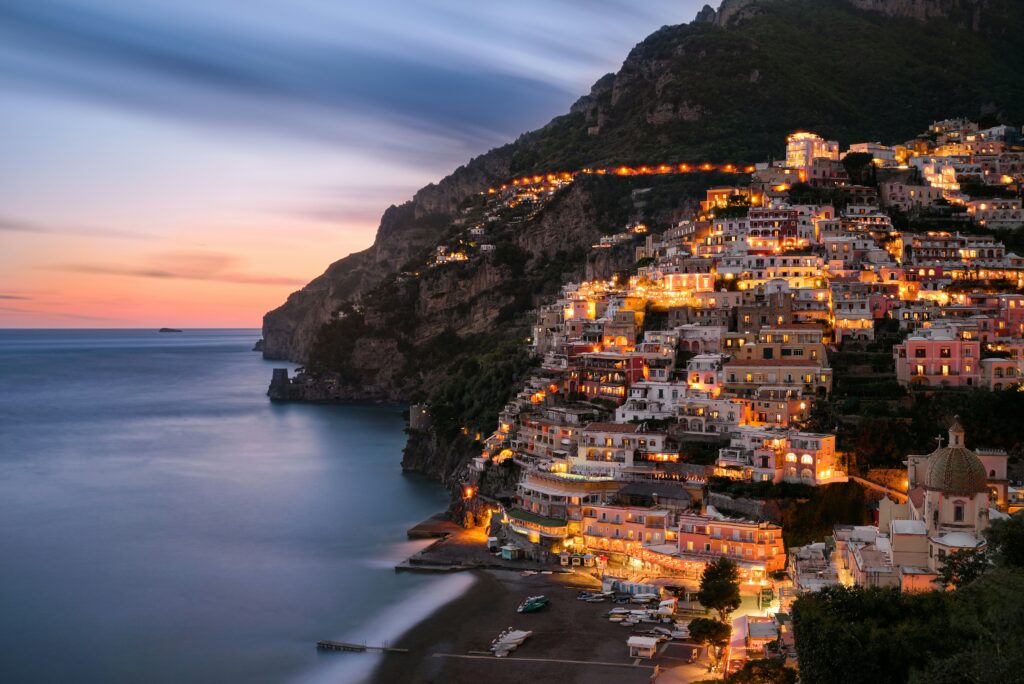
Positano is the most photographed town on the Amalfi Coast and the one whose image defines the coastline in the international imagination. The pastel-colored houses cascade in tiers from the clifftop to the Spiaggia Grande beach below, the streets are mostly staircases, and the combination of beautiful architecture, clear sea, and excellent restaurants has made it the most desirable address on the coast for international travelers and Italian celebrities alike.
Positano is expensive, crowded in peak season, and genuinely beautiful. The town rewards early risers: the light on the buildings at dawn before the day visitors arrive from Naples and Sorrento is extraordinary, and the beach is peaceful in the first hour after sunrise. Staying overnight in Positano rather than visiting on a day trip transforms the experience completely.
- Best for: photography, atmosphere, luxury accommodation, beach
- Getting there: ferry from Amalfi or Sorrento, or bus on the SS163 coast road
- Stay: at least two nights to experience the town at dawn and after dark
Ravello sits 350 meters above the coast and offers the finest panoramic views of the Amalfi Coast from any accessible point on the entire stretch. The town was a refuge for medieval nobility and 20th-century artists alike. D.H. Lawrence, Gore Vidal, and Wagner all spent significant time here. The gardens of Villa Cimbrone and Villa Rufolo, which extend over the clifftop with views of the coastline stretching to the horizon, are among the great garden experiences in Italy.
Ravello is significantly quieter than Positano and Amalfi and rewards travelers who want the visual drama of the coast without the crowds. The annual Ravello Festival, running from June to September, brings world-class classical music concerts to the Villa Rufolo gardens with the coastline as backdrop.
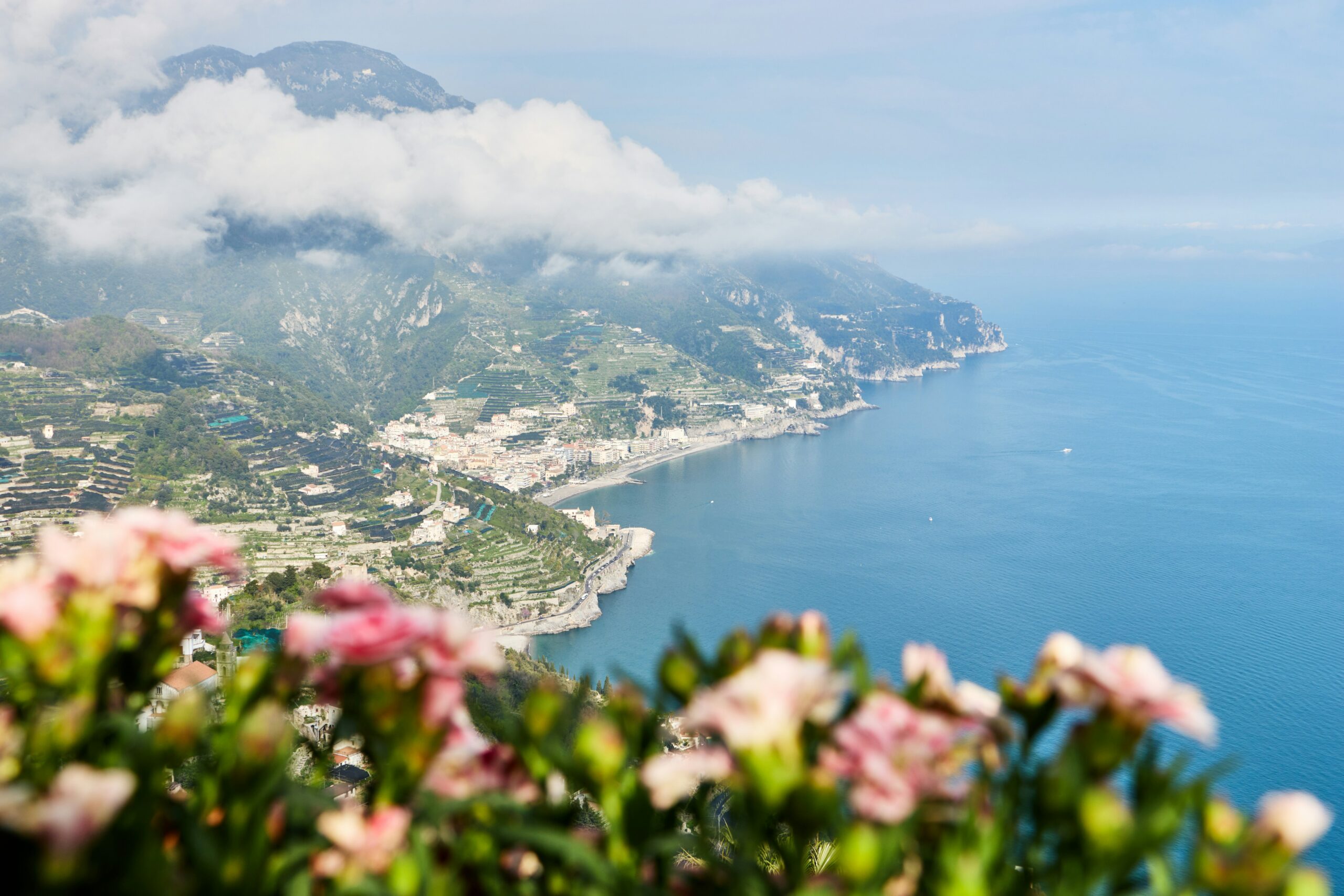
The view from Ravello over the Amalfi Coast. At 350 meters above sea level, Ravello offers the finest panorama of the entire coastline, with lemon terraces dropping to the sea below.
Amalfi is the largest town on the coast and was once one of the great maritime republics of medieval Italy, trading with the Byzantine Empire and the Arab world and producing the Tabula Amalfitana, one of the oldest maritime codes in the world. The Cathedral of Sant’Andrea, with its Arabic-Norman facade and crypt containing the relics of Saint Andrew, is the most extraordinary medieval building on the coast.
Amalfi is the most practical base for exploring the coast. The ferry service connecting the coast runs through here, the bus connections are the best of any town on the route, and the price of accommodation is significantly lower than Positano. The historic paper mills of the Valle dei Mulini just behind the town produce the famous Amalfi paper using ancient techniques and are worth a half-day excursion.
Praiano between Positano and Amalfi is the most liveable town on the coast for travelers who want the coastline experience without the tourist density. The village has a genuinely local atmosphere, excellent small restaurants, and the extraordinary Marina di Praia beach in a narrow cove below the main road. The viewing platform above the village gives one of the best coastline views available anywhere.
Cetara on the eastern end of the coast is famous for its colatura di alici, a fermented anchovy sauce that has been produced here since the medieval period and is one of the great flavor intensifiers in Italian cooking. The town is almost entirely without tourism and the quality of the seafood restaurants reflects that entirely.
Getting around the Amalfi Coast is one of the key practical challenges of a visit. The SS163 coast road is narrow, twisting, and shared by buses, trucks, taxis, tourist coaches, and rental cars in a combination that regularly creates gridlock in peak season. Understanding the transport options before you arrive determines how much of your time is spent enjoying the coast versus sitting in traffic.
The ferry service connecting Positano, Amalfi, Salerno, and the islands of Capri and Ischia is the most enjoyable and often the fastest way to travel along the coast. The view of the coastline from the water is dramatically better than from the road above, and the ferries are reliable, affordable, and give access to the coast’s best swimming spots for spontaneous stops.
SITA ferries and several private operators run the route from April to October. Outside this period, services are reduced significantly. Ferry timetables are available at each pier and at most hotels.
The SITA bus runs the length of the coast road and is by far the most affordable way to travel between towns. Tickets are purchased at tabacchi shops before boarding and the service is frequent in peak season. The trade-off is that the buses are often crowded to capacity in July and August and the road’s single-lane sections mean journey times can vary significantly with traffic. Early morning and late evening services are reliably faster.
Driving the Amalfi Coast in a rental car in July and August is an experience most visitors regret. The road is genuinely narrow, the bus drivers who know it well regularly intimidate drivers who do not, and parking in the towns is extremely limited and expensive. A rental car makes more sense in shoulder season from April to June and September to October when traffic is significantly lighter. A small car rather than an SUV is strongly recommended.
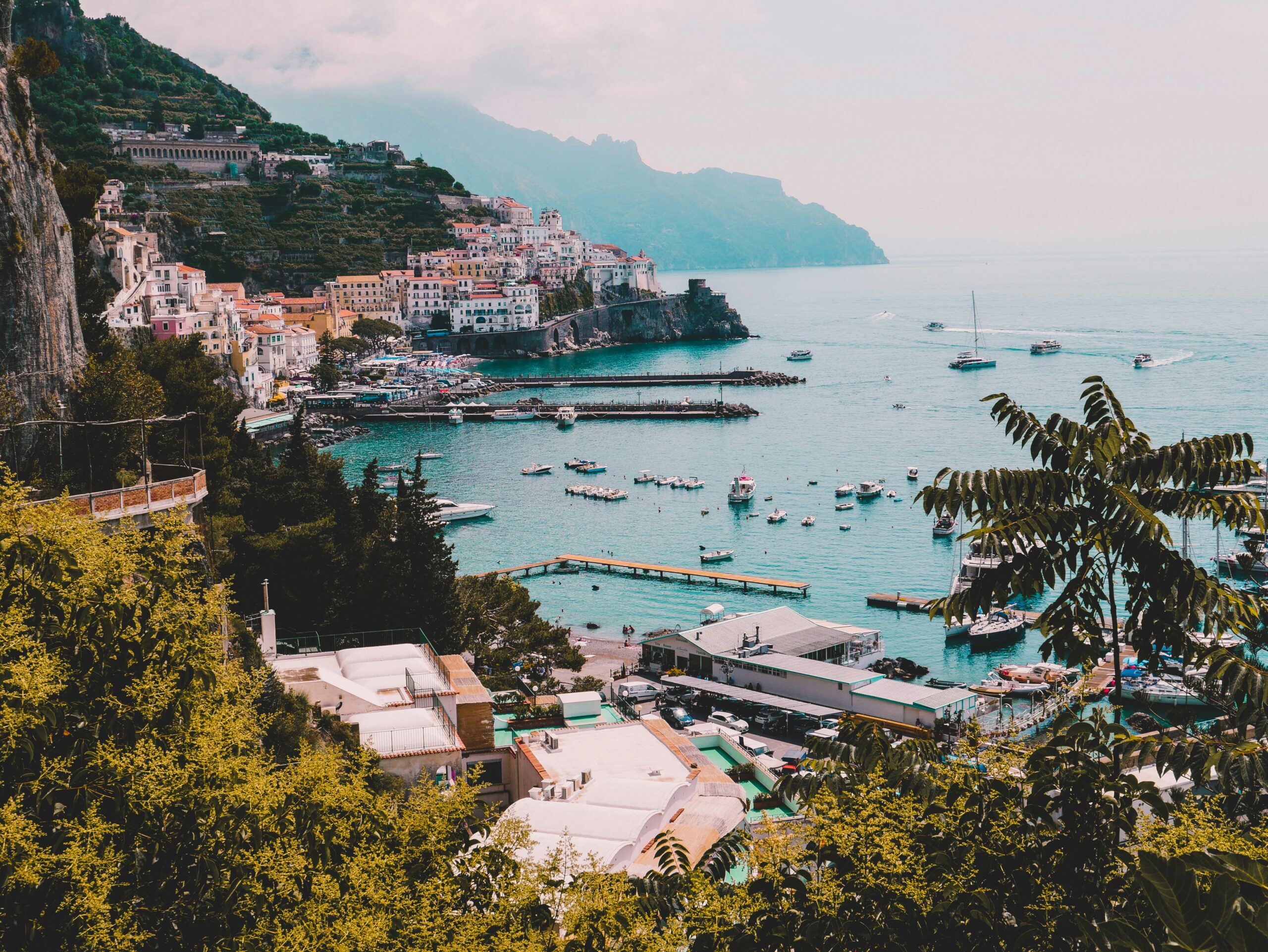
The harbor at Amalfi town with its turquoise bay and colorful houses climbing the cliff face. Amalfi was once a major medieval maritime republic and remains the practical hub of the coast.
A private boat hired for the day is the finest way to experience the Amalfi Coast. The ability to stop at sea caves, swim off the boat in clear water below the cliffs, approach sea stacks and grottos that the road never reaches, and see the coastline as it has been seen by sailors for centuries is worth the cost. Half-day and full-day private boat rentals with a skipper are available from Amalfi, Positano, and Sorrento for around 200 to 500 euros depending on the boat size and duration.
The Path of the Gods is a hiking trail that runs along the clifftops between Agerola and Nocelle (above Positano) at an altitude of 600 meters, with continuous views over the coast and sea that justify the name. The trail takes approximately 3 to 4 hours at a comfortable pace and involves some steep sections. Take the bus up from Amalfi or Positano and walk one way, taking the descent path back to the coast road at the end.
- Sfusato amalfitano lemons: the enormous, intensely fragrant lemons grown on the coastal terraces are Protected Designation of Origin and form the basis of Limoncello, lemon pasta, and the lemon granita served everywhere on the coast
- Scialatielli ai frutti di mare: thick, fresh pasta with mixed seafood in a light tomato or white wine sauce. The signature pasta dish of the Amalfi Coast
- Alici di Cetara: anchovies from Cetara, either fresh-grilled or in the form of colatura di alici, the concentrated fermented sauce that is one of the great flavor agents of Southern Italian cooking
- Mozzarella di bufala: the buffalo mozzarella from the Campania region is at its freshest here and bears little resemblance to the product sold outside Italy
- Delizia al limone: a sponge cake soaked in limoncello and filled with lemon cream. The definitive dessert of the Amalfi Coast
| Period | Weather | Crowds | Notes |
|---|---|---|---|
| May to June | Warm, clear | Moderate | Best overall conditions |
| July to August | Very hot, 32 to 38C | Extreme | Peak season, gridlock on coast road |
| September to October | Warm, sea still warm | Moderate | Excellent, slightly quieter |
| November to April | Cool, some rain | Very low | Reduced ferry service, quietest |
May and June are the best months to visit the Amalfi Coast. The weather is warm and reliable, the sea is swimmable from mid-May, the ferry services are running full schedules, and the crowds are manageable compared to the intense July and August peak. The lemon trees are in full bloom in May and the coastal villages have a freshness that the summer heat erases.
September and October are excellent alternatives. The sea temperature is at its warmest, the summer crowds have thinned significantly, hotel prices drop from August peaks, and the late afternoon light on the cliffs and villages is extraordinary. October can bring occasional rain but the dramatic cloud formations over the mountains create some of the most atmospheric photography conditions of the year.
- Book accommodation well in advance: the best hotels and apartments in Positano and Ravello sell out 6 to 9 months ahead for July and August. Even shoulder season accommodation in Positano books early
- Use the ferry as primary transport: the coast road is beautiful but the sea view is incomparably better and often faster in peak season
- Wear proper shoes: the towns are built on staircases and the hiking trails require ankle support. Flip-flops work only at the beach
- Start activities early: the day tour buses from Naples and Sorrento arrive from 10am. Reaching the main viewpoints and beaches before this transforms the experience
- Carry cash: many of the smaller restaurants, beach clubs, and market stalls on the coast prefer or require cash
- Budget for higher prices: the Amalfi Coast commands a premium on almost everything from groceries to restaurant meals. This is simply the cost of being in one of the most desirable destinations in Italy
The Amalfi Coast is one of those places where the landscape does most of the work. The combination of vertical cliff, Mediterranean blue, lemon yellow, and the particular quality of the light in the late afternoon creates a setting that requires very little from the traveler beyond the willingness to be in it. Slow down, take the ferry, eat the seafood pasta, and watch the sun set over the Tyrrhenian Sea.
This Amalfi Coast travel guide gives you the framework. The coast will provide everything else, as it has been doing for the painters, writers, and travelers who have been drawn to this stretch of Italian shoreline for the past two centuries.
Ready to Plan Your Amalfi Coast Trip?
Discover more Italy guides, destination tips, and Mediterranean travel itineraries on Tripfavor.
Explore Tripfavor →