
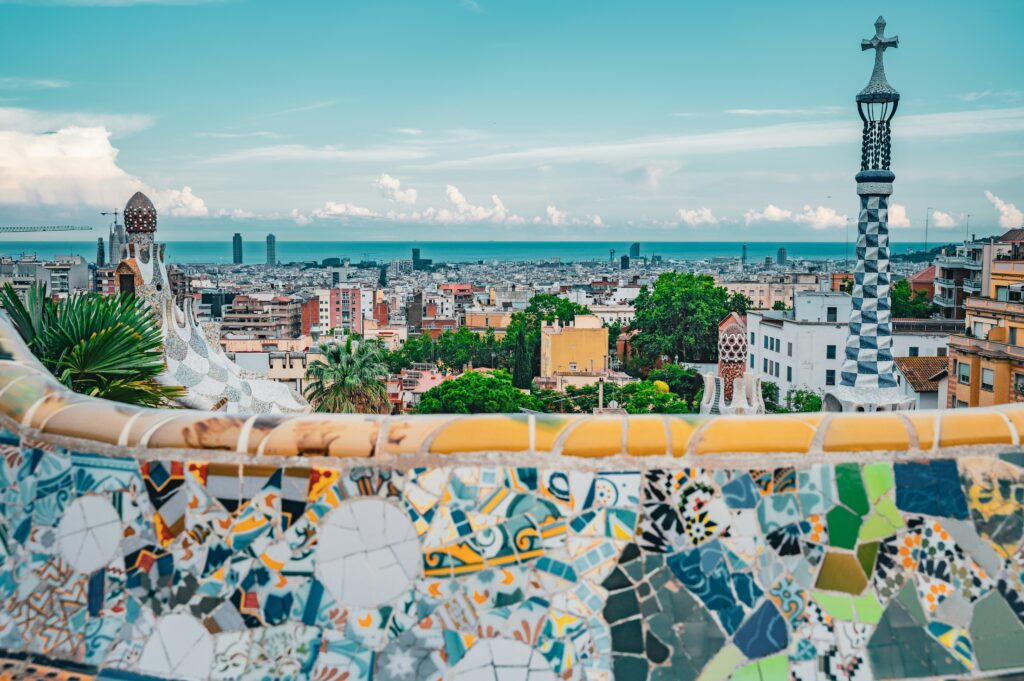
Barcelona is one of the great cities of Europe and one of the very few that genuinely delivers on every dimension simultaneously: extraordinary architecture, excellent beaches, world-class food, a nightlife culture that begins where other cities’ ends, and a distinct Catalan identity that makes it feel unlike anywhere else in Spain. The city built by Antoni Gaudi, Joan Miro, and Pablo Picasso is a permanent exhibition of what happens when a great city decides to take beauty seriously.
This Barcelona travel guide covers everything first-time visitors need to know: the essential Gaudi landmarks, the best neighborhoods, where to eat tapas and drink vermouth, the beaches, the best time to visit, and the practical details that make one of Europe’s most enjoyable cities feel easy to navigate and impossible to leave.
Quick Answer: Barcelona Travel Guide
Barcelona combines things that should not go together as well as they do. Ancient Roman ruins and cutting-edge contemporary architecture. A serious beach culture and a world-class museum scene. Late-night dining culture that begins at 10pm and an extraordinary food market open from dawn. The city has a confidence and an aesthetic ambition that is uniquely Catalan and that produces a travel experience unlike any other in the Mediterranean.
Barcelona city welcomed 16 million visitors in 2025, with 13.4 million (nearly 84 percent) of them international, a 3.5 percent increase over 2024, according to Barcelona City Council’s tourism observatory. The city’s infrastructure for tourism is excellent without having lost its genuine local character in the neighborhoods away from the main tourist circuit.
The Sagrada Familia is the most extraordinary building currently under construction in the world. Antoni Gaudi began work on the basilica in 1882 and devoted the last 43 years of his life to it. He is buried in the crypt below. Construction is ongoing, funded entirely by visitor donations, with a completion target of 2026 for most of the remaining elements.
The basilica defies conventional architectural categories. The organic forms of the Nativity facade, the geometric precision of the Passion facade, and the extraordinary interior where the light filtered through stained glass creates the effect of standing inside a living forest all represent different aspects of Gaudi’s vision. It is genuinely unlike any other building in the world and needs to be experienced in person to be understood.
- Entry: approximately 26 euros, tower access extra
- Book: weeks in advance at sagradafamilia.org, or through Tiqets for a skip-the-line guided option. Timed entry is mandatory
- Best time: first entry slot of the day for the best morning light in the interior
Park Guell was conceived by Gaudi as a garden city for the Barcelona bourgeoisie and, when the project failed commercially, became a public park that is now one of the most visited sites in the city. The Monumental Zone at the top of the hill contains the iconic mosaic terrace with its serpentine bench, the Hypostyle Room of columns, and the two gingerbread-style gatehouses at the entrance.
The panoramic view from the terrace over Barcelona to the sea is the finest in the city. The mosaic work on the bench, using the trencadis technique of broken ceramic tiles, is extraordinarily detailed and colourful. Book timed entry tickets in advance as the Monumental Zone has a strict visitor cap.
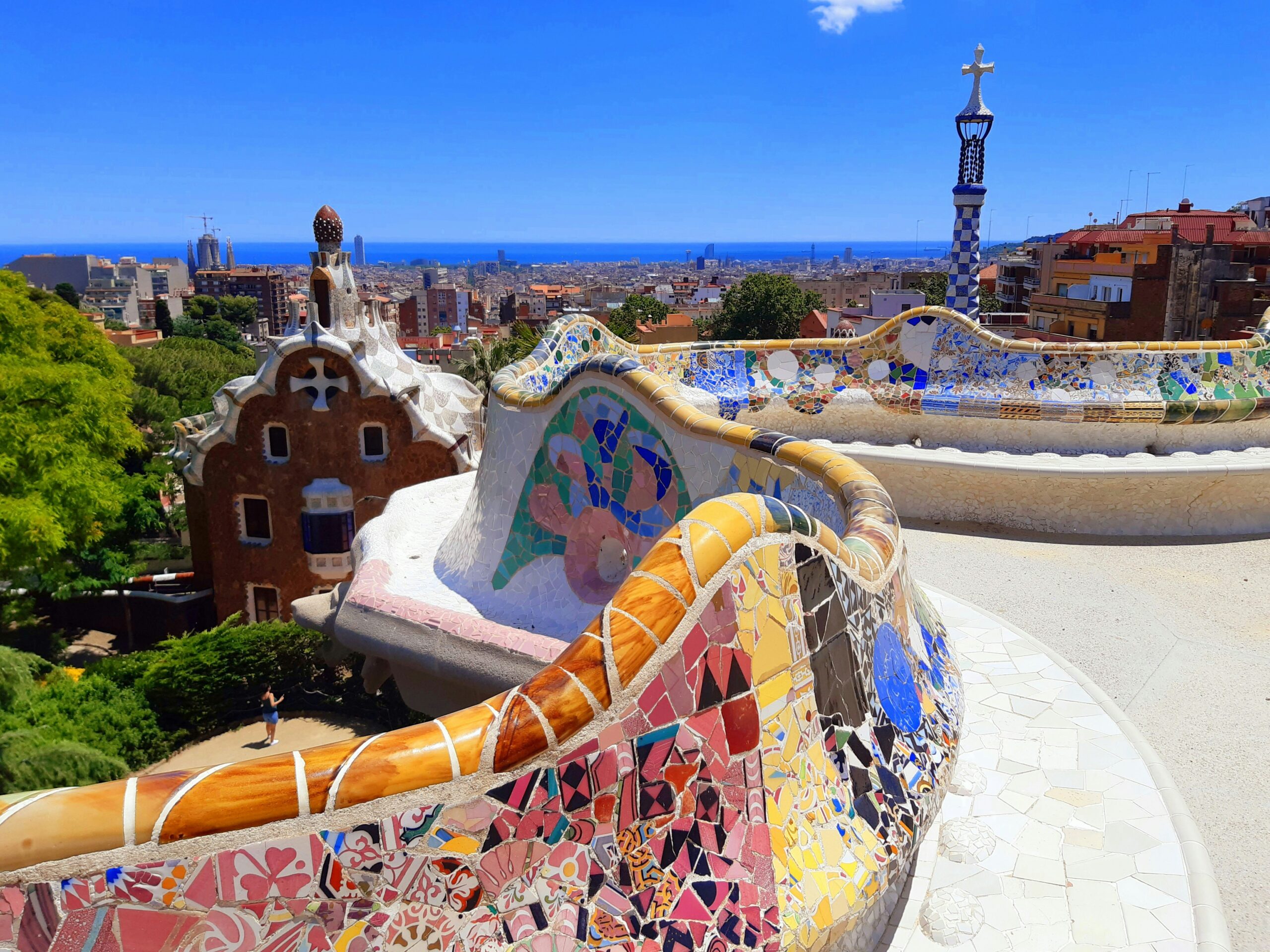
The mosaic terrace at Park Guell with its famous serpentine bench covered in Gaudi’s trencadis ceramic work. The view from here over Barcelona to the Mediterranean is the finest in the city.
La Boqueria is Barcelona’s most famous market and one of the great food markets in Europe. The covered market off Las Ramblas sells fresh produce, charcuterie, cheese, seafood, and prepared food from over 200 stalls in a permanent sensory exhibition of Catalan and Spanish food culture. The market is at its best in the morning when the produce is freshest and the professional chefs are shopping.
Las Ramblas is Barcelona’s most famous boulevard, a 1.2-kilometer tree-lined pedestrian street running from Placa Catalunya to the waterfront. It is heavily tourist-facing and the target for significant petty crime, but the architecture along its flanking streets is beautiful and the Miro mosaic embedded in the pavement at the midpoint is easy to miss and worth finding.
The Gothic Quarter is the medieval heart of Barcelona, built on the Roman foundations of the city of Barcino and containing streets that have been continuously inhabited for 2,000 years. The Barcelona Cathedral, the remains of the Roman temple of Augustus, the Placa Reial, and the medieval Jewish Quarter (El Call) are all within a few minutes walk of each other in a dense network of narrow streets that rewards unhurried exploration.
The Gothic Quarter is best explored early in the morning or in the evening when the tour groups have dispersed. The area around Carrer del Bisbe and the Cathedral is particularly atmospheric at night when the floodlit Gothic stonework is at its most dramatic.
The Parc de la Ciutadella is Barcelona’s most beloved public park, covering 17 hectares between the Gothic Quarter and the sea. The grand Cascada fountain at its center, partially designed by the young Antoni Gaudi before he became famous, is one of the most elaborate Baroque park features in Spain. The park also contains the Barcelona Zoo, the Catalan Parliament building, a boating lake, and extensive lawns where Barcelonans gather on weekends.
El Born immediately east of the Gothic Quarter is consistently cited as the most liveable neighborhood in Barcelona by the city’s international residents. The medieval streets contain the extraordinary iron-framed Mercat de Santa Caterina (an alternative to the overcrowded Boqueria), the Picasso Museum, excellent independent restaurants and wine bars, and a density of beautiful 14th and 15th-century architecture that rivals anything in the Gothic Quarter itself.
Barceloneta is the beach neighborhood of Barcelona, a triangular grid of narrow streets built in the 18th century for the fishing community displaced by the construction of the Ciutadella fortress. The neighborhood retains a local character that the beachfront itself has largely lost to tourism. The Barceloneta beach is the most central and accessible in the city and is genuinely pleasant for swimming from May to October.
Gracia was a separate village until the 19th century and still feels distinct from the rest of the city. The neighborhood has a density of small plazas, each with a distinct character and a permanent community of local residents who treat them as outdoor living rooms. Vermouth culture is most alive here in the late morning on weekends. The famous Festa Major de Gracia in August transforms the streets into elaborately decorated outdoor celebrations.
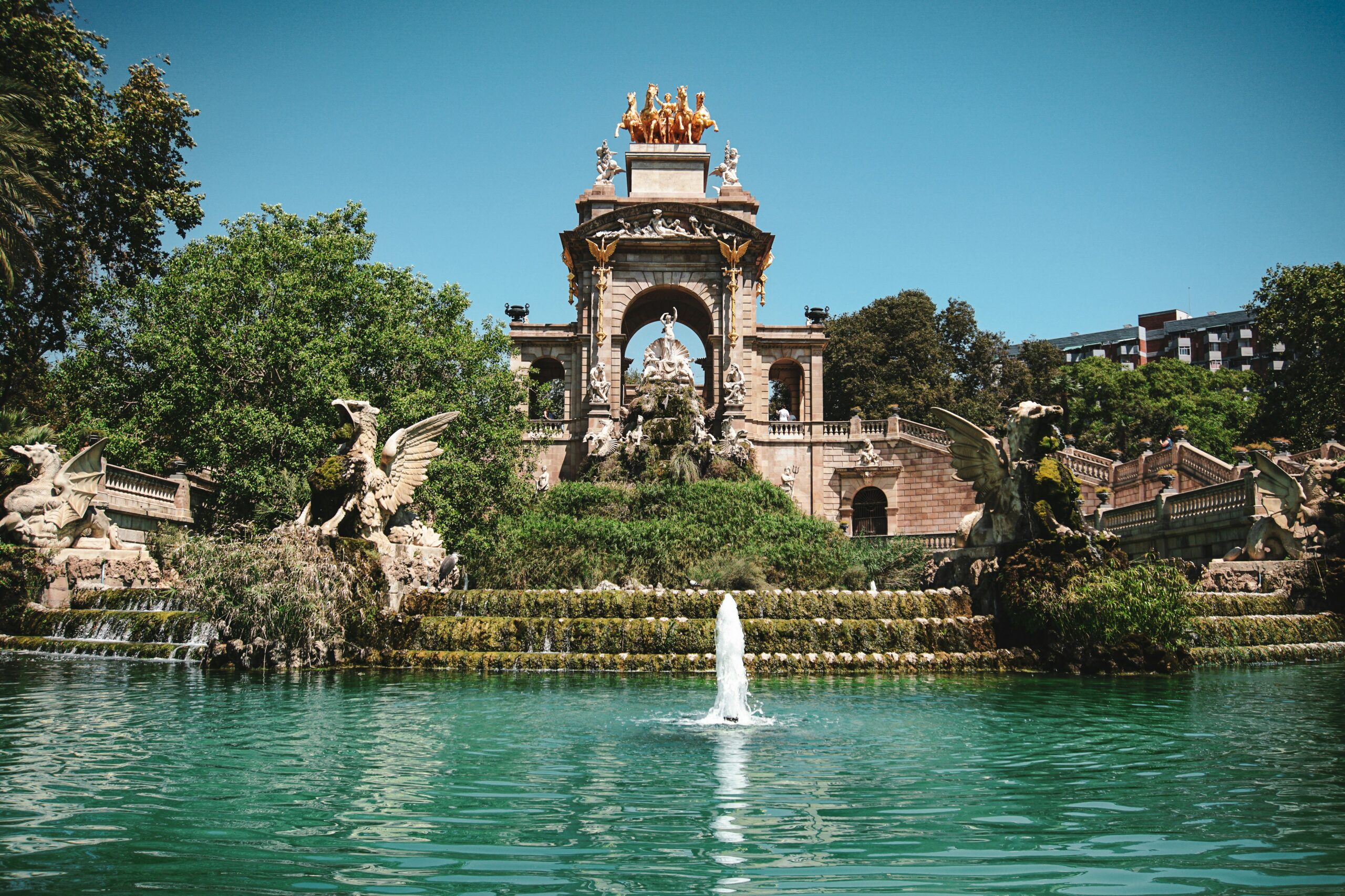
The Cascada fountain at Parc de la Ciutadella, partially designed by the young Antoni Gaudi. The park is Barcelona’s most beloved public green space and the gathering point for the city on weekend mornings.
Barcelona’s food scene draws from the extraordinarily rich tradition of Catalan cuisine, one of the great regional cooking traditions in Europe, combined with a contemporary restaurant scene that has produced some of the most innovative chefs of the past three decades.
- Pan con tomate (pa amb tomaquet): the foundation of Catalan eating. Bread rubbed with ripe tomato and olive oil, served with almost everything. Simple and extraordinary when done well
- Patatas bravas: fried potatoes with a spicy tomato sauce and aioli. The tapas bar standard. Every bar has their own version and opinions on the best are strongly held
- Jamon iberico: cured Iberian ham sliced thin and served at room temperature. The best quality (bellota, from acorn-fed pigs) is one of the great foods of Spain
- Fideus: a Catalan pasta dish cooked in a paella pan with seafood, similar to paella but using short noodles instead of rice. More common in restaurants in the old city than the tourist-facing versions near the beach
- Vermut: the midday ritual of Barcelona. A glass of vermouth with olives and a small snack at around noon on weekends is as much a social ritual as a culinary one
| Period | Weather | Crowds | Notes |
|---|---|---|---|
| April to June | Warm, pleasant | Moderate to high | Best overall conditions |
| July to August | Very hot, 32 to 38C | Very high | Peak season, beach weather |
| September to October | Warm and clear | Moderate | Excellent, sea still warm |
| November to March | Mild, some rain | Low | Quietest, best prices |
May, June, and September are the best months to visit Barcelona. The weather is excellent for both city sightseeing and beach days, the queues at Gaudi sites are shorter than in peak summer, and the city has a more local atmosphere than in the intensely tourist-heavy July and August period.
The La Merce festival in late September is one of the best times to experience Barcelona. The city’s patron saint festival runs for four days with free concerts, human towers (castellers), fire runs, and celebrations throughout the streets that showcase the city at its most distinctly Catalan.
- Metro: Barcelona’s metro is fast, clean, and covers all major neighborhoods and attractions. The T-Casual 10-trip card offers the best value for a short visit
- Walking: the central neighborhoods including the Gothic Quarter, El Born, Eixample, and Barceloneta are all walkable from each other
- Bicing bike share: available to registered users for longer stays. The city has an extensive network of protected bike lanes
- Cable car to Montjuic: the aerial cable car from Barceloneta beach to the Montjuic fortress gives the best views of the port and city from any public transport
- Taxi and Uber: readily available and reasonably priced. Uber is generally faster to book in busy periods. For airport arrivals, a pre-booked transfer through Welcome Pickups removes any uncertainty after a long flight
- Book Gaudi sites well in advance: Sagrada Familia and Park Guell require timed entry tickets purchased online. Both sell out weeks ahead in summer
- Be vigilant about pickpockets: Las Ramblas, La Boqueria, and the metro are the highest risk areas. Use inside pockets or a money belt for valuables
- Learn a few words of Catalan: Bon dia (good morning) and gracies (thank you) are genuinely appreciated in a city that takes its linguistic identity seriously
- Avoid beach restaurants: the restaurants directly on Barceloneta beach are overpriced and often mediocre. Walk one street back for dramatically better food at lower prices
- The Eixample grid is walkable: the rational grid layout of the 19th-century Eixample district makes it easy to navigate on foot between the Sagrada Familia, Gaudi’s Casa Batllo, and Casa Mila (La Pedrera)
Barcelona rewards travelers who stay long enough to fall into its rhythm. The late dinners, the long lunches, the Saturday morning vermouth in Gracia, the swim at Barceloneta before the beach fills up. The city is extraordinarily beautiful and extraordinarily alive, and the two things reinforce each other in ways that make it genuinely difficult to leave.
This Barcelona travel guide gives you the foundation. Book the Gaudi sites before anything else, explore El Born in the evening, eat later than you think is reasonable, and give yourself at least four days. Barcelona will provide the rest.
Ready to Plan Your Barcelona Trip?
Discover more Europe guides, destination tips, and travel itineraries on Tripfavor.
Explore Tripfavor →