
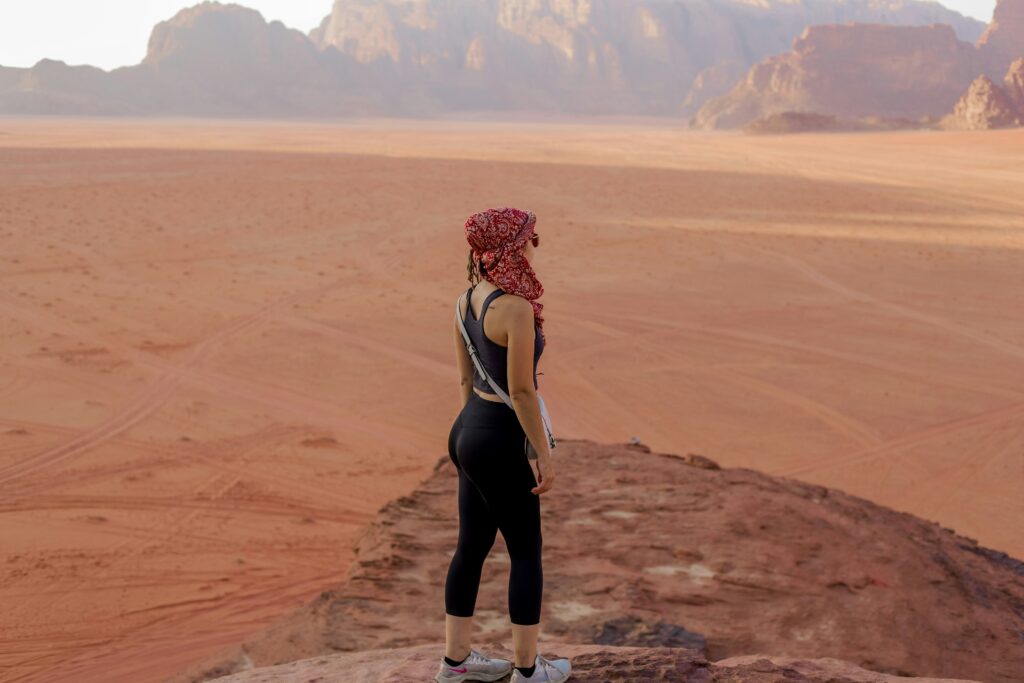
Petra Jordan Travel Guide: Everything You Need to Know
Petra is one of the most extraordinary places on earth. The rose-red city carved into the sandstone cliffs of southern Jordan was the capital of the Nabataean kingdom over two thousand years ago and was largely unknown to the outside world until a Swiss explorer rediscovered it in 1812. Today it is one of the New Seven Wonders of the World and Jordan’s most visited site, drawing travelers from every continent who come to walk the ancient Siq and stand before the Treasury in the same moment of disbelief that every visitor experiences regardless of how many photographs they have seen beforehand.
This Petra Jordan travel guide covers everything first-time visitors need to know: how to explore the site, what to see beyond the Treasury, the best time to visit, practical logistics, and the experiences that make Petra genuinely unforgettable rather than simply impressive.
Petra’s power comes from its scale and its silence. The site covers over 260 square kilometers, of which most visitors see perhaps 10 percent. The Treasury is the iconic image, but it is only the beginning of a city that includes hundreds of carved tombs, a Roman colonnaded street, amphitheaters, temples, and high places of sacrifice reached by trails that climb into the surrounding mountains.
Walking through the Siq, the narrow 1.2-kilometer gorge that forms the main entrance to the city, is an experience in controlled anticipation. The walls rise 80 meters on either side, narrowing in places to less than 3 meters wide, and then the gorge opens suddenly onto the Treasury facade in a reveal that has been shocking travelers for two centuries. According to UNESCO’s World Heritage listing, Petra is recognized as one of the most precious cultural properties of humanity’s cultural heritage.
The walk through the Siq is the essential Petra experience. The gorge begins at the Bab el-Siq entrance and winds for 1.2 kilometers through increasingly narrow canyon walls carved with ancient water channels and votive niches. Ancient Nabataean inscriptions are still visible on the walls. The light shifts as you walk deeper and the temperature drops noticeably in the shade of the high walls.
The Treasury (Al-Khazneh) reveals itself through a gap in the gorge walls in a moment that never loses its impact regardless of how many times you have seen it in photographs. The 43-meter facade was carved directly into the sandstone cliff face around the 1st century BC and displays a sophistication of Hellenistic design that makes the encounter with a civilization working in this remote desert landscape genuinely extraordinary.
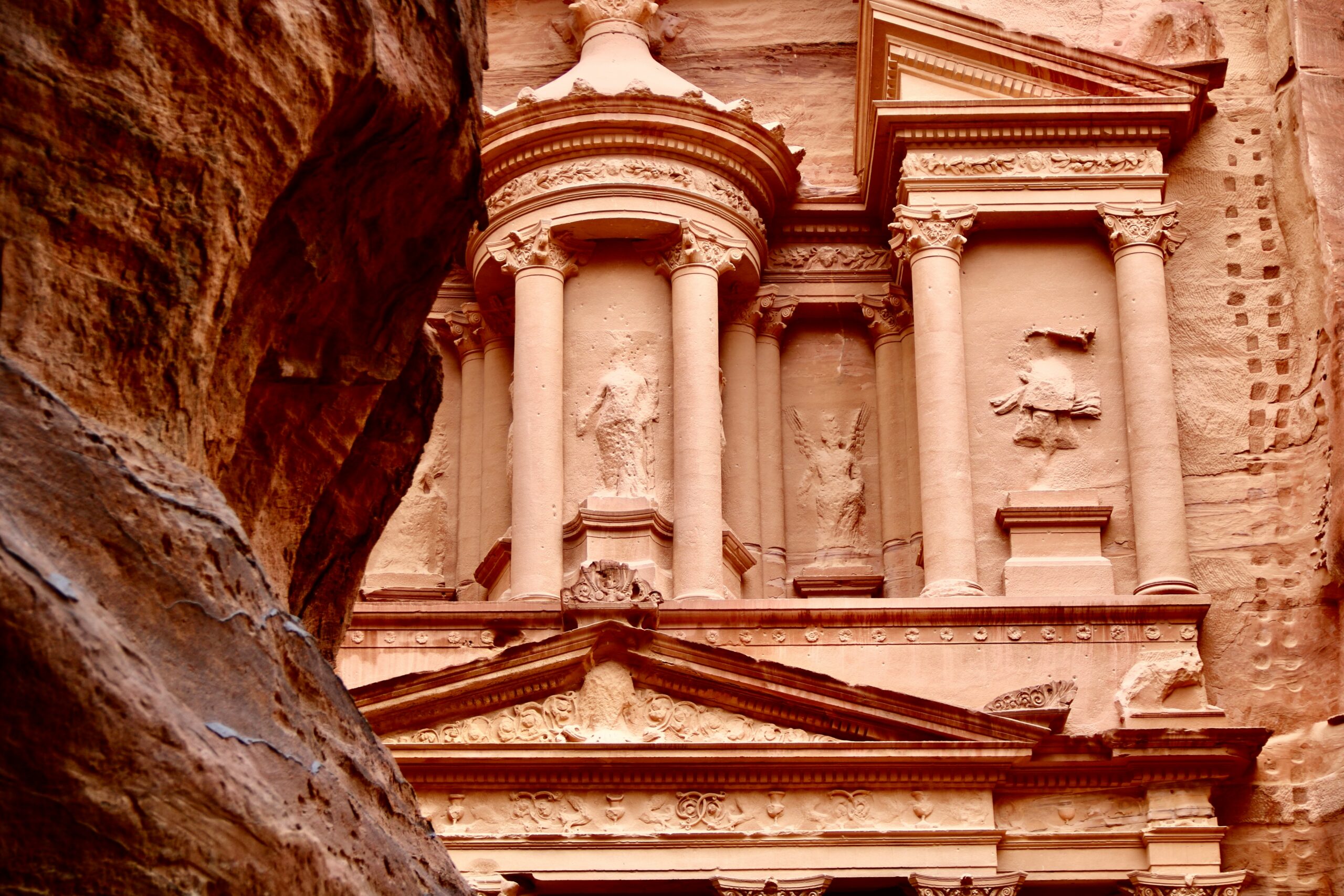
The Treasury reveals itself through the Siq walls in a moment that no photograph fully prepares you for. The facade is 43 meters high and was carved entirely by hand from the sandstone cliff.
Beyond the Treasury, the Siq opens into the broader Petra valley and the Street of Facades begins: a continuous row of carved tomb fronts extending along the cliff face. The scale becomes clearer here as you realize the Treasury was only the most elaborate of hundreds of similar structures carved across the entire mountain range surrounding the city.
The Royal Tombs further along the main street include the Urn Tomb, the Silk Tomb, the Corinthian Tomb, and the Palace Tomb. These facades glow extraordinary colors in the afternoon light, the sandstone banding shifting through cream, pink, rust, and purple in ways that earned Petra its description as the rose-red city.
The Monastery is Petra’s other great carved monument and, by many measures, more impressive than the Treasury. It stands 50 meters wide and 45 meters tall, making it larger than the Treasury in every dimension, and it sits at the top of a 45-minute climb of approximately 850 rock-cut steps from the main valley floor.
The climb is the point as much as the destination. The trail passes through increasingly dramatic canyon scenery, past a series of carved niches and cisterns, and the final approach gives a view of the Monastery appearing above the trail that is one of the great arrival moments in archaeology. The plateau at the top offers views across the mountains of southern Jordan that justify the ascent entirely on their own terms.
- Climb time: approximately 45 minutes up, 35 minutes down
- Best time: morning for cooler temperatures and better light
- Donkey transport: available for travelers who cannot manage the stairs
The High Place of Sacrifice is reached by a different trail that climbs steeply from the main Colonnaded Street to a plateau 1,035 meters above sea level where the Nabataeans conducted ritual sacrifices. The altar, with its drainage channels cut into the rock for blood, is remarkably well preserved. More compellingly, the views from this plateau encompass the entire central Petra valley in a panorama that gives a genuine sense of the city’s original scale and layout.
The descent route on the far side of the plateau passes the Lion Monument, the Garden Tomb, and the Renaissance Tomb before returning to the main valley floor near the Roman Colonnaded Street, making it a natural loop that adds significant depth to a Petra visit.
Petra by Night runs on Monday, Wednesday, and Thursday evenings. The Siq and Treasury are lit entirely by candles placed along the path, creating an atmosphere unlike anything the site offers during the day. The Treasury glows in the candlelight while Bedouin musicians play traditional music. It is theatrical, deliberately so, and most visitors describe it as genuinely moving.
Tickets cost approximately 17 JOD (around $24) and are purchased separately from the main entrance ticket. The experience lasts around two hours and begins at 8:30pm. Book in advance through your hotel or the Petra visitor center.
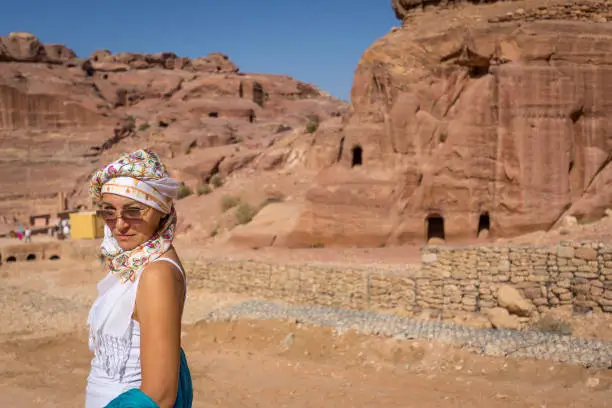
Petra is one of the most accessible and rewarding destinations in the Middle East for solo travelers. The site is vast enough to find quiet corners even on busy days.
One day is enough to see the Siq, the Treasury, and the main valley. Two days allows you to add the Monastery and the High Place of Sacrifice without rushing. Three days lets you explore the outer reaches of the site, including Little Petra (Siq al-Barid) and the less-visited areas of the eastern cliff face.
Most travelers who visit Petra for a single day describe wishing they had stayed longer. The site reveals itself gradually and rewards the visitor who moves slowly and returns to the same places at different times of day, when the light transforms the color of the stone completely.
| Period | Temperature | Crowds | Notes |
|---|---|---|---|
| March to May | 18 to 28 degrees C | High | Best weather, spring wildflowers |
| September to November | 20 to 30 degrees C | Moderate | Excellent conditions, manageable crowds |
| December to February | 5 to 15 degrees C | Low | Cold but uncrowded, occasional rain |
| June to August | 30 to 38 degrees C | Moderate | Hot but manageable with early starts |
Spring and autumn are the best times to visit Petra. March to May offers mild temperatures and the site is at its most photogenic with occasional wildflowers across the canyon floors. September to November brings similar conditions with slightly fewer visitors. Winter visits are cold but offer the extraordinary experience of having the site almost entirely to yourself on some days.
- Buy a multi-day ticket: a 2-day ticket costs only slightly more than a 1-day ticket and gives significantly more value
- Start at opening time (6am): the site is at its quietest and coolest in the first two hours
- Wear comfortable closed shoes: the terrain is uneven rock and gravel throughout. Sandals make the hikes to the Monastery and High Place genuinely difficult
- Bring more water than you think you need: the site has limited water points and the distances are larger than they appear on maps
- Decline horse rides through the Siq: walking the Siq at your own pace is the correct way to experience the approach. The horse option covers it in a few minutes and misses the point entirely
- Carry Jordanian Dinars (JOD) in cash: vendors inside the site and the Petra by Night tickets are cash transactions
Wadi Rum is a protected desert wilderness 1.5 hours south of Petra and one of the most extraordinary landscapes in the Middle East. The valley of rose-red sandstone mountains and sand dunes served as a filming location for Lawrence of Arabia, The Martian, and Dune. An overnight camp in Wadi Rum combined with a Petra visit makes a natural two-destination Jordan itinerary.
Little Petra is a smaller Nabataean settlement 8 kilometers north of the main Petra site and is free to enter. The narrow Siq leads to a series of carved facades and a dining room with the only surviving Nabataean painted ceiling in the region. It offers a quieter, more contemplative version of the Petra experience and is excellent in the early morning before the main site opens.
Petra is one of those places that justifies the effort of travel in a single morning. The walk through the Siq and the first sight of the Treasury is an experience that stays with people for the rest of their lives, not because it is beautiful (though it is) but because it is evidence of what human civilization is capable of at its most ambitious.
This Petra Jordan travel guide gives you the tools to experience the site at its best. Come early, move slowly, climb to the Monastery, and stay for at least two days. The rose-red city rewards those who give it time.
Ready to Plan Your Petra Trip?
Discover more Middle East guides, destination tips, and travel itineraries on Tripfavor.
Explore Tripfavor →