
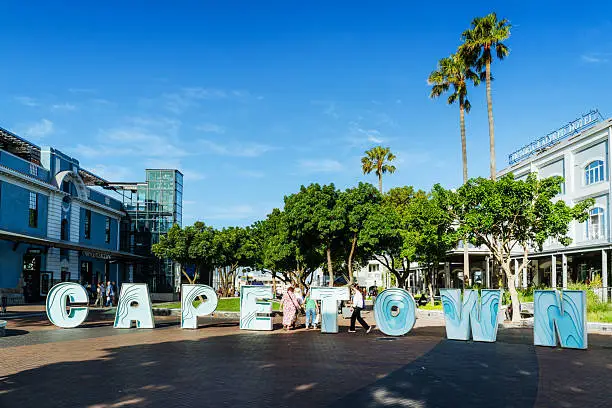
Cape Town is consistently ranked among the most beautiful cities in the world, and it earns that reputation. The combination of Table Mountain rising 1,086 meters directly behind the city center, two oceans meeting at the Cape Peninsula 60 kilometers south, and some of the finest beaches in the southern hemisphere within 20 minutes of the city, creates a setting that simply does not exist anywhere else on earth.
This Cape Town travel guide covers everything first-time visitors need to know: the essential attractions, the best beaches, the Cape Winelands, the neighborhoods worth exploring, safety considerations, the best time to visit, and the practical details that make the difference between a good Cape Town trip and a genuinely extraordinary one.
Quick Answer: Cape Town Travel Guide
Cape Town offers more variety within a single city than almost any other destination on earth. World-class hiking and a vibrant restaurant scene. Penguin colonies and Cape Dutch architecture. Wine estates an hour from a surf beach. The city sits where the Atlantic and Indian Oceans meet, and that geographical position shapes everything: the quality of the light, the diversity of the marine life, the character of the wind that locals call the Cape Doctor.
Cape Town International Airport handled a record 11.1 million two-way passengers in 2025, and the city welcomed 1.44 million foreign overnight visitors that year, according to Cape Town Tourism and Airports Company South Africa data, making it South Africa’s most visited destination by a significant margin.
Table Mountain is Cape Town’s defining landmark and one of the New Seven Wonders of Nature. The flat-topped mountain is visible from almost everywhere in the city and the views from the summit encompass the entire Cape Peninsula, Robben Island in Table Bay, and on clear days the distant peaks of the Hottentots Holland mountains to the east.
The cable car to the summit runs weather permitting and takes five minutes. The rotating cars give 360-degree views during the ascent. Hiking routes to the summit take between 2 and 4 hours depending on the trail. The Platteklip Gorge route is the most popular and most straightforward. The India Venster route offers more dramatic scenery and fewer hikers.
- Cable car return: approximately R380 (around $21)
- Best time to go: early morning for clear skies before the tablecloth cloud forms
- Check conditions: the mountain closes during high winds and low visibility
The drive from Cape Town south along the Cape Peninsula to Cape Point is one of the great coastal drives in the world. The road passes through the Constantia wine valley, along the Atlantic Seaboard through Hout Bay, and then climbs over Chapman’s Peak on a cliff road carved from the mountainside above the ocean before reaching the Cape of Good Hope Nature Reserve.
Cape Point itself stands at the southwestern tip of the African continent, with sheer cliffs dropping to the ocean and views to both horizons that make the scale of the Atlantic feel genuinely comprehensible. The reserve also contains substantial populations of baboons, ostriches, bontebok, and eland. The penguin colony at Boulders Beach near Simon’s Town on the return route is one of the most unusual and delightful wildlife encounters available near any major city on earth.
In visiting order, a full-day Peninsula drive from Cape Town looks like this:
- Constantia wine valley — a short detour through South Africa’s oldest wine region on the way out of the city
- Hout Bay — a working fishing harbor, good for a seal-cruise stop or an early lunch
- Chapman’s Peak Drive — the cliff-hugging toll road between Hout Bay and Noordhoek
- Cape of Good Hope Nature Reserve and Cape Point — the southwestern tip of the continent, with its lighthouse and viewpoints
- Boulders Beach, Simon’s Town — the African penguin colony, visited on the return leg
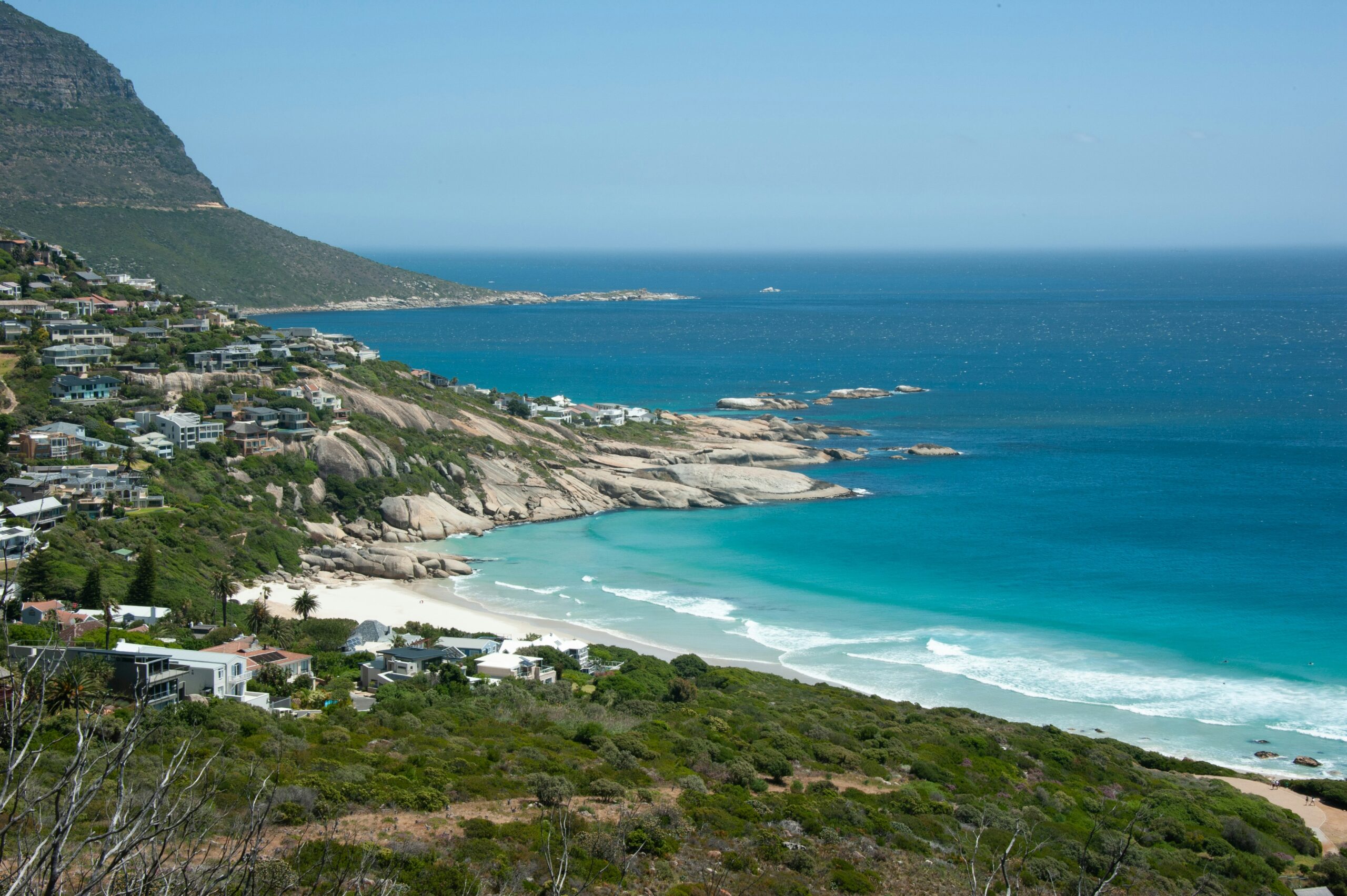
Llandudno Beach on Cape Town’s Atlantic Seaboard. The water is cold year-round from the Benguela Current, but the scenery is extraordinary in any season.
Robben Island sits in Table Bay 12 kilometers from the V&A Waterfront and is where Nelson Mandela was imprisoned for 18 of his 27 years of incarceration. The island is now a UNESCO World Heritage Site and museum. Tours are led by former political prisoners who describe their personal experiences in a way that transforms the visit from historical tourism into something more profound.
The ferry crossing takes 30 minutes and the tour lasts approximately 3.5 hours including a bus tour of the island and a guided walk through the maximum security prison. Book tickets well in advance through the official Robben Island website as tours sell out regularly, particularly in summer.
The V&A Waterfront is Cape Town’s working harbor transformed into a retail, restaurant, and entertainment precinct with the mountain as backdrop. It is tourist-facing but genuinely beautiful, and the views of Table Mountain from the harbor waterfront are among the best in the city. The Two Oceans Aquarium here is excellent for families and anyone interested in the extraordinary marine life of the Cape.
Bo-Kaap, the brightly colored neighborhood on the slopes of Signal Hill above the city center, is one of Cape Town’s most photographed areas. The cobbled streets and vivid painted houses are the visual legacy of Cape Malay culture, and the neighborhood has been home to the Muslim community brought to the Cape as slaves by the Dutch East India Company in the 17th century. The Bo-Kaap Museum gives excellent context for the community’s history.
Cape Town has two distinct coastlines with very different beach characters. The Atlantic Seaboard faces west and receives cold water from the Benguela Current. The False Bay coastline faces east and is significantly warmer. The choice of beach depends on whether you prioritize scenery or swimming temperature.
Clifton’s four beaches are the most famous in Cape Town: sheltered granite boulders divide the shoreline into four distinct coves that are protected from the southeaster wind. The water is cold but the scenery is extraordinary. Fourth Beach is the most popular and social. First Beach is quieter and slightly more local. Sunset at Clifton in summer is a Cape Town institution.
Camps Bay is the most accessible Atlantic beach, a wide strip of white sand backed by the Twelve Apostles mountain range. It has the most developed cafe and restaurant strip of any Cape Town beach. The water is cold but the setting is spectacular. Llandudno further south requires a 20-minute drive from the city center but offers dramatic boulder scenery and reliably uncrowded sand.
Muizenberg on the False Bay coast is Cape Town’s surf beach, with warmer water, consistent beginner waves, and a row of colorful Victorian bathing boxes that are one of the city’s iconic images. Fish Hoek and St James offer sheltered, calm swimming with exceptional mountain backdrop scenery. The tidal pool at St James is one of the most beautiful ocean swimming spots in the city.
The Cape Winelands begin less than an hour east of Cape Town in the valleys around Stellenbosch, Franschhoek, and Paarl. The scenery is extraordinary: mountains covered in indigenous fynbos, white-gabled Cape Dutch manor houses, and vineyards producing wines that compete with the best in the world.
Stellenbosch is the hub of South African wine production, with over 150 wine estates within a 30-minute radius of the town center. The oak-lined streets of the town itself are lined with excellent restaurants, galleries, and the historic buildings of one of South Africa’s oldest European settlements. A full day is barely enough.
Franschhoek, the Valley of the French, was settled by French Huguenot refugees in the late 17th century and retains a distinctly Gallic character in its architecture, food culture, and wine style. The Franschhoek Wine Tram links the valley’s estates in a hop-on hop-off tasting circuit that is one of the most enjoyable ways to spend a day in the Western Cape.
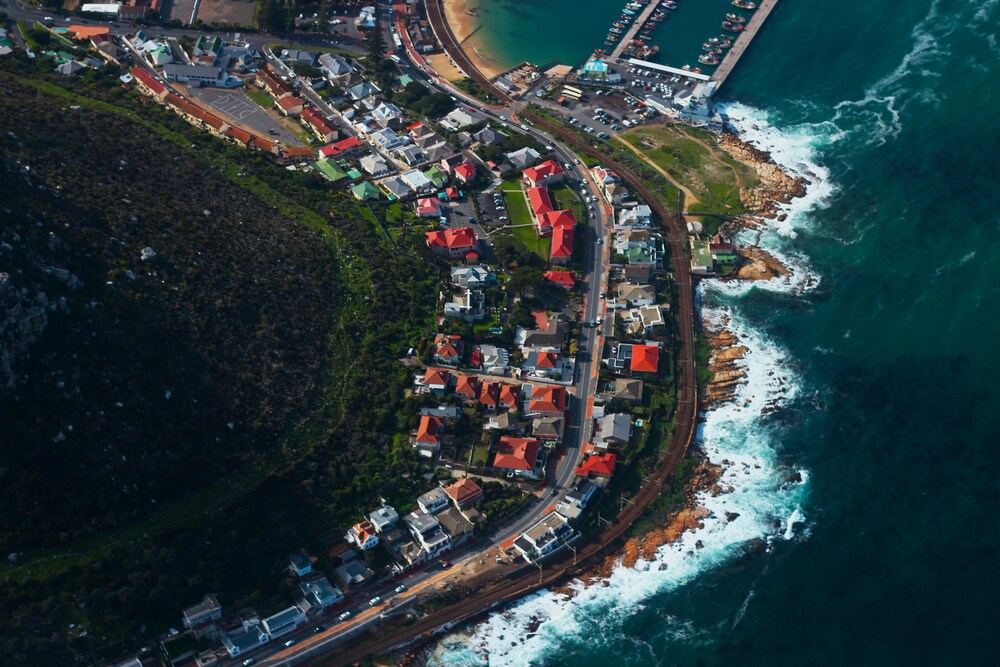
Cape Town’s Atlantic Seaboard from above. The road clings to the mountain edge as it follows the coast south toward Hout Bay and Chapman’s Peak.
| Period | Season | Temperature | Notes |
|---|---|---|---|
| November to March | Summer | 22 to 30 degrees C | Best beaches, long days, peak prices |
| April to May | Autumn | 16 to 23 degrees C | Excellent conditions, fewer tourists |
| June to August | Winter | 8 to 17 degrees C | Whale season, lowest prices, rainy |
| September to October | Spring | 14 to 22 degrees C | Wildflowers, warming up, good value |
November to March is the best time to visit Cape Town for beaches and outdoor activities. The days are long, the weather is warm and sunny, and the city is at its most vibrant. This is also peak season with the highest prices and busiest attractions.
April and May are an excellent alternative, with warm conditions, significantly fewer tourists, and lower accommodation rates. June to August is whale season in Walker Bay near Hermanus, with southern right whales visible from the shore. Winter days in Cape Town can be beautiful between rain spells and the mountain is often snow-capped, which creates extraordinary photographic conditions.
Cape Town requires more active safety awareness than most European or Asian destinations. The city has high inequality and significant crime, and tourists who are unaware of the landscape make themselves vulnerable. This does not mean Cape Town is not worth visiting. Millions of people visit safely every year. It means arriving with accurate information rather than either dismissing concerns or being paralyzed by them.
- Use Uber rather than street taxis: Uber is widely available, safe, and priced fairly throughout the city
- Do not walk in the CBD after dark: the city center is best navigated by Uber in the evening
- Keep valuables out of sight in vehicles: smash and grab theft at traffic lights occurs in some areas
- The tourist areas are generally safe during the day: the Waterfront, Atlantic Seaboard beaches, Bo-Kaap, and the Winelands are all well-managed tourist environments
- Ask your accommodation for neighborhood-specific advice: safety varies enormously by area and local knowledge is the most reliable guide
- Rent a car: Cape Town is spread across a large geography and public transport is limited. A rental car, bookable through AutoEurope, unlocks the Peninsula drive, the Winelands, and the southern beaches
- Book Table Mountain cable car online: avoid walk-up queues in summer by booking ahead
- Currency: the South African Rand (ZAR) makes Cape Town very affordable for visitors from Europe or North America. Most restaurants and shops accept cards
- Tipping: 10 to 15 percent is standard in restaurants. Petrol station attendants, parking guards, and hotel staff typically receive small cash tips
- Sun protection: the Cape summer sun is intense and the UV index is consistently high. Sunscreen, hats, and UV-protective clothing are essential for outdoor days
Cape Town delivers on its reputation and then exceeds it. The mountain, the ocean, the food, the wine, the wildlife, the history. Very few cities in the world offer this range of extraordinary experiences within a single metropolitan area.
This Cape Town travel guide gives you the framework to experience the city at its best. Come with time, rent a car, drive south to Cape Point on your first clear day, and let the city reveal the rest of itself at its own pace.
Ready to Plan Your Cape Town Trip?
Discover more Africa guides, destination tips, and travel itineraries on Tripfavor.
Explore Tripfavor →