
Bali is one of the most visited islands on earth, and it has earned that status honestly. The combination of ancient Hindu temple culture, extraordinary natural landscapes, world-class surf, genuinely excellent food, and an accommodation market that ranges from $10 guesthouses to private villas with infinity pools overlooking rice terraces makes it a destination that works for almost every kind of traveler.
This Bali travel guide covers everything first-time visitors need to know: the best regions to base yourself, what to see and do, where to eat, how to get around, the best time to visit, and the practical details that will make your first trip to Bali as good as it can possibly be.
Quick Answer: Bali Travel Guide
Bali is the rare destination that genuinely delivers on its reputation. The temples are extraordinary. The rice terraces are extraordinary. The surf is extraordinary. The sunsets from the Uluwatu cliffs and the silence of the Sidemen Valley at dawn are experiences that stay with travelers for decades. The island also has a resilience and cultural depth that overtourism has tested but never quite broken.
Bali welcomed approximately 6.95 million foreign tourist arrivals in 2025, a 9.7 percent increase over 2024, according to Statistics Indonesia’s Bali provincial office (BPS). Despite those numbers, the island still contains enough quiet corners and cultural substance to reward travelers who look beyond the most obvious tourist circuit, as our hidden gems in Bali guide covers in more detail.
For a first visit, this south-to-center-to-south loop is the most logical way to sequence the regions below:
- Seminyak or Canggu — arrive, recover from the flight, and get oriented
- Ubud — move inland for cultural immersion and the rice terraces
- Uluwatu and the Bukit Peninsula — finish with cliffs, surf, and sunset
- East Bali (Sidemen and Amed) — add on with extra time, for the quietest and most local experience
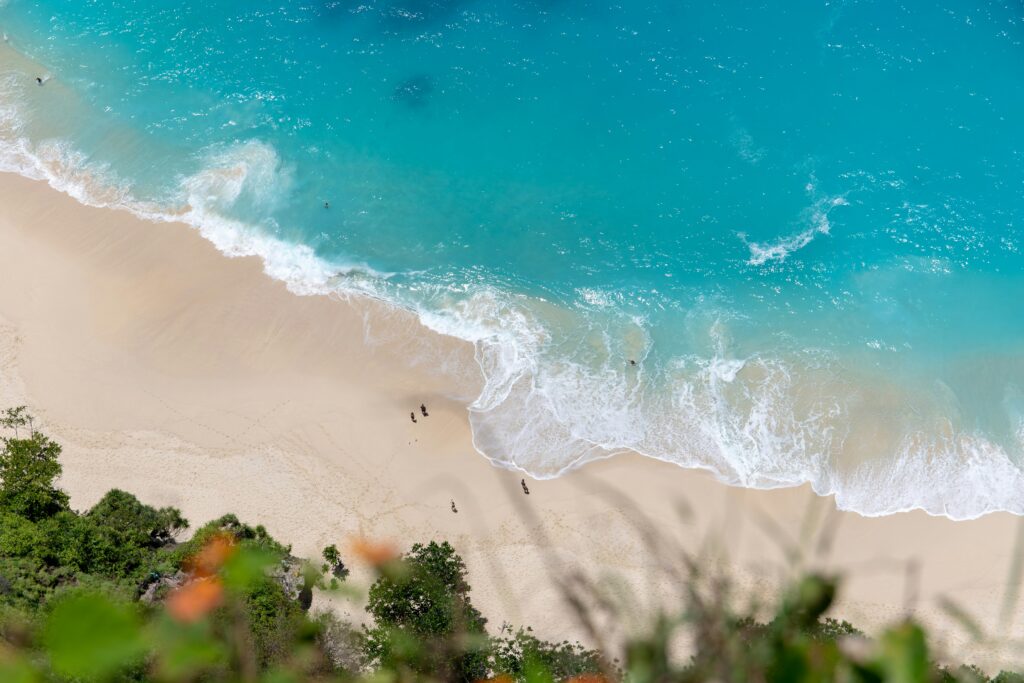
Seminyak and Canggu are where most first-time visitors to Bali begin, and for good reason. Both neighborhoods have excellent accommodation at every price point, the best restaurant and cafe scenes on the island, and direct access to the long beaches of the south coast where the surf is consistent and the sunsets are extraordinary. Our full guide to the best beaches in Bali ranks all of the south coast options.
Seminyak is slightly more polished and upmarket. Canggu is more relaxed, more creative, and has developed into a significant digital nomad hub with co-working spaces, specialty coffee, and a strong community of long-term travelers. Both are well connected to the rest of the island and make excellent bases for day trips.
Ubud is the cultural center of Bali, set in the hills of the island’s interior surrounded by rice terraces, jungle, and a network of temples that predate the tourist infrastructure by centuries. The town has more excellent restaurants per square kilometer than almost anywhere in Southeast Asia, an extraordinary density of wellness and yoga facilities, and easy access to some of Bali’s most spectacular natural sites.
Spending at least two to three nights in Ubud is essential for any first Bali visit. The pace is slower than the south, the air is cooler, and the combination of cultural depth and natural beauty is something the beach towns simply cannot replicate.
The Bukit Peninsula at Bali’s southern tip is a limestone plateau with dramatic cliff edges dropping to some of the island’s most spectacular beaches. Uluwatu is home to the famous clifftop temple, world-class surf breaks including Padang Padang and Uluwatu reef, and a concentration of cliff-edge bars and restaurants where sunset is a genuinely competitive spectacle.
The Bukit has a different atmosphere from the rest of Bali, more wind-swept and dramatic, with a visitor mix that skews toward surfers, honeymooners in cliff villas, and travelers who have already done the Seminyak experience and want something with more character. A scooter or car, easy to book ahead through GetRentacar.com, makes hopping between the Bukit’s beaches far easier than relying on taxis.
Sidemen Valley in east Bali is one of the most beautiful landscapes on the island: working rice terraces in the shadow of Mount Agung, Balinese village life largely unchanged by tourism, and homestays that offer genuine immersion in the local culture. Most first-time visitors skip this region entirely and most of those who do visit describe it as the best part of their trip.
Amed on the northeast coast is Bali’s diving and snorkeling hub, with black volcanic sand beaches, exceptional coral gardens, and the USS Liberty wreck at Tulamben just up the coast. The pace in Amed is slower and more local than the south and the accommodation is excellent value.
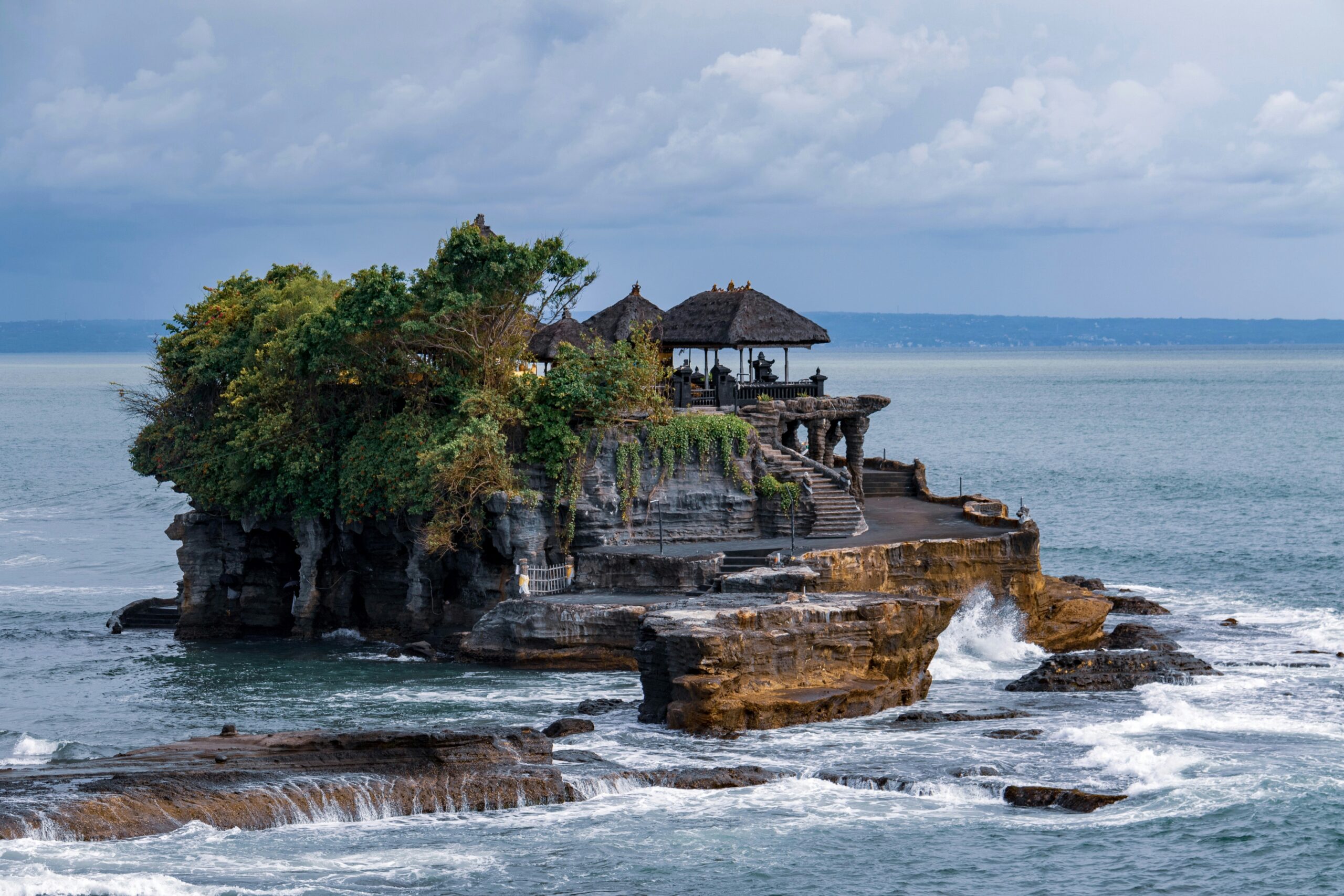
Tanah Lot is one of Bali’s most sacred sea temples, built on a rock formation surrounded by the Indian Ocean. It is most beautiful at sunset when the temple silhouette darkens against the sky.
The Tegallalang Rice Terraces near Ubud are the most photographed landscape in Bali. The subak irrigation system that creates these terraced fields is a UNESCO-listed cultural heritage and has been operating in essentially the same form for over a thousand years. Arrive before 8am to experience the terraces without the midday crowds and in the best light for photography.
Tanah Lot sits on a rock formation surrounded by the sea and is one of Bali’s most sacred temples. The sunset view of the temple silhouette against the western sky is one of the island’s iconic images. Arrive 90 minutes before sunset to explore the surrounding cliffs and tidal pools before the light transforms.
Uluwatu Temple on the clifftop above the surf break is equally dramatic. The Kecak fire dance performance held at the temple every evening at sunset is a genuinely extraordinary spectacle combining traditional Balinese dance, fire, and the ocean backdrop. Book tickets in advance, easiest through Klook.
The pre-dawn climb up Mount Batur is one of Bali’s essential experiences. The 1,717-meter volcano takes approximately two hours to climb in darkness and the summit reveals at sunrise above the clouds with views across the caldera lake and, on clear mornings, as far as Mount Agung and Mount Rinjani on Lombok. Hire a local guide the evening before through your accommodation, or in advance through Klook. The climb begins at 4am.
Bali is one of the world’s premier surf destinations, with breaks suitable for every level from beginners to experts. Kuta Beach is the traditional starting point for beginner surfers with a long, forgiving wave and dozens of surf schools. Canggu’s Echo Beach and Batu Bolong are excellent for intermediate surfers. Uluwatu and Padang Padang are world-class breaks that attract advanced surfers from around the globe.
The surf season peaks from April to October when the southwest swell is most consistent. Even outside peak season, the waves are reliably good across multiple breaks simultaneously.
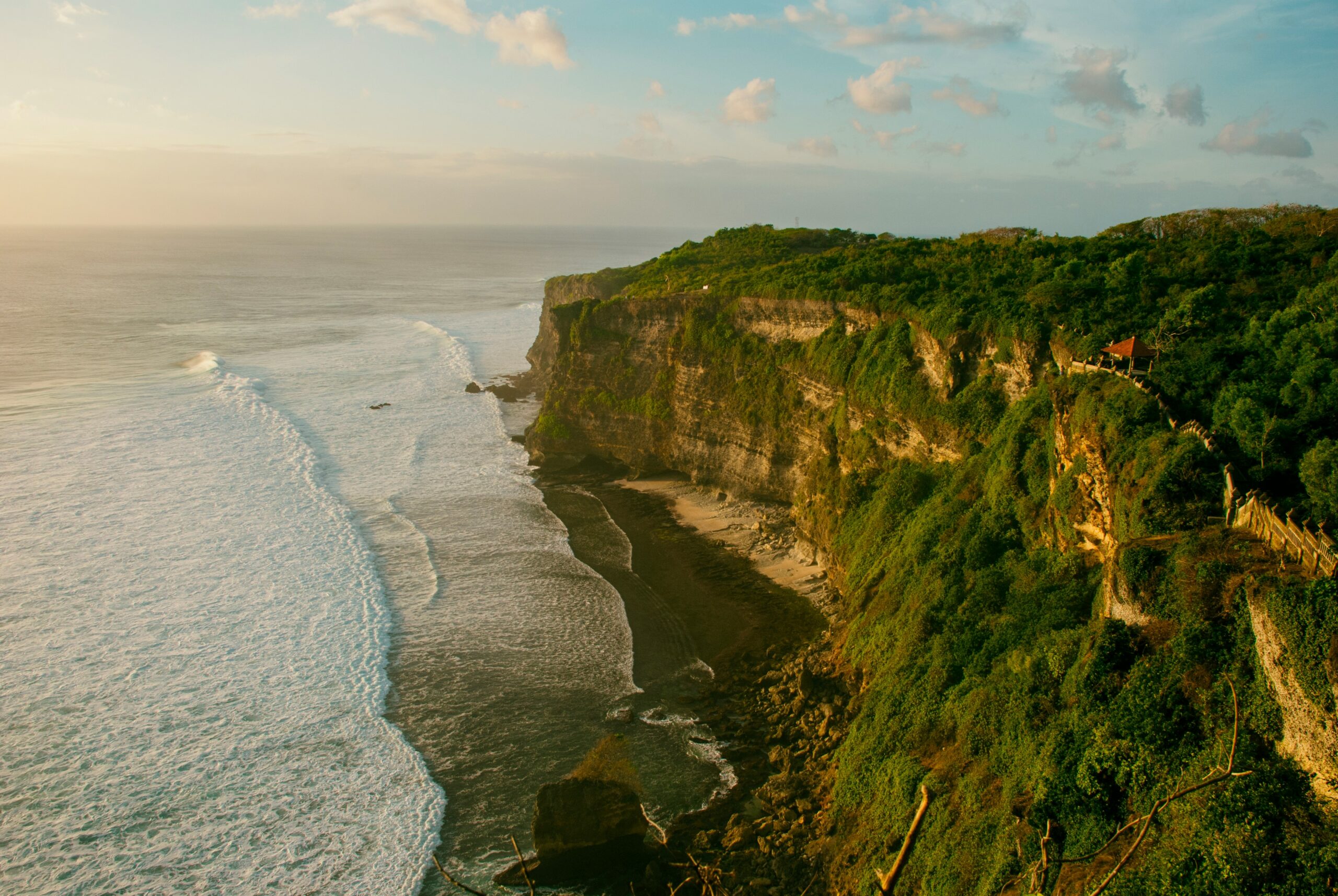
The cliffs of Uluwatu on the Bukit Peninsula drop directly into the Indian Ocean. The world-class surf break runs along the base of these limestone walls.
- Nasi goreng: Indonesian fried rice with egg, vegetables, and choice of protein. The national dish and available everywhere from street carts to fine dining
- Babi guling: Balinese suckling pig slow-roasted with spices. One of the great dishes of Southeast Asian cuisine. Ibu Oka in Ubud is the most famous source
- Satay (sate): skewered and grilled meat with peanut sauce, served from street carts throughout the island
- Lawar: a traditional Balinese dish of finely chopped meat, vegetables, and grated coconut mixed with spices. Usually available only at local warungs
- Jamu: traditional Balinese herbal medicine drink made from turmeric, ginger, and tamarind. Sold by women carrying baskets through hotel areas in the morning
| Period | Season | Weather | Crowds |
|---|---|---|---|
| April to October | Dry season | Sunny, low humidity | High (July to August peak) |
| April to June | Shoulder dry | Ideal conditions | Moderate |
| September to October | Late dry | Warm and clear | Moderate |
| November to March | Wet season | Rain, green landscape | Low |
April to October is the dry season and the best time to visit Bali for beaches, outdoor activities, and reliable sunshine. April, May, September, and October offer the best balance of good weather, manageable crowds, and reasonable prices. July and August are peak season with maximum prices and visitor numbers. Our full best time to visit Bali guide breaks down every month.
The wet season from November to March brings afternoon rain but the island is green, lush, and significantly cheaper. Rice terraces are at their most photogenic. Waterfalls run at full power. The rain usually falls in concentrated bursts rather than all day, leaving mornings clear for most activities.
- Rent a scooter: for travelers comfortable riding one, a scooter gives the most freedom to explore independently at around $5 to $7 per day
- Use GoJek or Grab: ride-hailing apps work throughout Bali and give fixed prices without negotiation
- Dress modestly at temples: a sarong and sash are required for temple entry. Most temples provide these to borrow for a small fee
- Carry cash: many local warungs, markets, and small businesses are cash only. ATMs are widely available but some charge high fees
- Respect temple ceremonies: if you encounter a procession or ceremony in progress, give space and move quietly. Temple ceremonies happen in virtually every village every week
- Book popular experiences in advance: Mount Batur guides, Uluwatu Kecak dance tickets, and the best restaurants in Ubud fill up days ahead in peak season
Bali rewards travelers who come without fixed expectations. The island has been written about so extensively that most visitors arrive with a mental picture already formed. The reality is both different and better. The rice terraces are more beautiful in person. The temple ceremonies are more moving. The food is more surprising. The silence of the valley at dawn is something photographs cannot convey.
This Bali travel guide gives you the foundations to plan a trip that goes beyond the obvious. Start early, move slowly, and give yourself enough time. Bali never quite runs out of things to show you.
Ready to Plan Your Bali Trip?
Discover more Bali guides, hidden beaches, and travel tips across Southeast Asia on Tripfavor.
Explore Tripfavor →