
Bangkok Travel Guide: Everything You Need to Know
Bangkok is one of the great cities of Southeast Asia and one of the most visited cities on earth. It is loud, chaotic, brilliantly alive, and genuinely impossible to be bored in. Ancient temples sit beside glass skyscrapers. Floating markets operate a few kilometers from Michelin-starred restaurants. The street food is among the finest in the world and available on every corner at any hour of the day or night.
This Bangkok travel guide covers everything first-time visitors need to know: the essential temples and landmarks, the best neighborhoods to explore, where to eat, how to get around, the best time to visit, and the practical details that make navigating one of Asia’s most complex cities feel straightforward rather than overwhelming.
Bangkok rewards travelers who engage with its contradictions. The city is simultaneously one of the most modern urban environments in Asia and home to a temple culture that has been continuous for over 700 years. The energy is extraordinary and relentless, but the city also contains quiet canal neighborhoods, rooftop gardens, and courtyard cafes where the noise of the streets disappears completely.
According to the Tourism Authority of Thailand, Bangkok consistently ranks among the world’s most visited cities, attracting over 22 million international visitors in peak years. The city’s infrastructure for tourism is excellent, the cost of living is very low by international standards, and the combination of culture, food, and nightlife creates an experience that is genuinely difficult to replicate anywhere else.
The Grand Palace is the most important historical site in Bangkok and the centerpiece of any first visit to the city. The complex was built in 1782 as the royal residence and seat of government and covers 218,000 square meters of gilded spires, ornate pavilions, and manicured courtyards on the banks of the Chao Phraya river.
Within the palace grounds, Wat Phra Kaew (the Temple of the Emerald Buddha) houses the most sacred Buddhist image in Thailand, a 66-centimeter statue carved from a single piece of jade that has been housed here since 1784. The murals lining the temple’s outer gallery depict the entire Ramakien epic in 178 panels and are among the finest examples of Thai decorative art in existence.
- Opening hours: daily 8:30am to 3:30pm
- Entry: 500 THB (approximately $14)
- Dress code: shoulders and knees covered. Sarong rental available at the entrance
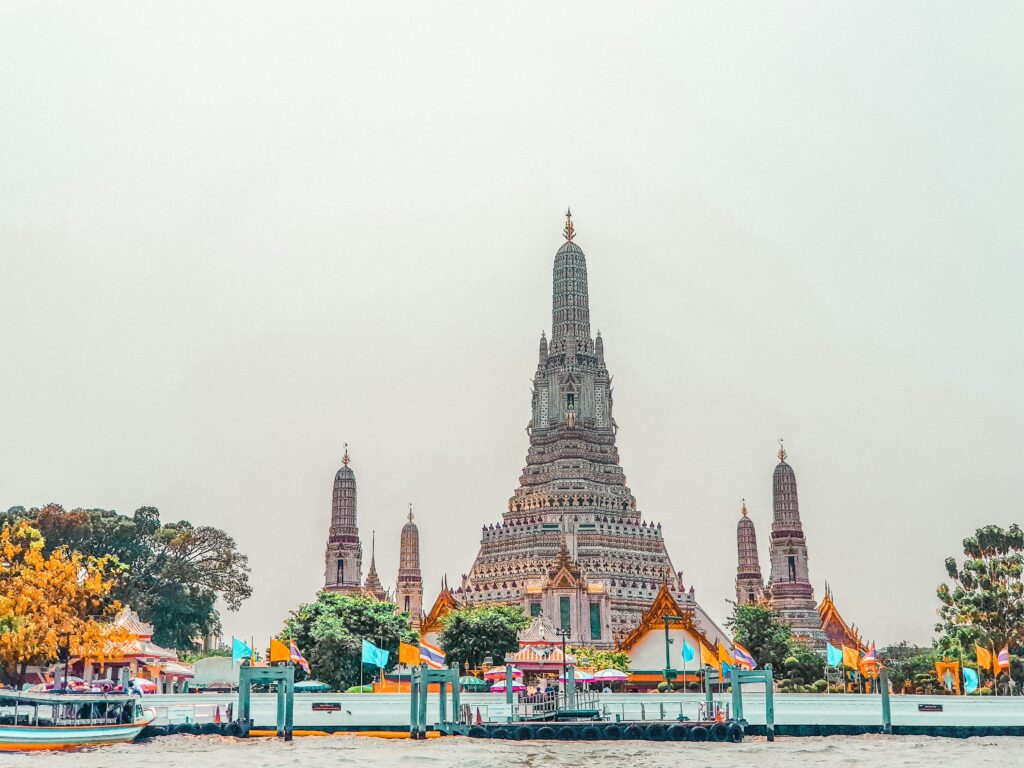
Wat Arun, the Temple of Dawn, stands on the west bank of the Chao Phraya directly opposite the Grand Palace and is one of Bangkok’s most recognizable images. The central prang (spire) rises 67 meters and is covered entirely in fragments of Chinese porcelain that catch the light differently at every hour of the day. The best view of Wat Arun is from the opposite bank at sunset, when the temple turns gold in the evening light.
The Chao Phraya river is the most efficient and atmospheric way to travel between the riverside attractions. The orange flag express boats run the length of the river for 15 THB per trip and connect the Grand Palace, Wat Arun, Chinatown, and the modern riverfront areas in a journey that reveals Bangkok’s relationship with its waterways in a way that no road journey can.
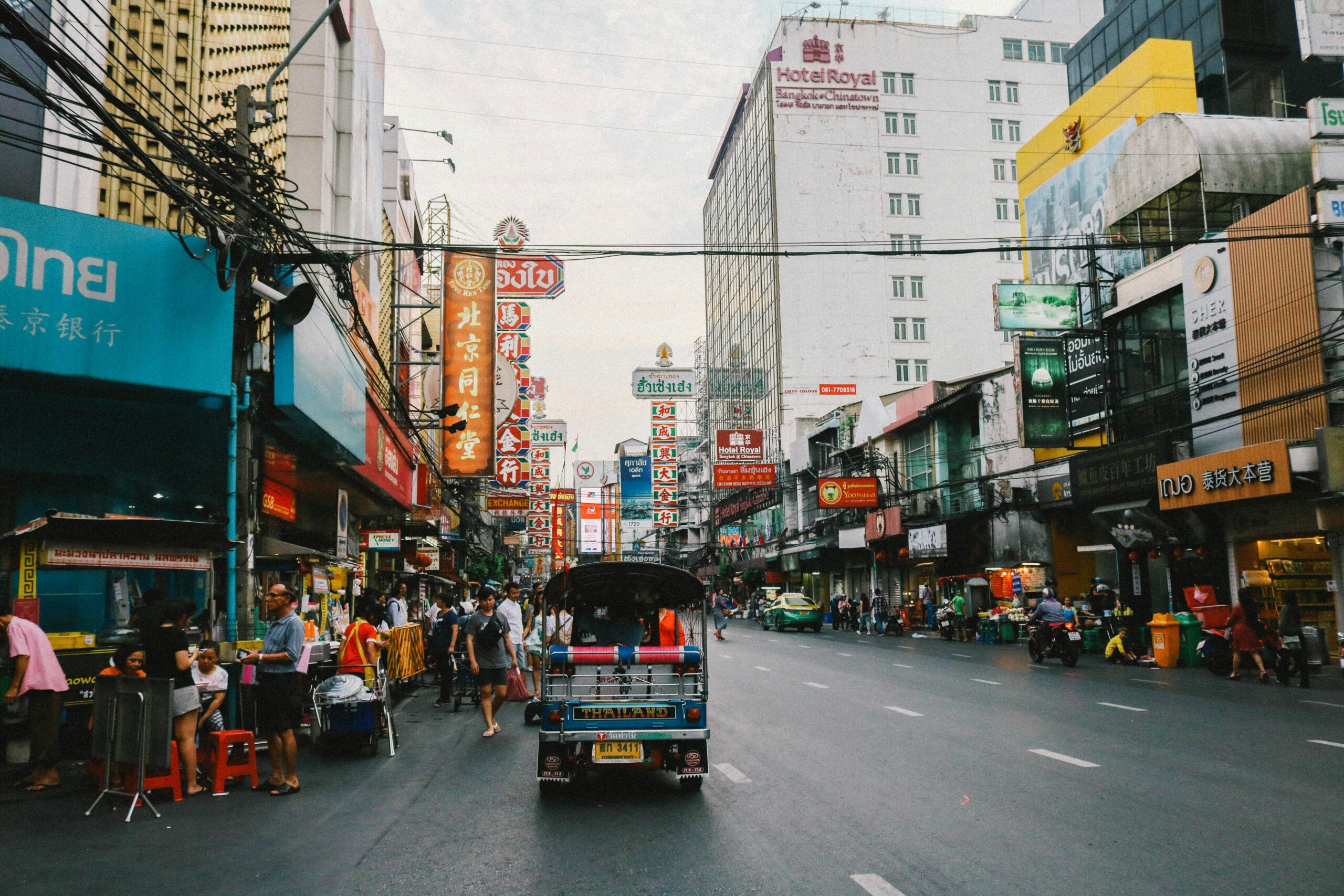
Wat Arun viewed from the Chao Phraya river. The express boats that run the length of the river are the most atmospheric way to travel between Bangkok’s riverside landmarks.
Yaowarat, Bangkok’s Chinatown, is one of the oldest and most atmospheric neighborhoods in the city. The main street of Yaowarat Road runs through a dense grid of gold shops, medicinal herb suppliers, restaurants, and street food vendors that has operated continuously since the Chinese community settled here in the late 18th century.
Chinatown comes fully alive after dark. The street food scene on Yaowarat Road in the evening is extraordinary: dim sum, roast duck, fresh seafood, mango sticky rice, and dozens of regional Chinese dishes served from carts and small shophouses to a crowd that is almost entirely local. A tuk-tuk through Chinatown in the evening is one of the most vivid urban travel experiences in Southeast Asia.
Chatuchak Weekend Market is the largest market in Thailand and one of the largest in the world, with over 15,000 stalls covering 35 acres in northern Bangkok. It opens on weekends only and sells everything from vintage clothing and handmade crafts to live plants, antiques, street food, and artworks. Navigating Chatuchak without getting lost is essentially impossible and entirely beside the point.
Arrive early (before 10am) to avoid the worst of the heat and crowds. The market has several excellent coffee shops and cold drink vendors positioned throughout for essential breaks. Bring cash, comfortable shoes, and more patience than you think you need.
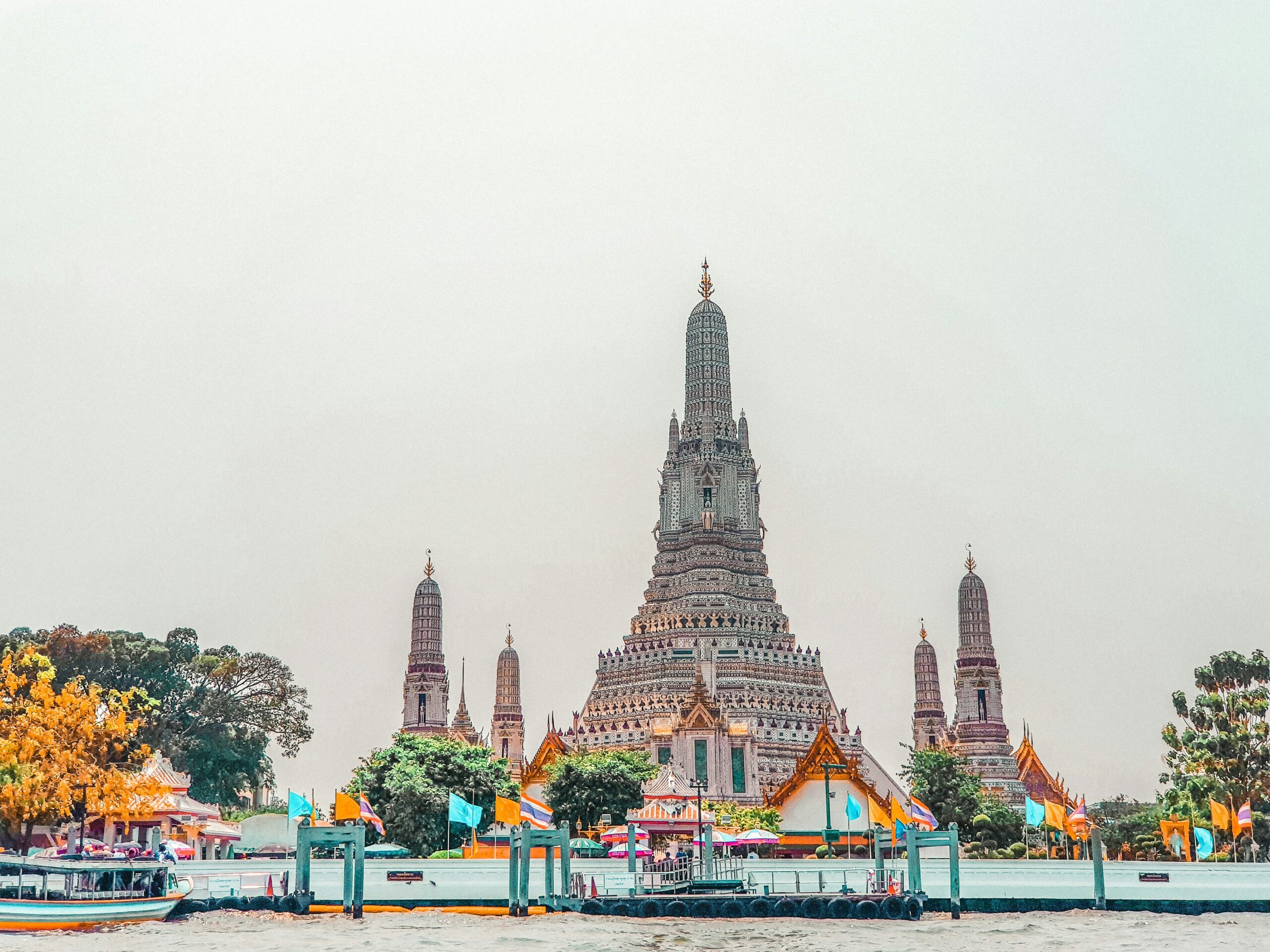
Bangkok’s Chinatown after dark. The tuk-tuks, neon signs, and street food vendors of Yaowarat Road create one of the most vivid urban atmospheres in Southeast Asia.
The old royal island of Rattanakosin contains the Grand Palace, Wat Arun, Wat Pho, and the National Museum within walking distance of each other. It is the historical and cultural heart of Bangkok and the obvious starting point for first-time visitors. The area is best explored in the morning before the heat and crowds build. The streets immediately surrounding the palace contain excellent local restaurants and small guesthouses.
Sukhumvit is Bangkok’s most international neighborhood, running east from the city center along a long boulevard lined with hotels, shopping malls, restaurants, and bars. The BTS Skytrain runs the length of Sukhumvit and makes it the most convenient area for first-time visitors who want easy transport access. The side streets (sois) off the main road contain excellent local restaurants and some of the city’s best rooftop bars.
Silom is Bangkok’s financial district by day and a lively dining and entertainment area by night. Patpong Night Market runs through the middle of the district and is one of Bangkok’s most visited night markets despite its complicated reputation. The area around Silom also contains excellent Thai and international restaurants and is well connected by both BTS and MRT.
The Bang Rak area along the Chao Phraya riverfront has undergone significant development in recent years and now contains some of Bangkok’s best boutique hotels, riverside restaurants, and the ICONSIAM shopping complex. The evening atmosphere along the riverside promenade is excellent and the views of Wat Arun across the water are among the best in the city.
Bangkok’s street food is among the finest in the world and represents one of the primary reasons travelers choose the city. The range is extraordinary, the quality is consistently high, and the prices are almost absurdly low by international standards.
- Pad Thai: stir-fried rice noodles with egg, tofu or prawns, bean sprouts, and ground peanuts. The national dish and available on almost every street corner
- Tom Yum Goong: spicy prawn soup with lemongrass, galangal, kaffir lime leaves, and chili. One of the defining flavors of Thai cuisine
- Som Tam: green papaya salad pounded in a mortar with fish sauce, lime, chili, and tomatoes. Intensely flavored and addictive
- Khao Man Gai: poached chicken served over rice cooked in the chicken stock with a rich dipping sauce. The Bangkok comfort food of choice
- Mango sticky rice: fresh mango with glutinous rice and coconut cream. Best in mango season from April to June
- Boat noodles: small bowls of intensely flavored noodle soup traditionally served from canal boats. Available at markets throughout the city
Bangkok has multiple overlapping transport systems, each with different strengths. Understanding which to use in which situation removes most of the frustration from navigating the city.
- BTS Skytrain: elevated rail covering Sukhumvit, Silom, and connecting to the airport via the Airport Rail Link. Fast, air-conditioned, and inexpensive
- MRT: underground metro covering different routes from the BTS, useful for Chinatown, Chatuchak, and Rattanakosin connections
- Chao Phraya Express Boat: river ferry connecting all riverside attractions for 15 THB per trip
- Grab: ride-hailing app that works throughout Bangkok with fixed prices before you book
- Tuk-tuk: iconic but primarily for short distances. Always agree on the price before boarding and be aware that drivers sometimes take detours to commission-paying shops
- Taxi: metered taxis are plentiful and cheap but can be slow in Bangkok traffic. Always insist on the meter
| Period | Season | Temperature | Notes |
|---|---|---|---|
| November to February | Cool season | 25 to 32 degrees C | Best weather, peak tourist season |
| March to May | Hot season | 32 to 40 degrees C | Very hot, Songkran festival in April |
| June to October | Wet season | 28 to 34 degrees C | Rain, lower prices, still very liveable |
November to February is the best time to visit Bangkok. Temperatures are warm but manageable, humidity is lower, and the city is at its most comfortable for outdoor exploration. December and January are peak tourist months with the highest prices and most visitors.
The Songkran water festival in mid-April is one of Thailand’s most extraordinary cultural celebrations and worth planning around specifically. The entire country celebrates Thai New Year by throwing water at everyone in sight for three days. Bangkok’s Songkran is the largest and most exuberant in the country.
- Get a Thai SIM card at the airport: essential for maps, Grab, and translation throughout your visit
- Dress modestly for temples: shoulders and knees covered. Many temples provide sarongs to borrow but bringing your own is more convenient
- Carry small change: exact change is useful for express boats, street food, and markets
- Never speak negatively about the Thai royal family: lese-majeste laws in Thailand are strictly enforced and apply to visitors
- Stay hydrated: Bangkok’s heat and humidity are relentless. Drink more water than you think you need throughout the day
- Book popular restaurants in advance: Bangkok’s best restaurants fill quickly, particularly for dinner service
Bangkok is a city that operates at a frequency most visitors have never encountered before. The density, the heat, the smell, the noise, the beauty of the temples, the extraordinary food at every turn. It demands engagement rather than passive observation and it rewards travelers who give it their full attention.
This Bangkok travel guide gives you the foundations. The rest is Bangkok’s to deliver, and it has been doing that for a very long time.
Ready to Plan Your Bangkok Trip?
Discover more Asia guides, destination tips, and travel itineraries on Tripfavor.
Explore Tripfavor →