
Santorini Travel Guide: Everything You Need to Know
Santorini is one of the most dramatic landscapes in Europe. The island was formed by a volcanic eruption so powerful that it created a caldera visible from space, and the clifftop villages of Oia and Fira now cling to the edge of that caldera above a flooded volcanic bay that turns every shade of blue and purple depending on the light. The photographs you have seen do not exaggerate.
This Santorini travel guide covers everything first-time visitors need to know: the best villages to explore, where to stay, the beaches worth visiting, the wine culture, the best time to go, and the practical details that make the difference between a rushed tourist experience and a genuinely extraordinary few days on one of the most beautiful islands in the world.
Most Greek islands are beautiful. Santorini is geological. The caldera was created around 3,600 years ago by one of the largest volcanic eruptions in recorded history, an event that may have contributed to the decline of the Minoan civilization on Crete. The crescent of remaining land forms the island as it exists today, with cliffs dropping 300 meters directly into the sea and the submerged volcanic cone still active beneath the water.
According to the official Greek tourism website, Santorini receives over two million visitors annually, making it one of the most visited destinations in Greece. Despite those numbers, the island retains a beauty and atmosphere that justifies every photograph ever taken of it.
Oia at the northern tip of the island is the most photographed village in Santorini and one of the most photographed places in Europe. The white-washed houses with their blue domes cascade down the caldera cliff face, the narrow alleyways are lined with art galleries and restaurants, and the sunset view from the castle ruins above the village draws hundreds of people every evening to watch the sun drop into the Aegean.
Oia is worth arriving in before the morning tour buses reach it and after they leave in the late afternoon. The village at 7am and again after 7pm is a completely different experience from the crowded midday version. If you are staying in Santorini, Oia is the village to base yourself in for the full caldera experience.
Fira is the capital of Santorini and the most practical base for exploring the island. It has the widest range of accommodation at every price point, the best transport connections, the most shops and restaurants, and its own extraordinary caldera views from the main clifftop promenade. The cable car connecting Fira to the old port below is a Santorini experience in itself.
Fira is louder and busier than Oia but also more alive after dark. The nightlife along the main streets is concentrated here, and the atmosphere in the early evening as the cruise ship passengers return to port and the island settles into its own rhythm is genuinely enjoyable.
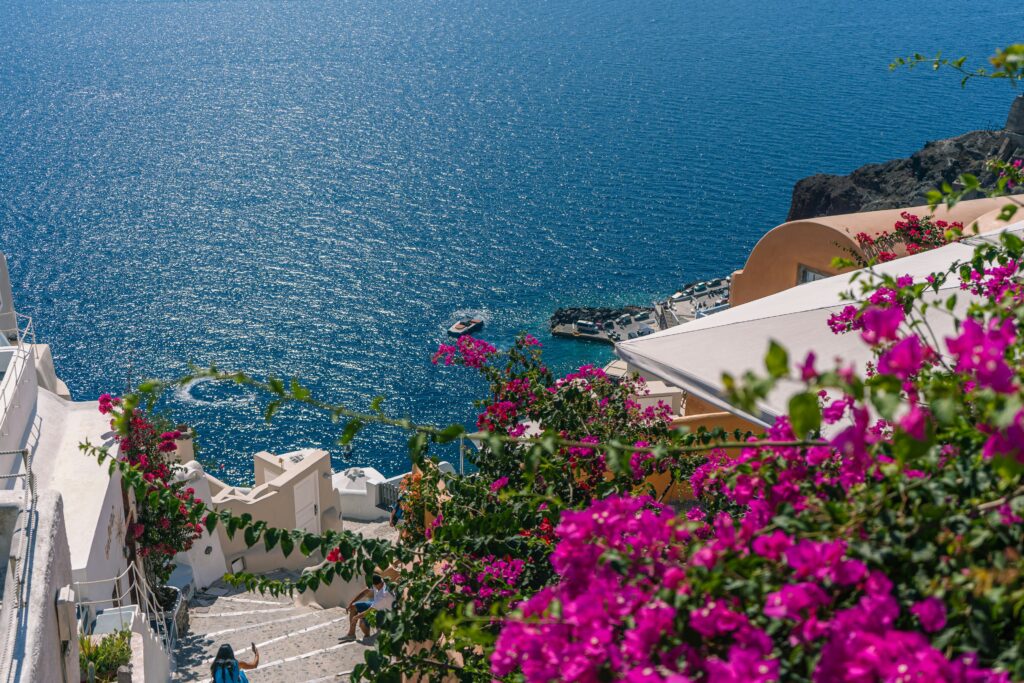
Oia village on the northern tip of Santorini’s caldera. The white-washed houses and blue-domed churches cascade down 300-meter cliffs above the flooded volcanic bay.
Imerovigli sits between Oia and Fira on the highest point of the caldera rim and offers arguably the best caldera views of any village on the island, without the crowds that concentrate in the more famous names. The Skaros Rock, a volcanic promontory extending from the cliff face, is an exceptional short hike with views in every direction. Most of the accommodation here is cave suites and boutique hotels carved into the caldera face.
Pyrgos is the oldest surviving village on the island, built inland on a hill around a Venetian castle. It sees a fraction of the visitors that the caldera villages receive and retains a genuinely local atmosphere. The views from the castle ruins extend across the entire island and are particularly spectacular at sunset when you have them largely to yourself.
Santorini’s beaches are unusual. The volcanic geology means the sand is black, red, or dark grey rather than the white sand of most Aegean islands. The beaches are not Santorini’s strongest suit compared to its caldera scenery and wine, but they are distinctive and worth visiting.
- Perissa and Perivolos: the longest black sand beaches on the east coast, with the best development of beach bars, water sports, and restaurants. Most accessible from Fira by bus
- Kamari: the most organized beach on the island, with a paved promenade, open-air cinema, and calm swimming conditions. Popular with families
- Red Beach: extraordinary red volcanic cliffs meeting dark sand in a dramatically colored cove near Akrotiri. Accessible only by boat or a short cliff walk. Very photogenic
- White Beach: accessible only by boat from Akrotiri or Red Beach, with striking white pumice cliffs. Small and beautiful
- Vlychada: a quieter black sand beach on the southern coast with dramatic white pumice formations along the cliff face. Worth the effort to reach
Santorini’s volcanic soil produces wines that compete with the finest in the world. The indigenous Assyrtiko grape thrives in the island’s conditions and produces dry whites with a mineral intensity and citrus acidity that is unique to this terroir. The vines are trained into a circular basket shape called a kouloura to protect them from the wind, a technique used nowhere else in the world.
- Santo Wines: the largest cooperative winery on the island with a spectacular caldera-view tasting terrace above Pyrgos. The sunset tasting here is one of Santorini’s great experiences
- Estate Argyros: one of Santorini’s oldest family-owned estates near Episkopi Gonia, producing some of the finest Assyrtiko on the island. Book a tasting in advance
- Domaine Sigalas: a boutique winery near Oia known for exceptional Assyrtiko and Aidani wines. Small tours with personal attention from knowledgeable staff
- Venetsanos Winery: housed in a historic 1947 winery built into the caldera cliff, with extraordinary views over the bay and a range of tasting options

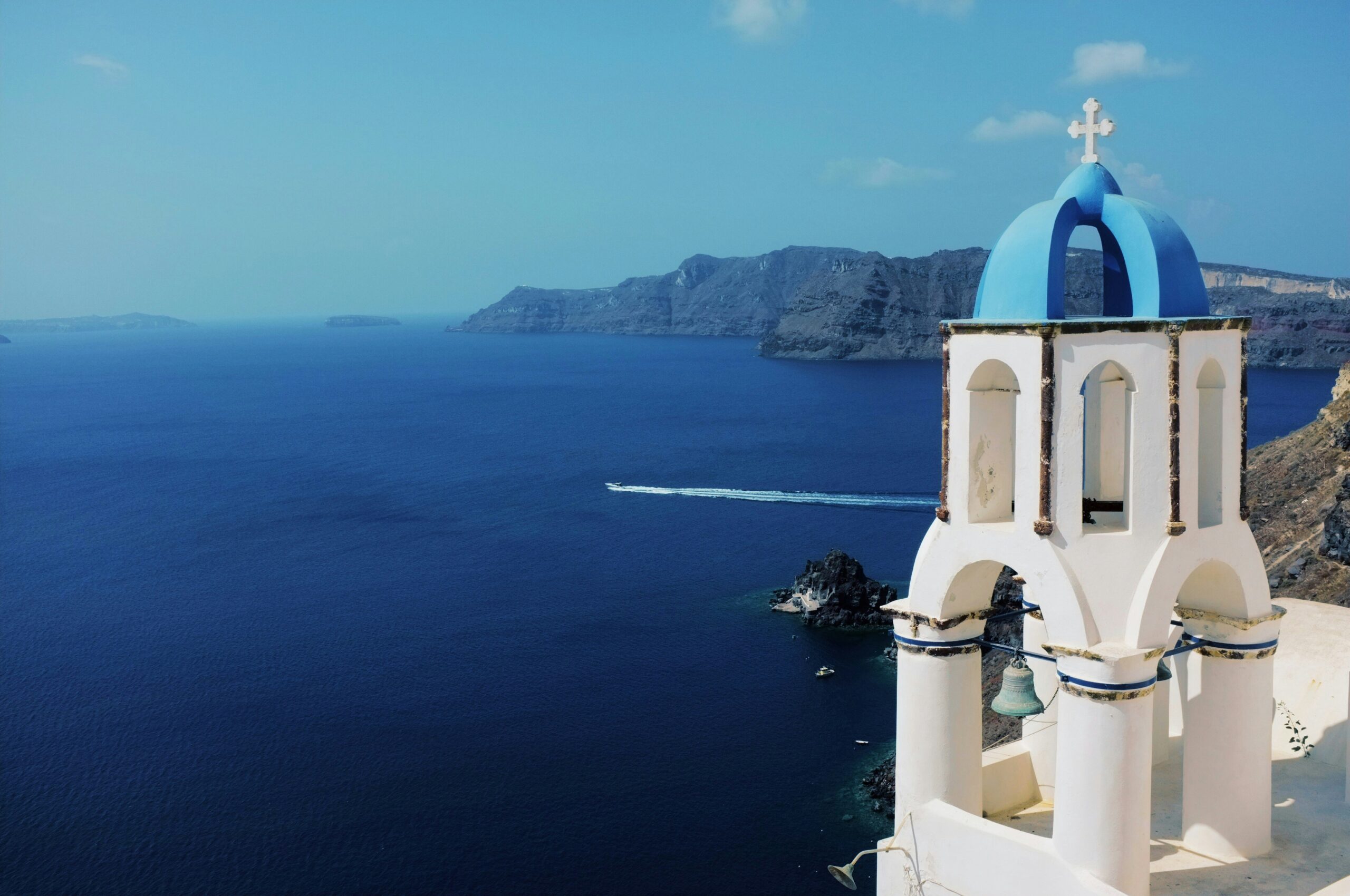
A blue-domed church bell tower in Oia with the caldera and volcanic cliffs behind. The combination of whitewashed architecture and deep blue water is Santorini’s defining visual.
- Fava: a puree of yellow split peas native to Santorini, served with olive oil, lemon, and raw onion. Santorini fava has Protected Designation of Origin status and is distinct from any other version
- Tomatokeftedes: tomato fritters made from Santorini’s distinctive small, intensely flavored tomatoes, shaped into balls and fried. Available in virtually every restaurant on the island
- Chlorotyri: a fresh sheep’s milk cheese with a creamy texture and mild flavor, served with honey or as part of a meze plate
- Grilled octopus: dried and grilled over charcoal until tender and slightly charred, served with lemon and olive oil. A Greek island standard done particularly well at the tavernas in Oia and Ammoudi port below
- Fresh seafood: the fish tavernas at Ammoudi port at the base of the Oia cliffs serve exceptional fresh fish and seafood at prices significantly lower than the clifftop restaurants above
| Period | Weather | Crowds | Prices |
|---|---|---|---|
| April to May | Warm, clear | Moderate | Mid-range |
| June to August | Hot, dry | Very high | Peak |
| September to October | Warm, clear | Moderate | Mid-range |
| November to March | Cool, some rain | Very low | Low |
Late May, June, and September are the best times to visit Santorini. The weather is excellent, the sea is warm enough for swimming, the caldera views are unobstructed by haze, and the crowds are significantly more manageable than in July and August. Hotel prices are also lower in these shoulder months.
July and August are the peak of peak season on Santorini. The island is extraordinarily crowded, the famous Oia sunset viewpoint fills to capacity, and the narrow alleyways of both villages become genuinely difficult to navigate during the day. Hotels sell out months in advance and prices are at their highest. If you visit in these months, manage expectations around solitude and book everything early.
The most coveted accommodation in Santorini is the cave suite carved into the caldera cliff face. These properties, concentrated in Oia, Imerovigli, and Fira, typically feature private terraces with infinity pool or hot tub overlooking the caldera, whitewashed interiors with curved volcanic stone walls, and a level of privacy that regular hotel rooms cannot match.
- For the full caldera experience: Oia or Imerovigli cave suites. Book 6 to 9 months in advance for peak dates
- For best value: Fira has the widest range of accommodation at lower prices with still-excellent caldera views
- For beach access: Perissa and Kamari have accommodation directly on the black sand beaches at significantly lower prices than the caldera villages
- For a quieter experience: Pyrgos and Megalochori are inland villages with boutique hotels and far fewer tourists than the caldera rim
- ATV or scooter: the most popular way to explore the island independently. Rental is available throughout Fira and Kamari for around 25 to 40 euros per day
- Bus: the island has a reliable bus network connecting Fira to Oia, Perissa, Kamari, and Akrotiri. Inexpensive and reliable for the main routes
- Taxi: limited in number and expensive. Book in advance for airport transfers
- Cable car: connects Fira to the old port below. Runs frequently and gives a spectacular view of the caldera on the way down
Santorini delivers on its reputation. The caldera view at sunset from a clifftop terrace in Oia, a glass of Assyrtiko in hand, the island turning gold and then rose and then deep blue as the light fades. It is one of those experiences that justifies the entire journey without apology.
This Santorini travel guide gives you everything you need to plan a visit that goes beyond the obvious. Stay longer than you think you need to. Explore the quieter villages. Drink the wine. Walk to Ammoudi port at dawn before anyone else is moving. Santorini rewards those who give it time.
Ready to Plan Your Santorini Trip?
Discover more Greece guides, island comparisons, and Mediterranean travel tips on Tripfavor.
Explore Tripfavor →