
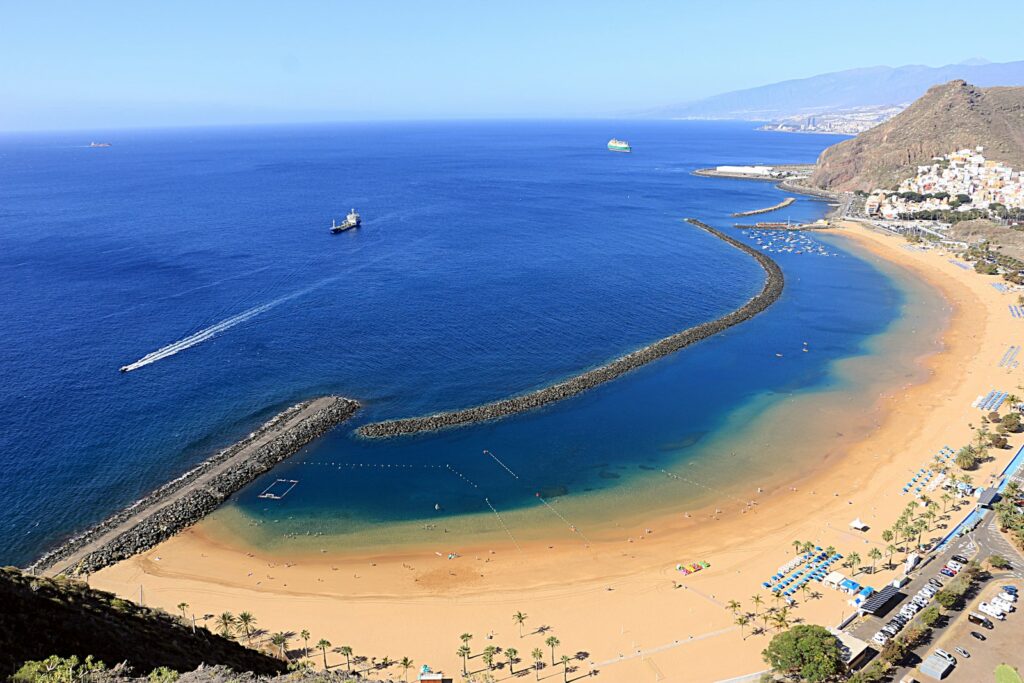
The Canary Islands are Spain’s answer to winter sun: an Atlantic archipelago with mild weather in December through February and short flights from much of Europe. But the seven main islands are very different, so the right choice depends on whether you want beaches, volcanoes, wind sports or hiking.
Quick Answer
- Warmest and most varied: Tenerife, especially the south
- Best for beaches and dunes: Gran Canaria
- Best for volcano landscapes: Lanzarote
- Best for wind and long beaches: Fuerteventura
- Typical winter feel: Coastal averages around 18 °C (64 °F) in January and February, per one weather guide
What Are the Canary Islands?
The Canary Islands are a Spanish archipelago in the Atlantic. According to Wikipedia, there are seven main islands, listed by area as Tenerife, Fuerteventura, Gran Canaria, Lanzarote, La Palma, La Gomera and El Hierro, plus the smaller inhabited La Graciosa. The islands have been an outermost region of the European Union since 1992, and about 43% of residents live on Tenerife and 39% on Gran Canaria. Their highest point is Mount Teide, at 3,715 m (12,188 ft), the highest peak in Spain.

Jagged green ridges meeting the Atlantic on Tenerife
Why Are the Canary Islands Popular for Winter 2026-27?
REWE Group, the parent of German tour operator DERTOUR, said in August 2026 that winter bookings had picked up again, with most coming in for Thailand and Egypt, followed by the Indian Ocean and the Canary Islands. UK agency group Advantage reported earlier that winter sun was among the growing categories for winter 2026-27. The appeal is simple: a relatively short flight from Europe, no long-haul jet lag and mild temperatures when much of the continent is cold.
Which Canary Island Is Best for Winter Sun?
This comparison pulls together facts from Wikipedia and 2026 weather guides. Weather figures vary between sources, so treat them as approximate.
| Island | Best for | Signature sight | Winter notes |
|---|---|---|---|
| Tenerife | Variety, hiking, warmest south coast | Teide National Park, a UNESCO World Heritage Site since 2007 | One guide lists January highs of roughly 22 °C; the Teide summit can see snow |
| Gran Canaria | Beaches, dunes, easy resort stays | Maspalomas Dunes, a 404-hectare nature reserve since 1987 | Similar to Tenerife; the south coast is the area to target |
| Lanzarote | Volcanic scenery and sightseeing | Timanfaya National Park, shaped by eruptions from 1730 to 1736 | Windier; January highs up to about 21 °C |
| Fuerteventura | Beach-focused stays, kite and windsurfing | Long sandy beaches | Described as the driest island, with over 300 sunny days a year |
How Warm Is It in the Canary Islands in Winter?
One 2026 weather guide says Tenerife and Gran Canaria are the warmest islands in December, January and February, with coastal daily averages around 18 °C (64 °F) in January and February. A German travel source puts January lows on Tenerife at about 14 to 16.5 °C and highs near 22 to 23 °C, and notes it can snow on the island’s highest peaks. Water temperatures in January are around 19 °C, which suits a quick swim more than a long soak. Lanzarote and Fuerteventura are usually windier.
Higher elevations are noticeably colder than the coast, so pack a light jacket even for a beach trip.

A volcanic peak rising above the clouds, the kind of view that makes Tenerife’s high country memorable
What Is There to Do in Teide National Park?
Teide National Park covers about 189.9 km² and became a UNESCO World Heritage Site on June 28, 2007. Wikipedia calls it the most-visited national park in Spain and reports 4,463,281 visitors in 2023. Access to the peak itself requires a free permit that must be booked in advance, so reserve before you travel if the summit is on your list. Bring layers: temperatures at altitude can be far lower than on the coast.
How Do You See Timanfaya on Lanzarote?
Timanfaya National Park covers 51.07 km² of volcanic terrain in southwestern Lanzarote. Its largest recorded eruptions ran from September 1, 1730, to April 16, 1736. Visitors tour the landscape by coach on a road otherwise closed to the public, starting from a public car park. A common demonstration pours water into a cavity so it erupts as steam, with core temperatures at about 13 m depth reaching 100 to 600 °C. Only two footpaths exist, and both require prior authorization and a guide.
How Do You Plan a Canary Islands Winter Trip Step by Step?
- Choose your priority. Pick Tenerife for variety, Gran Canaria for beaches, Lanzarote for volcano scenery or Fuerteventura for wind and long beaches.
- Stay on the south coast of Tenerife or Gran Canaria if warmth is your top concern.
- Book flights and lodging early. Agency data points to ultra-early bookings for winter 2026-27.
- Reserve the Teide summit permit in advance if you plan to climb to the top.
- Rent a car or book transfers. The best sights are spread across each island.
- Pack layers. Mornings, high ground and windy coasts can feel much cooler than the forecast average.
Book Your Canary Islands Trip
Tours, rental cars and airport transfers are worth locking in early for winter.
Which Island Suits Which Traveler?
- First-timers and mixed groups: Tenerife, because beaches, mountains and towns are all within reach.
- Beach and resort lovers: Gran Canaria’s south, around Maspalomas.
- Sightseers: Lanzarote, for the volcano landscapes around Timanfaya.
- Kite and windsurfers: Fuerteventura or Lanzarote.
Planning More Island and Winter Travel?
Frequently Asked Questions About Canary Islands Winter Trips
Which Canary Island is warmest in winter?
Tenerife and Gran Canaria are generally the warmest in December to February, with coastal daily averages around 18 °C in January and February, according to one 2026 weather guide. The south coasts are the areas guides recommend targeting.
Is the Canary Islands a good winter sun destination?
Yes. The islands are popular for winter sun because of mild weather and short flights from Europe, and tour operators reported strong winter bookings for them in 2026.
Can you swim in the Canary Islands in winter?
Yes, but the sea is cool. January water temperatures are around 19 °C, so many visitors enjoy short swims and use hotel pools for longer ones.
Do you need a permit to climb Mount Teide?
Access to the peak requires a free permit that must be booked in advance, according to Wikipedia. Reserve it before you travel.
Which Canary Island is best for beaches?
Gran Canaria’s south coast, including the Maspalomas Dunes, and Fuerteventura are the usual beach picks. Fuerteventura is described as the driest island and is also windier, which suits kite and windsurfing.
How many Canary Islands are there?
There are seven main islands: Tenerife, Fuerteventura, Gran Canaria, Lanzarote, La Palma, La Gomera and El Hierro, plus the small inhabited island of La Graciosa.
Final Thoughts
For most winter-sun travelers, Tenerife is the safest all-round pick, Gran Canaria is the beach specialist, and Lanzarote is the volcano day-trip island. Book early, choose the south coast for warmth and keep a light jacket for the mountains and the wind.
Plan Your Next Trip
Browse more destination guides, itineraries and planning tips.