
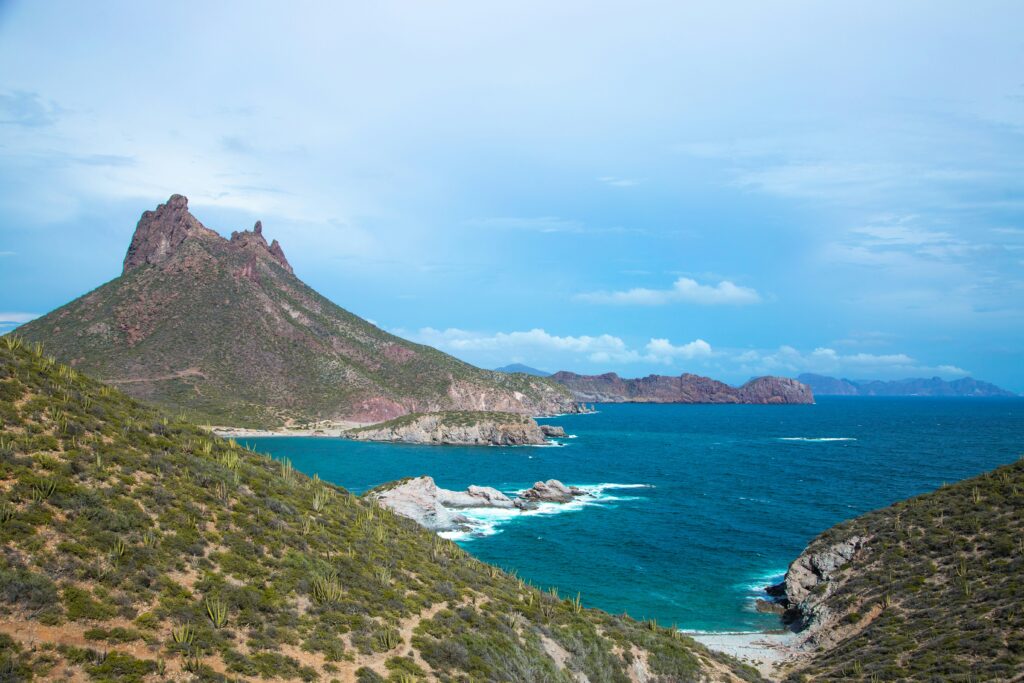
Sonora is the road-trip version of Mexico. There is no airport-and-resort bubble here: you drive in, usually from Arizona, and the state unfolds as desert, then coastline, then desert again, with colonial mission towns and Sea of Cortez beach towns scattered across a landscape that feels closer to the American Southwest than to the Mexico most travelers picture. It is Mexico’s second-largest state, and for travelers within driving distance of the border, it is one of the most accessible international trips available.
This guide covers the places that actually make up a Sonora trip: the Sea of Cortez beach towns, the desert biosphere reserves, the colonial river towns, and the practical details of crossing the border, driving the state, and knowing what to expect once you arrive. Sonora rewards travelers who come with a vehicle and a few days, not a packed checklist.
Quick Answer: Sonora at a Glance

The saguaro cactus is the defining symbol of the Sonoran Desert, which stretches across the US-Mexico border through Arizona and the Mexican state of Sonora.
What Makes Sonora Different From the Rest of Mexico?
Most international visitors to Mexico fly into Cancún, Mexico City, or Los Cabos. Sonora works on an entirely different logic: it is the natural drive-to destination for travelers from Phoenix, Tucson, Scottsdale, and the broader Southwest. The state is in Mexico’s Free Zone, meaning a Temporary Import Permit is generally not required for short visits, and the border crossings at Nogales, Lukeville, and Naco are set up for exactly this kind of casual cross-border travel.
The landscape itself is the other major difference. The Sonoran Desert, dotted with saguaro and organ-pipe cacti, dominates the northern part of the state before giving way to a drier, tropical landscape south of Guaymas. This is not the jungle-and-beach Mexico of the Yucatán; it is closer in spirit to Arizona, except with a coastline on the Sea of Cortez and an entirely different food and cultural identity once you cross the border.
Where Should You Go in Sonora?
A typical Sonora road trip runs north to south, in this order:
- Cross the border and start at Puerto Peñasco (Rocky Point), the closest beach town to Arizona.
- Continue south to San Carlos and Guaymas on the Sea of Cortez.
- Stop in Hermosillo, the state capital and main transport hub.
- Detour inland to the colonial pueblo mágico of Álamos.
- Or head north from Hermosillo along the Rio Sonora route through ranch country.
The most popular Sonora beach destination for American travelers, roughly a 3.5 to 4-hour drive from Tucson via the Lukeville border crossing. Sandy Beach is the main draw: wide, warm, and lined with resorts, condos, and beach bars. The town has a genuine tourism infrastructure built around weekenders from Arizona, including golf courses, ATV and dune-buggy rentals for the surrounding desert, sport fishing charters, and a lively malecón (waterfront boardwalk) for evening strolls.
Las Conchas, a quieter beach area east of the main town, offers a more residential, less crowded alternative. The Pinacate y Gran Desierto de Altar Biosphere Reserve sits inland from Puerto Peñasco and is genuinely worth the detour: a UNESCO World Heritage volcanic landscape with crater rims, lava fields, and a 5-kilometer trail around the Elegante crater that rewards a half-day visit.
San Carlos is a beachfront community within the port city of Guaymas, known for exceptionally clear, warm water and the dramatic Tetakawi Peak rising directly above the bay. It draws a strong community of American and Canadian snowbirds who winter here, along with a serious diving and sport fishing scene given the clarity of the water and the marine life in the surrounding Sea of Cortez.
Guaymas itself, the working port city next door, has more authentic Mexican town character: a historic cathedral, a real fishing and shrimping industry, and considerably fewer tourist-facing businesses than San Carlos. The two work well as a single visit, combining San Carlos’s beach resort comforts with Guaymas’s more genuine local atmosphere.
Sonora’s capital is primarily a business and transport hub rather than a tourist destination in its own right, but it has genuine character: colonial architecture, the Metropolitan Cathedral of Hermosillo, a strong baseball culture (home to Los Naranjeros), and a food scene built around carne asada, large flour tortillas, and coyotas, a Sonoran pastry filled with brown sugar piloncillo. Most visitors pass through via its international airport rather than basing a trip here, but it is worth a half-day if your route takes you through.
A designated Pueblo Mágico in southern Sonora, known for Spanish Baroque architecture, narrow cobblestone streets, and a genuinely laid-back atmosphere distinct from the beach towns further north. The National Customs Museum offers context on the region’s history. Worth the detour for travelers interested in colonial Mexico who want a counterpoint to Sonora’s desert and coastal identity.
A scenic drive north from Hermosillo following the Sonora River, passing through small villages like Ures and Arizpe that preserve the rustic farm-and-ranch character of old Sonora. Colonial buildings, working ranches, and a genuine sense of rural Mexico that the beach towns do not offer.
Aconchi along this route is known for natural hot springs, reached via a roughly 4-kilometer hike along a bumpy access road. Magdalena de Kino, further along, draws pilgrims every October 4th to the crypt of Father Eusebio Francisco Kino, the Jesuit missionary who explored and mapped much of the region in the 17th century, and was declared a Pueblo Mágico in 2012.
The Sonoran Desert and El Pinacate
A UNESCO World Heritage Site covering one of the most striking volcanic desert landscapes in North America, located inland from Puerto Peñasco. The reserve includes massive volcanic craters, including the Elegante crater with its 5-kilometer rim trail, extensive lava fields, and the Gran Desierto de Altar dune field, one of the largest active dune systems on the continent. Wildlife includes the endangered Sonoran pronghorn and desert bighorn sheep. An 80-kilometer driving loop covers the main points of interest; allow a full day, and bring a vehicle suited to some deep sand sections, particularly near the entrance.
A natural sun-and-beach destination roughly 100 kilometers from Hermosillo, facing Tiburón Island, the largest island in Mexico, in the Sea of Cortez. Beyond beach and water sports including fishing and diving, visitors can try sandboarding on the dunes near San Nicolás. Bahía de Kino is also a center of Seri (Comcáac) culture, the Indigenous people of this coastal region, whose communities at Punta Chueca and Desemboque preserve traditional crafts, dance, and ceremony, with some tourist services available through them directly.
Planning a sandboarding or desert tour near Puerto Peñasco? Book ahead during the busy winter snowbird season when slots fill up fastest.
Browse Sonora Tours on KlookCrossing the Border and Getting Around
Lukeville to Sonoyta is the standard crossing for Puerto Peñasco, roughly 3.5 to 4 hours from Tucson. Nogales is the main crossing for Hermosillo and points further south, with a more developed border infrastructure. Naco offers a quieter, less-trafficked alternative further east. A valid passport is required for all crossings.
US auto insurance is not valid in Mexico. Mexican auto insurance is required and widely available through companies that specialize in cross-border coverage, purchasable online before you leave or at insurance offices near the border crossings. Do not skip this step; driving without valid Mexican insurance creates serious liability exposure in the event of an accident.
The state’s main highways connecting Hermosillo, Guaymas, and the border crossings are well maintained. Routes into more remote areas, including parts of the Pinacate reserve and some Rio Sonora villages, involve unpaved or partially paved roads. A vehicle with reasonable ground clearance is recommended for these detours, though the main loop is manageable in most cars.
Hermosillo’s international airport is the main air gateway to the state, with connections to several US and Mexican cities. For travelers without a vehicle or based further from the border, flying into Hermosillo and renting a car locally is the practical alternative to the classic Arizona road trip.
Food and Drink: What Makes Sonora Distinct
Sonora is widely credited as the birthplace of carne asada as it is known across the Southwest: thin-cut beef grilled over mesquite, served with flour tortillas rather than corn. The beef culture here runs deep, tied to the state’s cattle ranching economy.
Sonora is the home of the oversized, thin flour tortilla, distinct from the corn tortillas that dominate central and southern Mexico. They are the base for burritos in the region and a defining marker of Sonoran food identity.
A Sonoran pastry, essentially a large flour tortilla filled with piloncillo (unrefined brown sugar), griddle-cooked until caramelized. A genuinely regional specialty rarely found outside Sonora and the border Southwest.
A regional agave spirit similar to mezcal, produced specifically in Sonora and protected by its own denomination of origin. Worth seeking out as a genuinely local alternative to the more internationally known tequila and mezcal from other regions.
Staying connected for navigation along the border and coast? Grab a Mexico eSIM before you cross so maps and translation work immediately.
Get a Mexico eSIM with AiraloWhen to Visit
| Season | Conditions | Prices |
|---|---|---|
| October–April | Comfortable temperatures for beach time and desert hiking; cool nights inland | Peak snowbird season, highest demand |
| May–June | Temperatures climb quickly; midday outdoor activity gets demanding | Transition pricing |
| July–September | Extreme heat, regularly above 38–40°C inland; coast more tolerable | Lowest prices of the year |
This is when most American snowbirds arrive in San Carlos and Puerto Peñasco, and for good reason: daytime temperatures sit in a comfortable range for beach time, desert hiking, and exploring without the punishing summer heat. Winter nights can be genuinely cool, particularly inland, so pack layers even for a beach-focused trip.
Temperatures climb quickly and the desert becomes genuinely demanding for outdoor activity by midday. Coastal areas remain more bearable than inland Hermosillo, but this is generally a less comfortable window than the winter season.
Summer in the Sonoran Desert is genuinely severe, with inland temperatures regularly exceeding 38 to 40°C. This is the off-season for tourism, meaning lower prices on accommodation, but outdoor activity needs to be planned carefully around the worst of the heat. The coast is more tolerable than inland Hermosillo but still hot and humid.
Continue planning your trip with these Tripfavor guides:
FAQ: Sonora Mexico Travel Guide
Final Thoughts
Sonora is not trying to be Cancún, and that is precisely its appeal. It is Mexico experienced through a windshield: the Sonoran Desert giving way to Sea of Cortez coastline, colonial river towns that see a fraction of the tourists found further south, and a food and drink culture, carne asada, flour tortillas, bacanora, that exists almost nowhere else in quite the same form.
For travelers within driving range of Arizona, Sonora is one of the most genuinely accessible international trips available: a passport, a few hours of driving, and a state that rewards a full week far more than a rushed weekend. For everyone else, flying into Hermosillo and renting a car opens the same desert-and-coast combination that makes this corner of Mexico worth the detour from the well-worn resort circuit.
Planning More of Your Mexico Trip?
Browse our destination guides to plan the rest of your itinerary.
Explore More Destinations
Great content! Keep up the good work!