
Sri Lanka packs beaches, rainforest, ancient cities, and misty tea country into an island you can cross in a single day’s drive — and in 2026 it landed on Travel + Leisure’s list of the best places to travel in the world. This Sri Lanka travel guide covers when to go, where to go, what it costs, and how to get around, so you can plan the trip properly instead of guessing.
Quick Answer
- Best time: December–March for the west and south coasts; May–September for the east coast (Arugam Bay, Trincomalee)
- Budget: $25–80 USD per day depending on travel style
- Currency: Sri Lankan Rupee (LKR)
- Visa: Electronic Travel Authorization (ETA) required for most nationalities, roughly $50, apply online before arrival
- Getting in: Bandaranaike International Airport (CMB), near Colombo

Sigiriya Rock, the ancient fortress at the heart of Sri Lanka’s Cultural Triangle
When Should You Visit Sri Lanka?
Sri Lanka doesn’t have one single travel season — it has two, running on opposite sides of the island. The trick is picking your region to match the calendar rather than the other way around.
| Region | Best Months | Why |
|---|---|---|
| West & South Coasts, Hill Country, Cultural Triangle | December–March | Calm seas for whale watching, driest beaches, comfortable Cultural Triangle touring |
| East Coast (Arugam Bay, Trincomalee) | May–September | Dry and sunny while the west gets its monsoon; prime surf season at Arugam Bay |
| Island-wide shoulder season | October–November | Lowest prices and thinnest crowds, though weather is unpredictable |
West & South Coasts, Hill Country, Cultural Triangle
Best from December to March. Seas are calm enough for whale watching in Mirissa, the beaches around Galle and Bentota are at their driest, and the Cultural Triangle sites are comfortable to explore without the humidity spiking. This is peak season, so book accommodation in Ella and Galle Fort ahead of time.
East Coast — Arugam Bay & Trincomalee
Best from May to September, when the west gets its monsoon rains and the east stays dry and sunny. Arugam Bay is one of the world’s better-known surf breaks during this window.
The Shoulder Months
October and November sit between monsoons and can be unpredictable island-wide, but they also bring the lowest prices and thinnest crowds if you don’t mind the occasional downpour. If travel dates are flexible, this is where the best value sits.
Where Should You Go in Sri Lanka?
The Cultural Triangle
Sigiriya, Anuradhapura, Polonnaruwa, and Dambulla make up Sri Lanka’s ancient core. Climbing Sigiriya Rock at sunrise avoids both the heat and the crowds. Minneriya National Park, nearby, hosts “the Gathering” — hundreds of wild elephants converging on the reservoir during the dry season, typically July to September.
Kandy & the Hill Country
Kandy is home to the Temple of the Sacred Tooth Relic, one of Buddhism’s most significant pilgrimage sites. From there, the train to Ella is the single most recommended journey in the country — tea estates, waterfalls, and mountain air the whole way. Ella itself is built around hiking (Little Adam’s Peak, Ella Rock) and the Nine Arch Bridge.
The South Coast
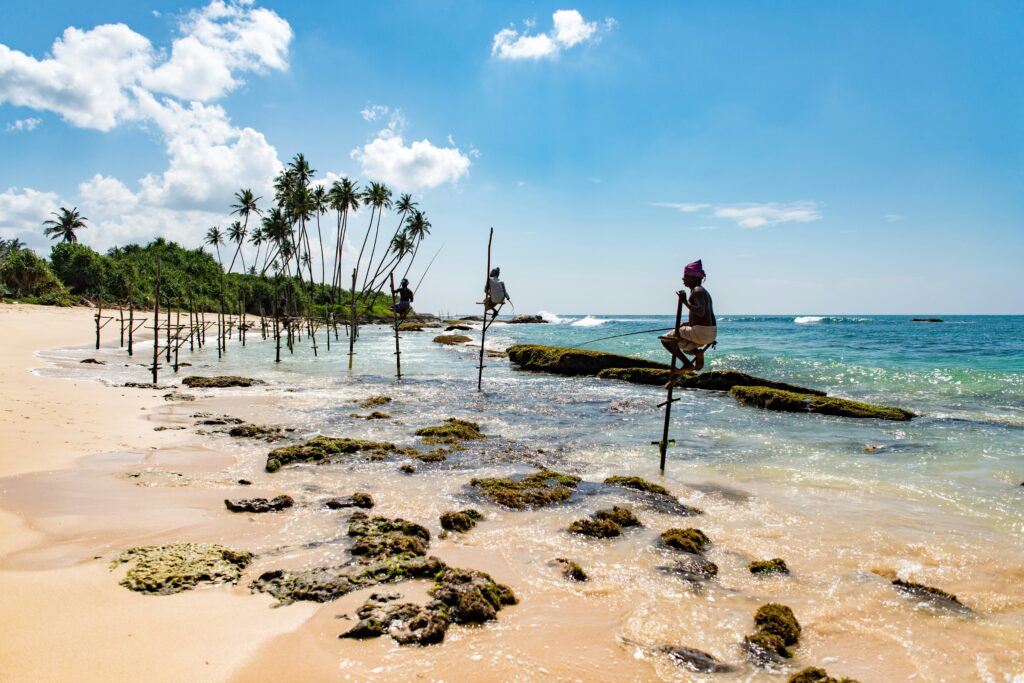
Galle Fort is a UNESCO World Heritage site with a genuinely walkable, café-and-shop colonial core. Mirissa is the whale-watching base; Weligama is the easier surf town for beginners. All three sit close enough together to combine in a few days without long transfers.
Yala National Park
Sri Lanka’s best-known safari destination, with one of the highest leopard densities anywhere in the world alongside elephants, sloth bears, and crocodiles. A half-day safari is usually enough; a good guide who knows the animal tracks (rather than just following radio chatter to the crowds) makes the real difference.

Rice and curry — the everyday meal that anchors Sri Lankan food culture
Getting Around
- Train: The Kandy–Ella route is considered one of the most scenic rail journeys anywhere — book reserved seats in advance for the daytime departures.
- Tuk-tuks: Best for short hops within towns; agree on a price before getting in, or use a metered app where available.
- Private driver: The most common choice for multi-region itineraries. A 150 km journey can take 3–5 hours depending on terrain, so a driver who knows the roads saves real time.
- Buses: Extensive and very cheap, reaching even remote villages, though crowded and slower than a private car.
Food to Know Before You Go
Rice and curry is the national default: a mound of rice with anywhere from three to eight different curries, dhal, and papadums. Hoppers (bowl-shaped fermented rice pancakes, often with an egg cracked into the centre) are the classic breakfast. Kottu roti — chopped flatbread stir-fried with vegetables, egg, and meat — is the street-food staple you’ll hear being made before you see it; the chopping sound is part of the experience.
Budget & Safety
Sri Lanka is generally more affordable than Thailand or Bali for a comparable standard of travel, with a realistic daily budget of $25–80 depending on accommodation and transport choices. The country is considered safe for tourists with low crime rates, though modest dress (shoulders and knees covered, shoes removed) is expected at temples and other religious sites, and sensible caution applies in remote areas after dark, as it would anywhere.
Book the Experiences in Advance
Safari jeeps in Yala and skip-the-line slots at the Cultural Triangle sites both get busy in peak season — worth locking in ahead of time rather than arranging on arrival.
Browse Sri Lanka Tours & Safaris on KlookStaying Connected
Local SIM cards are cheap and easy to find at the airport, but if you’d rather land and have data working immediately, an eSIM removes the airport-counter step entirely.
Planning More of Asia?
Frequently Asked Questions
How many days do I need in Sri Lanka?
Ten days is the most commonly recommended length — enough to cover the Cultural Triangle, hill country, and one coast without rushing. Two weeks lets you add both coasts comfortably.
Do I need a visa for Sri Lanka?
Most nationalities need an Electronic Travel Authorization (ETA), applied for online before departure, at a cost of roughly $50. Most tourists receive a 30-day ETA on arrival.
Is Sri Lanka safe for tourists?
Yes, generally. Crime rates are low and locals are widely described as welcoming. Standard travel precautions apply in remote areas, and modest dress is expected at religious sites.
What’s the best way to travel between cities?
A private driver is the most flexible option for multi-region itineraries, though the train between Kandy and Ella is worth building your route around for the scenery alone.
Can I see both the beaches and the hill country in one trip?
Yes — the island is compact enough that most first-time visitors combine the Cultural Triangle, Kandy, Ella, and the south coast in a single ten-to-fourteen-day loop.
Is Sri Lanka expensive?
No. It’s generally more affordable than Thailand or Bali for a similar standard of accommodation and food, with realistic daily budgets starting around $25–30 for backpacker-style travel.
Final Thoughts
This Sri Lanka travel guide comes down to one idea: plan around its two monsoons rather than fighting them — get the timing right for the region you want, and the island delivers an unusual amount of variety for its size. Whether that means sunrise over Sigiriya, a leopard sighting in Yala, or the Kandy–Ella train with a window seat, the logistics are straightforward once you know the pattern.
Keep Exploring
More destination guides, packing lists, and itinerary breakdowns to help plan your next trip.
Browse All Destinations