
Albania spent decades completely sealed off from the outside world, which is exactly why it still feels unspoiled: mountain villages untouched for generations, a coastline that rivals Greece at a fraction of the price, and a tourism boom that’s only just getting started. This Albania travel guide covers where to go, when to go, what it costs, and how to get around before the secret spreads any further.
Quick Answer
- Best time: May–June or September for warm weather without peak-season prices and crowds
- Budget: €25–40/day backpacker, €60–80/day mid-range
- Currency: Albanian Lek (ALL) — carry cash outside Tirana and the coast
- Getting around: rent a car (roughly €20/day) — it unlocks far more than buses or furgons
- Getting in: Tirana International Airport, with a growing number of direct European routes

Sarandë, the gateway city to the Albanian Riviera and its turquoise coastline
Why Visit Albania Now?
Albania was sealed off from the world until 1992 under one of Europe’s most isolated dictatorships, which is part of why the mountains stayed untouched, the coastline stayed clean, and the villages still look largely as they did decades ago. That isolation is ending fast: Albania recorded 4.5 million foreign visitors in the first half of 2024 alone, a 34% jump year over year, and budget airlines keep adding routes into Tirana. The trade-off is straightforward — this is still one of the most affordable, least crowded corners of the Mediterranean, but that window is visibly closing.
Where Should You Go in Albania?
Tirana
Albania’s capital is easily walkable in a couple of days: Skanderbeg Square as the natural starting point, the BunkArt museums for the country’s Cold War-era history, and a genuinely lively café and restaurant scene. A free walking tour on arrival is the fastest way to get oriented.
The Albanian Riviera
Running roughly from Vlorë down to Sarandë, this 200km stretch of coastline pairs mountains on one side with clear Adriatic and Ionian water on the other. Ksamil is the standout — often called the “Maldives of Europe” for its white sand and small swimmable islands. Dhërmi and Himara offer a quieter, more local alternative, and the drive itself, particularly through the Llogara Pass, is one of the most dramatic road trips in southeastern Europe.
Berat & Gjirokastër
Both UNESCO World Heritage Sites. Berat, the “City of a Thousand Windows,” is built in two halves up a hillside, with Ottoman-era houses stacked toward a riverside fortress. Gjirokastër, a few hours south, is known as the “Stone City” for its slate-roofed houses and imposing castle, which doubles as a museum housing a captured US spy plane.
The Albanian Alps
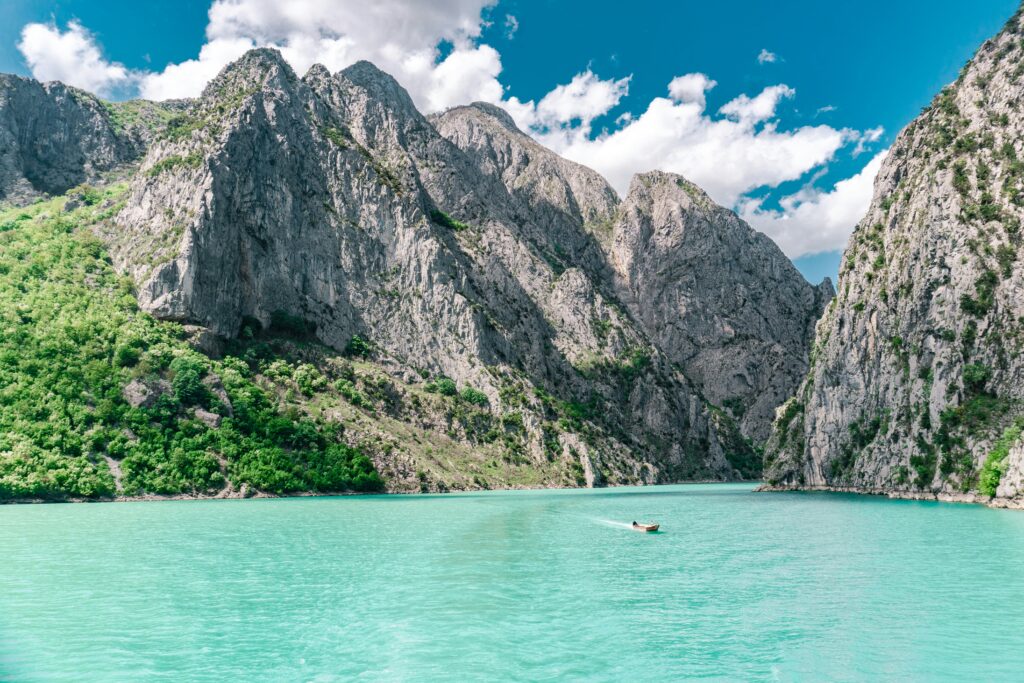
Known locally as the Accursed Mountains, this is where hikers come. The Theth-to-Valbona day hike is considered one of the best in the Balkans — a 6–7 hour walk crossing a mountain pass at around 1,800 meters. The region is only reliably snow-free from June through September, and the Lake Komani ferry through narrow gorges is a scenic way in or out.

Berat, Albania’s “City of a Thousand Windows,” stacked up the hillside above the Osum River
When to Go
How each season stacks up for weather, crowds, and price:
| Season | Weather & Crowds | Price Notes |
|---|---|---|
| May–June | Warm, wildflowers still out, crowds light | Well below peak summer |
| July–August | Peak season on the Riviera, hot (35°C+), crowded; only reliable window for the Albanian Alps hike | Highest of the year |
| September | Still warm enough to swim, Riviera crowds thinned out considerably | Best value-to-weather trade-off |
| Winter | Quiet in Tirana and the interior; most of the coast effectively shuts down | Lowest of the year |
Getting Around
Renting a car is genuinely the best decision you can make in Albania. It costs around €20 a day and unlocks mountain villages, hidden beaches, and canyon roads that buses simply don’t reach. Albania’s furgon minibuses are cheap but slow and disorganized; Flixbus connects the bigger cities on set schedules. One caveat: Albanian driving is aggressive, with overtaking on blind corners not unusual, so keep your speed down on mountain roads and avoid driving rural routes after dark.
Food & Budget
Albania remains one of the most affordable countries in Europe, though prices have risen noticeably since 2021. A hostel bed with breakfast runs roughly €15–20, a hotel room €30–70, a beer €1.50–3, and a full meal €7–15. Fresh seafood along the Riviera is often €8-12 a plate. Don’t skip byrek (flaky savory pastry), qofte (grilled meatballs), and a shot of raki, the homemade spirit offered almost everywhere as a gesture of hospitality.
Rent the Car Before You Land
A rental car is the single best way to see Albania properly — booking ahead avoids scrambling for options at the airport during peak season.
Day Trips Without the Planning
Berat, the Blue Eye spring, and Butrint National Park are all easy half-day or full-day trips from Sarandë or Tirana if you’d rather not navigate solo.
Planning More of the Mediterranean?
Frequently Asked Questions
Is Albania safe to visit?
Yes. Crime rates are low and Albanians are widely known for their hospitality, including “besa,” a traditional code of honor around protecting guests. Normal travel precautions apply, as anywhere.
How many days do I need for an Albania trip?
7–10 days is a common recommendation to cover Tirana, the Riviera, and at least one UNESCO town like Berat or Gjirokastër without rushing.
Is Albania cheaper than Greece or Croatia?
Generally yes. Meals, accommodation, and museum entries in Albania tend to run 40–60% below comparable Greek or Croatian prices, though the Riviera’s popular spots are creeping up in the peak summer months.
Do I need a car to see Albania properly?
Not strictly, but it makes an enormous difference. Public transport (furgons and buses) is cheap but slow and doesn’t reach many of the best beaches and villages.
What is Albania best known for?
The Albanian Riviera’s beaches, the Albanian Alps hiking around Theth and Valbona, and UNESCO towns like Berat and Gjirokastër, alongside a still-visible Cold War history of over 170,000 concrete bunkers scattered across the country.
When should I avoid the Albanian coast?
Winter largely shuts down the Riviera’s restaurants and bars. If you want swimmable weather without peak crowds, May, June, and September are the sweet spot.
Final Thoughts
This Albania travel guide comes down to one idea: Albania still delivers what much of the Mediterranean looked like fifty years ago — genuinely uncrowded beaches, mountain villages that haven’t been remade for tourists, and prices that make a Greek island holiday look expensive by comparison. That won’t last forever, given how fast arrivals are climbing, which makes the next couple of years a real window rather than just a marketing line.
Keep Exploring
More destination guides, packing lists, and itinerary breakdowns to help plan your next trip.