
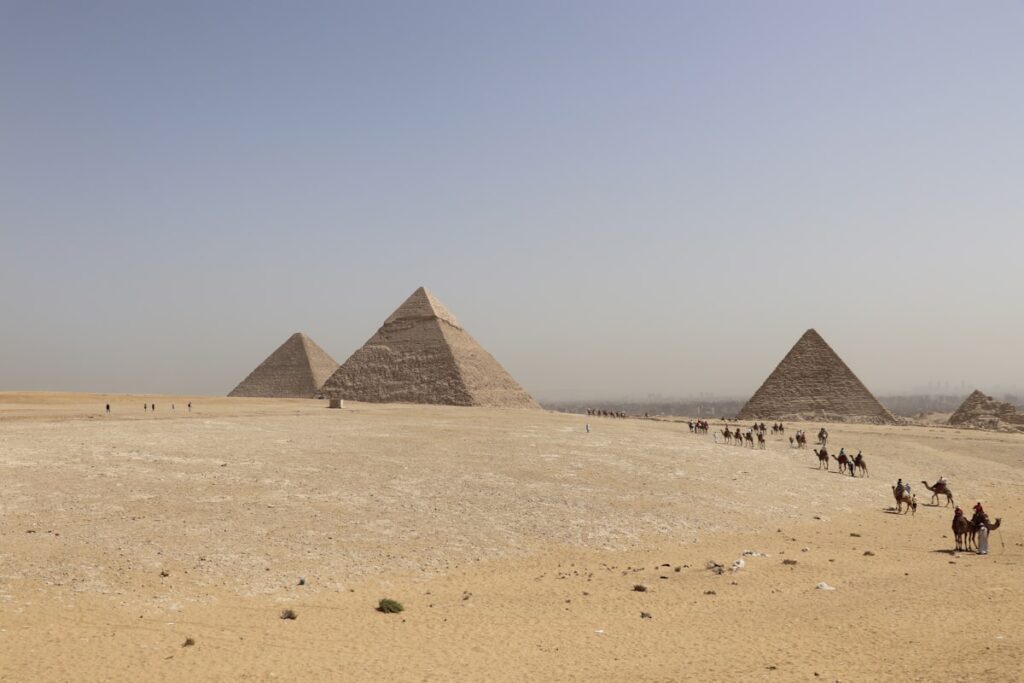
In 2026, Egypt is having its biggest tourism year in decades: arrivals climbed sharply in the first quarter, driven in large part by the full opening of the Grand Egyptian Museum near the Giza plateau (Egypt’s State Information Service, tourism arrivals report, retrieved 2026-07-20). Here’s what actually matters if you’re planning a trip — when to go, what it costs to get in, and which stops are worth your limited days.
Quick Answer
- Best time to go: October through April, when daytime temperatures are manageable outside of Cairo and the Nile Valley
- Visa: most travelers need an e-visa (around $25 single entry) or a $30 visa on arrival, arranged before or at the airport
- Currency: Egyptian Pound (EGP); withdraw from bank ATMs rather than exchanging cash on the street
- Minimum trip length: 4-5 days for Cairo and Giza alone; 8-10 days to add a Nile cruise to Luxor and Aswan
- Safety: the main tourist circuit (Cairo, Giza, Luxor, Aswan, Alexandria, the Red Sea resorts) is considered safe for visitors who follow standard precautions

The Pyramids of Giza at sunset
Why Is Egypt Worth Planning a Trip For Right Now?
Egypt’s tourism numbers jumped sharply in early 2026, with several industry trackers reporting double-digit growth in arrivals compared to the previous year (Egypt Independent, tourist arrivals report, retrieved 2026-07-20). Part of that surge traces directly to the Grand Egyptian Museum, which finished its full rollout in 2026 after years of construction next to the Giza plateau — it’s now the largest archaeological museum in the world built around a single civilization, and it changes the Cairo itinerary that guidebooks have used for decades.
That matters for planning: the Giza day that used to be “Pyramids in the morning, done by lunch” is now realistically a full day once you add the museum. Building in that extra time, rather than discovering it on arrival, is the single biggest itinerary adjustment worth making for a 2026 trip.
Best Time to Visit Egypt
October through April is Egypt’s travel season for a reason: daytime highs in Cairo and the Nile Valley sit in a comfortable range, and Upper Egypt (Luxor, Aswan) is dry year-round, so the difference is entirely about heat, not rain. December and January are the coolest and busiest months, especially around the Red Sea resorts, where northern European travelers head for winter sun.
May through September gets genuinely hot inland — Luxor and Aswan regularly pass 40°C (104°F) at midday in summer — but this is also when flights and Nile cruise cabins are cheapest, and Cairo’s museums and temples are air-conditioned or shaded enough to visit early or late in the day.
What Are the Top Things to Do in Egypt?
Most first trips to Egypt revolve around a short list of sites that justify their reputation. Here’s what consistently makes the list:
- Pyramids of Giza & the Sphinx: the only surviving Ancient Wonder of the World, and still the fastest way to feel the scale of Ancient Egypt in a single afternoon.
- Grand Egyptian Museum: Tutankhamun’s full treasure collection displayed together for the first time, plus dozens of other collections that never had space to be shown before.
- A Nile cruise between Luxor and Aswan: 3-4 nights on the river, with stops at Karnak Temple, the Valley of the Kings, and the temples at Edfu and Kom Ombo along the way.
- Valley of the Kings, Luxor: the royal tombs, including Tutankhamun’s original burial site, cut into the hills on the Nile’s west bank.
- Abu Simbel: Ramesses II’s cliffside temples near the Sudanese border, best reached as an early-morning flight or road trip from Aswan.
- Red Sea diving and snorkeling out of Hurghada or Sharm El-Sheikh — some of the most accessible reef diving in the world, and a common add-on to a Cairo/Nile trip.
- Islamic Cairo and Khan el-Khalili bazaar: a different, older layer of the city than the Pharaonic sites, worth a half-day on its own.

Hieroglyph-carved columns typical of the temple sites along the Nile
How Many Days Do You Actually Need?
The right trip length depends entirely on whether you’re adding the Nile south of Cairo. Here’s how the three common itinerary lengths break down:
| Trip Length | What You’ll Cover | Best For |
|---|---|---|
| 4-5 days | Cairo, Giza Pyramids, Grand Egyptian Museum, Islamic Cairo | A first look at Egypt on a tight schedule or a stopover |
| 8-10 days | Cairo/Giza plus a Nile cruise from Luxor to Aswan | The trip most first-time visitors should plan for |
| 12-14 days | All of the above plus Abu Simbel and Red Sea diving | Travelers who want the full circuit in one visit |
Visa, Currency & Entry Requirements
Most nationalities need a visa to enter Egypt, and the e-visa is the least stressful option: apply online at least a week before departure for roughly $25 (single entry), rather than dealing with the arrival queue. A $30 visa-on-arrival is also available at major airports, paid in cash. Either way, your passport needs at least six months of remaining validity and a couple of blank pages.
The local currency is the Egyptian Pound (EGP), and it isn’t easily exchanged back once you leave the country, so avoid over-converting. Bank-affiliated ATMs in cities give a far better rate than the currency-exchange counters aimed at tourists, and street exchange stalls are best avoided entirely.
Is Egypt Safe to Visit in 2026?
For travelers sticking to the standard circuit — Cairo, Giza, Luxor, Aswan, Alexandria, and the Red Sea resort towns — Egypt is considered safe, and government travel advisories reserve their strongest warnings for the North Sinai and the area near the Libyan border, both well outside any typical tourist route.
The practical risk in tourist areas is petty theft and overly persistent vendors, not violent crime: keep valuables out of sight in crowded markets like Khan el-Khalili, use a zipped bag rather than an open pocket for your phone, and agree on prices before accepting help from anyone at a site entrance. Avoiding demonstrations and large public gatherings, as with travel almost anywhere, is standard advice worth following.
Planning the Nile Cruise Leg
A 3-4 night Luxor-to-Aswan cruise is the easiest way to see the Valley of the Kings, Karnak, and the temples between them without arranging transport yourself — most itineraries handle the sites, meals, and overnight travel as one package.
Skip-the-Line Museum & Site Tickets
Booking Grand Egyptian Museum and Pyramids entry ahead of time avoids the ticket-counter queue, especially during the busier October-April season.
Planning More of the Middle East & North Africa?
Frequently Asked Questions
How many days do you need in Egypt?
Budget at least 4-5 days for Cairo and Giza alone. Most first-time visitors are better served by 8-10 days, which adds a Luxor-to-Aswan Nile cruise to the Cairo leg without feeling rushed.
Is Egypt safe to visit right now?
Yes, for the standard tourist circuit — Cairo, Giza, Luxor, Aswan, Alexandria, and the Red Sea coast. Current advisories focus on North Sinai and the area near the Libyan border, both outside typical itineraries.
What is the best time to visit Egypt?
October through April, when temperatures across Cairo and the Nile Valley are comfortable. December and January are the coolest and busiest months; May through September is hot but cheaper.
Do U.S. citizens need a visa for Egypt?
Yes. An e-visa (around $25 for single entry, applied for online in advance) or a $30 visa on arrival are both available; either requires a passport valid for at least six months.
What currency should I bring to Egypt?
The Egyptian Pound (EGP) is the only currency used day-to-day. Withdraw it from bank ATMs after arrival rather than exchanging cash beforehand, since EGP is difficult to convert back outside the country.
Final Thoughts
Egypt in 2026 rewards a little extra planning time, mostly because the Grand Egyptian Museum has genuinely added a full day to what used to be a quick Giza stop. Beyond that, the calculus hasn’t changed: go between October and April if you can, budget at least a week if the Nile cruise is on your list, and stick to the well-traveled circuit for the easiest, safest first trip.
Keep Exploring
More destination guides, packing lists, and itinerary breakdowns to help plan your next trip.