
Iceland’s winter of 2026 falls near the peak of Solar Cycle 25, giving aurora hunters one of the strongest Northern Lights windows in over a decade (NOAA Space Weather Prediction Center, retrieved 2026-07-20). Whether you’re chasing the aurora or the endless daylight of a summer road trip, here’s what actually shapes an Iceland trip — timing, cost, and the sites worth building your days around.
Quick Answer
- Best time for Northern Lights: September through March, with October-February offering the darkest skies
- Best time for daylight & road trips: June-August, with 20+ hours of daylight and all highland roads open
- Currency: Icelandic Króna (ISK); the country is almost entirely cashless, card accepted nearly everywhere
- Entry: visa-free for 90 days for US/UK/Canada/Australia citizens under the Schengen rule; an ETIAS travel authorization is expected to launch in late 2026
- Minimum trip length: 4-5 days for Reykjavik and the Golden Circle; 7-10 days to add the South Coast and a Ring Road loop

Aurora borealis over Vestrahorn mountain, southeast Iceland
Why Is 2026 a Strong Year for an Iceland Trip?
Iceland draws roughly 2 million international visitors a year, and 2026’s winter benefits from a specific, time-limited factor: the sun is near the peak of its 11-year activity cycle, which means stronger and more frequent aurora displays than the quieter years on either side. If seeing the Northern Lights is the actual goal of the trip rather than a nice-to-have, this is a meaningfully better year to prioritize a winter visit than 2023 or 2024 were.
One planning note for later in the year: the EU’s ETIAS travel authorization is expected to launch in the final quarter of 2026 for visa-exempt visitors. It doesn’t change who can visit, but it adds a short online application step before flying — worth checking close to your travel date rather than assuming the visa-free rules haven’t changed at all.
Best Time to Visit Iceland
There’s no single “best” season in Iceland — summer and winter offer almost opposite experiences, and the right choice depends on what you’re actually there to see.
Summer (June-August): 20+ hours of daylight, all highland F-roads open, whale watching, and puffins on the coastal cliffs through mid-August. The tradeoff is real: flights run 40-60% higher than winter, and popular stops book out months ahead.
Winter (November-February): the dark season, and the only time to realistically see the Northern Lights, plus ice-cave tours inside Vatnajökull glacier from November through March. Expect just 4-7 hours of daylight, sub-zero temperatures, and icy roads that call for a 4WD rental.
Shoulder seasons (April-May, September-October): the balance option — September pairs early aurora activity with still-reasonable daylight and thinner crowds, while May offers rapidly lengthening days and lower prices before the summer rush.
What Are the Top Things to Do in Iceland?
Most first trips to Iceland build around a short list of stops that consistently earn their reputation:
- The Golden Circle: Thingvellir National Park, the Geysir geothermal area, and Gullfoss waterfall — the single most popular day trip from Reykjavik, and doable independently in 6-8 hours. Full Golden Circle route guide →
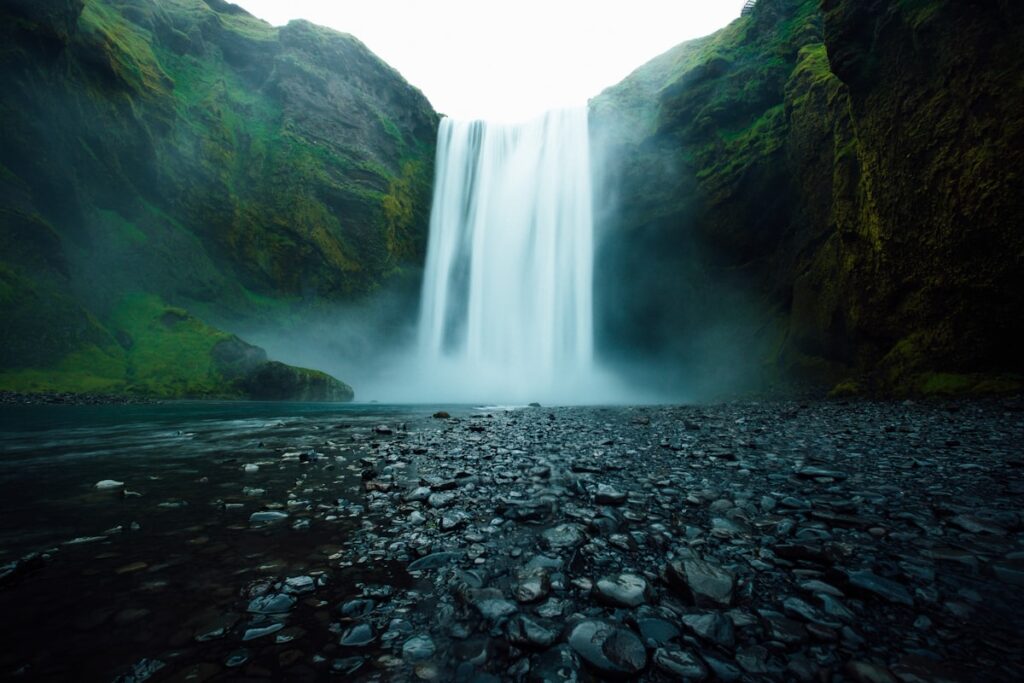
- The South Coast: Seljalandsfoss and Skógafoss waterfalls, then the black sand beach at Reynisfjara with its basalt sea stacks — a full day from Reykjavik, or the first leg of a longer Ring Road trip.
- Jökulsárlón Glacier Lagoon: icebergs calved from Vatnajökull drifting out to sea, with the “Diamond Beach” black-sand shore right across the road.
- The Blue Lagoon (or a quieter alternative): Iceland’s best-known geothermal spa, best booked well ahead; S&kacute;y Lagoon near Reykjavik is a popular, less crowded alternative with the same milky-blue water.
- Northern Lights hunting: a clear, dark night away from Reykjavik’s light pollution is really all it takes September through March — guided tours add a knowledgeable driver and a backup night if the first attempt is clouded out.
- Reykjavik itself: Hallgrímskirkja church, the Harpa concert hall, and a compact, walkable old town worth a half-day beyond just a landing pad for day trips.
- A full Ring Road loop: Route 1 circles the entire island, roughly 1,300 km/810 miles — 7-10 days covers it at an unrushed pace with stops along the whole south and east coast.

The basalt cliffs at Reynisfjara black sand beach, on Iceland’s South Coast
Summer vs. Winter: Which Trip Should You Plan?
The honest answer is that summer and winter are close to two different trips. Here’s how they actually compare:
| Factor | Summer (Jun-Aug) | Winter (Nov-Feb) |
|---|---|---|
| Daylight | 20+ hours | 4-7 hours |
| Northern Lights | Not visible (too much daylight) | Best odds of the year |
| Highland F-roads | Open | Closed |
| Typical prices | Highest of the year | 30-50% lower |
| Driving conditions | Easiest, no ice | 4WD strongly recommended |
Visa & Currency Basics
US, UK, Canadian, and Australian citizens can visit Iceland visa-free for up to 90 days within any 180-day period under the Schengen rule. From late 2026, that group is expected to also need an ETIAS travel authorization completed online before departure — a short form, not a full visa application, but worth doing a few days ahead of the flight rather than assuming it isn’t required yet.
Iceland uses its own currency, the Icelandic Króna (ISK), not the euro. Card payments are accepted almost everywhere, including small guesthouses and rural petrol stations, so carrying much cash isn’t necessary.
Booking a Golden Circle or South Coast Tour
A guided day tour handles the driving and timing for you — a solid choice in winter especially, when road conditions call for local experience.
Driving the Ring Road Yourself?
Book a 4WD rental ahead if you’re self-driving in winter — availability tightens quickly once the aurora season gets underway.
Planning More of Europe?
Frequently Asked Questions
What is the best time to visit Iceland?
It depends on your goal: June-August for 20+ hours of daylight and open highland roads, or September-March for a real shot at the Northern Lights. Shoulder months (May, September) balance the two.
How many days do you need in Iceland?
Budget 4-5 days for Reykjavik and the Golden Circle alone. 7-10 days allows a South Coast extension or a full, unrushed Ring Road loop.
Do you need a visa to visit Iceland?
US, UK, Canadian, and Australian citizens can visit visa-free for 90 days under the Schengen rule. An ETIAS online travel authorization is expected to become required from late 2026.
Is 2026 a good year to see the Northern Lights in Iceland?
Yes — 2026’s winter falls near the peak of Solar Cycle 25, which typically means stronger and more frequent aurora activity than a solar minimum year.
What currency does Iceland use?
The Icelandic Króna (ISK), not the euro. The country is largely cashless, with cards accepted almost everywhere, including remote petrol stations.
Final Thoughts
Iceland doesn’t really have an off-season so much as two very different trips depending on when you go. Chase the aurora in the dark months, chase the daylight and open roads in summer, and either way, build in enough days — a rushed Golden Circle-only stop barely scratches what the country actually offers.
Keep Exploring
More destination guides, packing lists, and itinerary breakdowns to help plan your next trip.