
National Geographic named South Korea one of its top destinations for 2026, and Seoul is the reason why: a capital with over 1,000 years of history layered directly against K-pop, design, and some of the best street food in Asia. Here’s what actually shapes a Seoul trip — timing, entry basics, and the stops worth building your days around.
Quick Answer
- Best time to visit: September-November for clear skies and autumn foliage; March-May for cherry blossoms
- Currency: South Korean Won (KRW); cards accepted almost everywhere, some cash useful for markets
- Entry: visa-free for 30-90 days for citizens of 100+ countries; a K-ETA travel authorization becomes required from January 1, 2027
- Minimum trip length: 3-4 days for the core palaces and neighborhoods; 5-7 days to add day trips outside the city
- Budget tip: summer (Jul-Aug) is hot and humid but the cheapest season for hotels

Gwanghwamun Gate at Gyeongbokgung Palace, Seoul’s largest and most iconic royal palace
Why Is Seoul Worth the Trip in 2026?
Seoul’s pitch is unusual for a major Asian capital: genuine 600-year-old palaces sit a short walk from neighborhoods that export global pop culture. That combination is exactly why a rushed one-or-two-day layover undersells the city — the palaces, the traditional hanok neighborhoods, and the modern districts each want their own half-day rather than being rushed together.
The exchange rate has also been favorable for US, European, and Australian visitors through 2026, meaning day-to-day costs — food, transit, markets — stretch further than they have in recent years.
Best Time to Visit Seoul
Autumn (September-November) is generally considered the best all-around season: clear skies, low humidity, and maple and ginkgo foliage that peaks in late October in the north of the country and into mid-November further south.
Spring (March-May) brings cherry blossoms and mild temperatures, and is the other peak travel window — book accommodation early if visiting during blossom season.
Summer (July-August) is hot, humid, and crowded, but also the cheapest season for hotels if the heat isn’t a dealbreaker. Winter is cold and dry, with far fewer tourists and lower prices across the board.
What Are the Top Things to Do in Seoul?
Seoul rewards splitting your time between the historic core and the newer districts. Here’s what consistently makes a first-timer’s list:
- Gyeongbokgung Palace: built in 1395 and the largest of Seoul’s five grand palaces, with a free Royal Guard Changing Ceremony held multiple times daily at Gwanghwamun Gate.
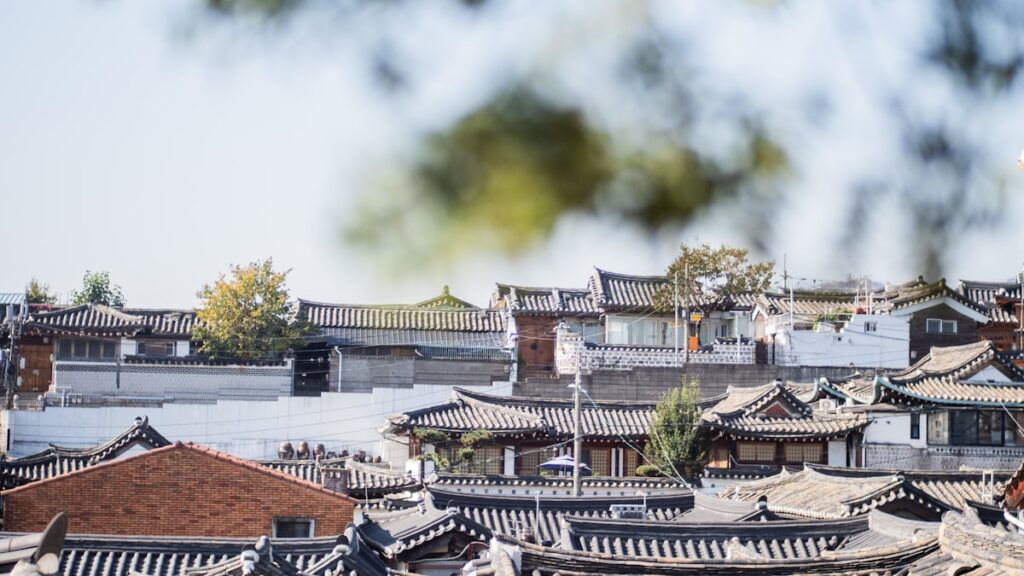
- Bukchon Hanok Village: a hillside neighborhood of hundreds of traditional hanok houses, many now home to teahouses, galleries, and guesthouses.
- Gwangjang Market: one of Seoul’s oldest and largest markets, best known for mung-bean pancakes and late-night street food stalls.
- Insadong: the city’s antiques and traditional-craft district, with shops and cafes housed in older buildings.
- N Seoul Tower: panoramic city views from Namsan mountain, especially worthwhile around sunset.
- Myeongdong & Dongdaemun: Seoul’s biggest shopping districts, from department stores to 24-hour markets.
- Gangnam: the district that put K-pop on the global map, now a mix of upscale shopping, entertainment, and nightlife.

Seoul’s skyline along the Han River, with N Seoul Tower visible on Namsan mountain
How Many Days Do You Need in Seoul?
The right length depends on whether day trips outside the city are on the list. Here’s how the common options break down:
| Trip Length | What You’ll Cover | Best For |
|---|---|---|
| 3-4 days | Gyeongbokgung, Bukchon Hanok Village, Myeongdong, Insadong | A first look at Seoul on a tight schedule |
| 5-7 days | All of the above plus Gangnam, N Seoul Tower, and a day trip (e.g. the DMZ) | Most first-time visitors |
| 8-10 days | All of the above plus a side trip to Busan or the countryside | Travelers combining Seoul with the rest of South Korea |
Visa & Currency Basics
Citizens of more than 100 countries, including the US, UK, Canada, and Australia, can currently enter South Korea visa-free for stays of 30 to 90 days depending on nationality. That’s changing soon: from January 1, 2027, a Korean Electronic Travel Authorization (K-ETA) will be required in advance, with an exemption in place through the end of 2026 — worth double-checking close to your travel date as the rule takes effect.
The currency is the South Korean Won (KRW). Cards are accepted almost everywhere, and Seoul is increasingly cashless, but small cash amounts are still useful at traditional markets and some street food stalls. Currency exchange shops in Myeongdong consistently offer better rates than airports or hotels.
Booking Seoul Tours & Activities
Skip-the-line palace tickets, DMZ day trips, and guided food tours are all easy to book ahead rather than arranging on the ground.
Need an eSIM for Your Trip?
South Korea has excellent mobile coverage; an eSIM set up before you land saves the hassle of finding a local SIM at the airport.
Planning More of Asia?
Frequently Asked Questions
What are the best things to do in Seoul?
Gyeongbokgung Palace, Bukchon Hanok Village, Gwangjang Market, N Seoul Tower, and the Myeongdong and Gangnam districts consistently top first-time visitors’ lists.
What is the best time to visit Seoul?
September-November for autumn foliage and clear skies, or March-May for cherry blossoms. Summer is hot and humid but the cheapest season for hotels.
Do you need a visa to visit Seoul?
Citizens of 100+ countries can currently enter visa-free for 30-90 days. A K-ETA online travel authorization becomes required starting January 1, 2027.
How many days do you need in Seoul?
3-4 days covers the core palaces and neighborhoods. 5-7 days allows time for Gangnam, N Seoul Tower, and a day trip outside the city.
What currency does Seoul use?
The South Korean Won (KRW). Cards are accepted almost everywhere, though small cash amounts help at traditional markets and street food stalls.
Final Thoughts
Seoul works because it doesn’t ask you to choose between old and new — a morning at a 600-year-old palace and an afternoon in Gangnam are a 20-minute subway ride apart. Give it more than a rushed layover, and the contrast is the whole point.
Keep Exploring
More destination guides, packing lists, and itinerary breakdowns to help plan your next trip.