
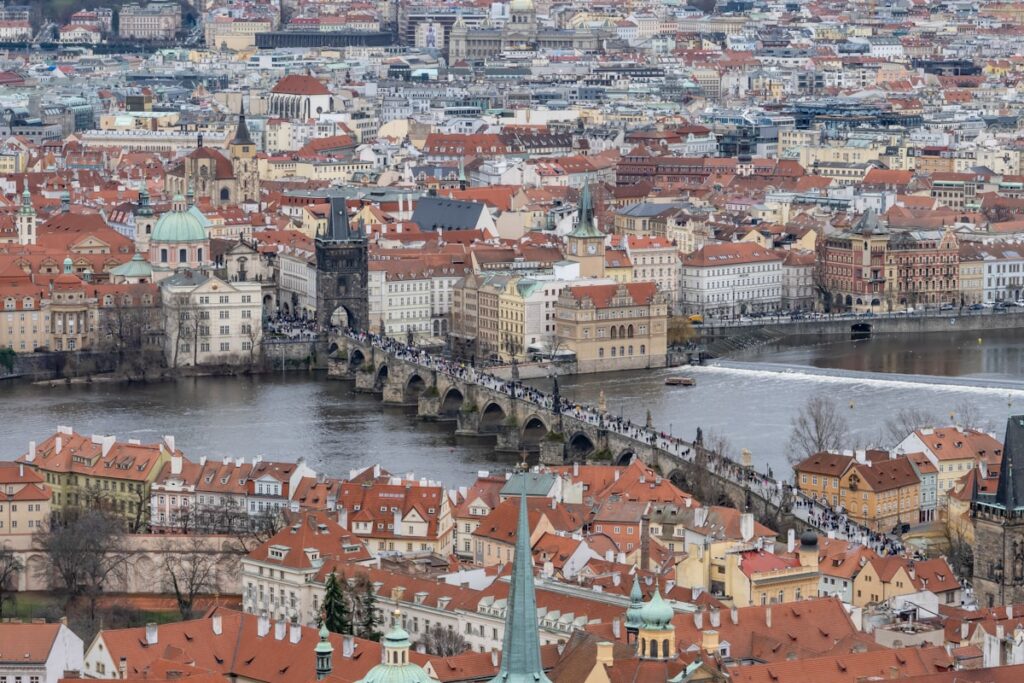
Prague was one of seven Eastern European capitals driving a regional surge in 2026 travel searches, and it’s easy to see why: a walkable medieval core, a currency that keeps costs well below Western Europe, and a skyline that barely changed in the last century. Here’s how to time it and what actually earns a spot on the itinerary.
Quick Answer
- Best time to visit: April-June and September-October — pleasant weather, manageable crowds; July-August is busiest and priciest
- Currency: Czech Koruna (CZK) — the Czech Republic hasn’t adopted the euro
- Entry: visa-free for 90 days for US/UK/Canada/Australia citizens; ETIAS authorization (€7, valid 3 years) expected to launch autumn 2026
- Budget tip: winter (Nov-Mar) brings the lowest prices and thinnest crowds, if you don’t mind the cold
- Minimum trip length: 3 days for the core sights; 5 days to add day trips

Colorful baroque facades lining a cobblestone street in Prague’s Old Town
When Is the Best Time to Visit Prague?
April-June and September-October hit the sweet spot: comfortable temperatures, manageable crowds, and solid availability on hotels and restaurant tables. July-August brings the thickest crowds and highest prices of the year — book Charles Bridge-area accommodation well ahead if traveling then.
Winter (November-March) is Prague’s under-the-radar season: noticeably lower prices, thinner crowds at every major sight, and a genuinely atmospheric old town when it snows — the tradeoff is shorter daylight and cold, damp weather.
Top Things to Do in Prague
- Charles Bridge: commissioned in 1357, lined with baroque statues, and Prague’s single most photographed spot — cross before 8am to see it without the crowds.
- Prague Castle: the largest ancient castle complex in the world by area, home to St. Vitus Cathedral and over 700 rooms across its grounds.
- Old Town Square & Astronomical Clock: the medieval heart of the city, with an hourly mechanical show at the 15th-century clock.
- Jewish Quarter (Josefov): historic synagogues and the Old Jewish Cemetery, one of Europe’s most significant Jewish heritage sites.
- Lesser Town (Malá Strana): baroque palaces and gardens on the castle side of the river, quieter than the Old Town.
- Vyšehrad: a lesser-visited fortress and park above the Vltava, with some of the best skyline views in the city.

Prague Castle and St. Vitus Cathedral, seen from across the Vltava River
A Simple 3-Day Prague Itinerary
| Day | Focus |
|---|---|
| Day 1 | Old Town Square, Astronomical Clock, Charles Bridge, Jewish Quarter |
| Day 2 | Prague Castle, St. Vitus Cathedral, Lesser Town, Petřín Hill |
| Day 3 | Vyšehrad, a river cruise, and a slower neighborhood (Vinohrady or Karlín) |
Do You Need a Visa, and What Currency Does Prague Use?
The Czech Republic is in the Schengen Area; citizens of the US, UK, Canada, and Australia can currently visit visa-free for up to 90 days within any 180-day period. From autumn 2026, an ETIAS online authorization (€7, valid for 3 years) is expected to become required for visa-exempt travelers before departure.
The currency is the Czech Koruna (CZK) — the Czech Republic has not adopted the euro, which keeps day-to-day costs noticeably lower than nearby Western European capitals. Cards are widely accepted in the tourist core, though small cafes and markets still favor cash.
Booking Prague Tours & Skip-the-Line Tickets
Prague Castle and the Jewish Quarter both get long ticket-counter queues in peak season — booking ahead saves real time.
Need an eSIM for Your Trip?
An eSIM set up before you land covers Prague and the rest of your Europe itinerary without hunting for a local SIM card.
Booking an Airport Transfer?
Prague’s airport sits a fair distance from the Old Town — a pre-booked transfer skips the taxi-rank haggling after a long flight.
Skip-the-Line Castle & Museum Tickets
Prague Castle’s ticket counters run long lines in peak season — booking entry ahead avoids losing an hour of a short trip to queuing.
Seeing Multiple Sights?
A city attraction pass can work out cheaper than paying per-site if the itinerary includes several of Prague’s paid sights.
Arriving Before Check-In?
Dropping bags at a storage point near Old Town Square means starting sightseeing straight off the train or an early flight.
Booking Flights to Prague?
Comparing fares across airlines before locking in dates usually beats booking direct on a single carrier’s site.
Worried About Flight Delays?
EU261 entitles passengers to compensation for many delayed or cancelled flights into Prague — most travelers never bother to claim it.
Catching a Show in Prague?
The Prague State Opera, jazz clubs, and touring concerts sell out fast in peak season — worth booking ahead rather than hoping for door tickets.
Planning a Day Trip?
Kutná Hora’s bone church and Český Krumlov are both an easy drive from Prague — a rental car gives more flexibility than a tour bus schedule.
Planning More of Europe?
Frequently Asked Questions
What are the best things to do in Prague?
Charles Bridge, Prague Castle, Old Town Square with its Astronomical Clock, the Jewish Quarter, and Lesser Town consistently top first-time visitors’ lists.
What is the best time to visit Prague?
April-June and September-October offer the best balance of weather and crowds. July-August is busiest and most expensive; winter is quiet and cheap but cold.
Do you need a visa to visit Prague?
US, UK, Canadian, and Australian citizens can currently visit visa-free for 90 days. An ETIAS online authorization is expected to become required from autumn 2026.
What currency does Prague use?
The Czech Koruna (CZK) — the Czech Republic has not adopted the euro, which keeps costs lower than many nearby capitals.
How many days do you need in Prague?
3 days covers the core sights comfortably; 5 days allows time for day trips or a slower pace through the quieter neighborhoods.
Final Thoughts
Prague’s Old Town is compact enough to walk almost everywhere, which is exactly why it rewards more than a rushed day trip — the castle alone deserves half a day, and the quieter neighborhoods across the river are where the city stops feeling like a checklist.
Keep Exploring
More destination guides, packing lists, and itinerary breakdowns to help plan your next trip.