
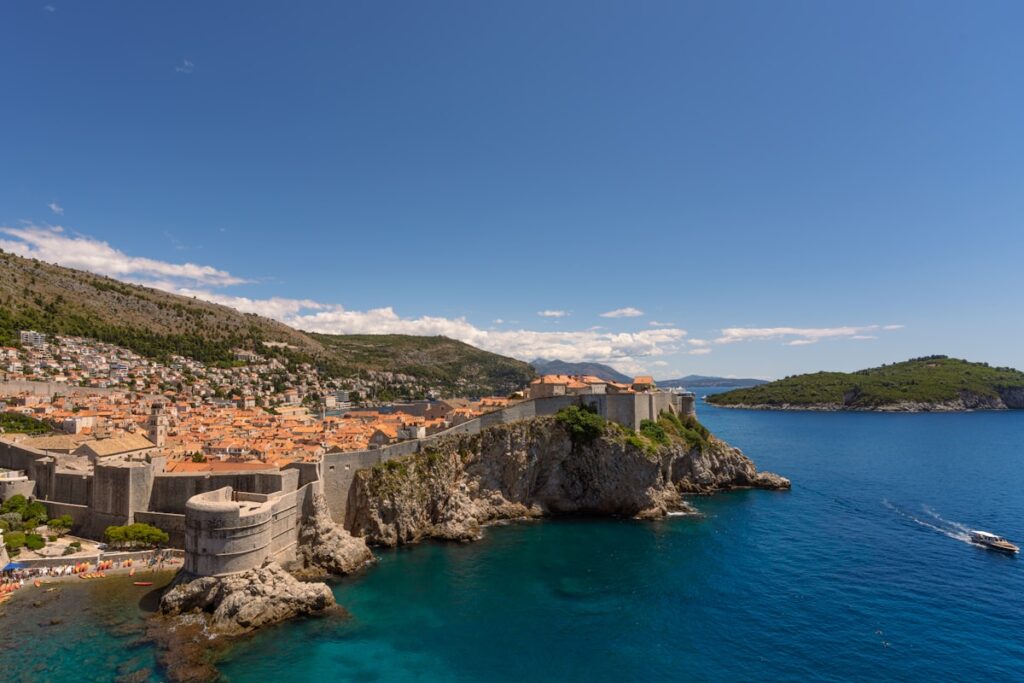
Dubrovnik in peak July sees as many as five cruise ships and 10,000 extra visitors a day — timing matters more in Croatia than in most of the Mediterranean. Here’s how the shoulder-season window actually works, and what earns a spot on the itinerary beyond the Old Town walls.
Quick Answer
- Best time to visit: May-June or September-October — warm weather, swimmable sea, roughly half the crowds of peak summer
- Currency: Euro (EUR), adopted in 2023; cards widely accepted, some cash useful for small vendors
- Entry: visa-free for 90 days for US/UK/Canada/Australia citizens; ETIAS authorization (€20, ~10 minutes online) expected to launch late 2026
- Avoiding crowds: visit Dubrovnik’s Old Town before 9am or after 5pm, when cruise passengers aren’t there
- Minimum trip length: 5-7 days to combine Dubrovnik with Split and Plitvice Lakes

The bell tower at Diocletian’s Palace, Split — a 4th-century Roman palace still lived in today
When Is the Best Time to Visit Croatia?
May-June and September-October are Croatia’s sweet spot: daytime highs of 23-28°C, a swimmable Adriatic, and roughly half the visitor density of peak summer. June in particular is often cited as the ideal month — reliably sunny with the summer buzz just starting, before the August peak.
July-August is genuinely crowded in Dubrovnik specifically — cruise ship arrivals alone can bring over 10,000 extra visitors on a single day, with queues at every major sight. If summer is the only option, visiting the Old Town before 9am or after 5pm avoids the worst of it.
Top Things to Do in Croatia
- Dubrovnik’s Old Town walls: a 2km walkable circuit around the walled city, best done early morning for both light and lighter crowds.
- Plitvice Lakes National Park: 16 terraced lakes connected by more than 90 waterfalls, with wooden boardwalks running right along the water.
- Split’s Diocletian’s Palace: a 4th-century Roman palace that’s still a living, inhabited neighborhood — shops, cafes, and homes built directly into the ancient structure.
- Island hopping: Croatia has over 1,000 islands; Hvar, Korčula, and the Elafiti Islands near Dubrovnik are among the most popular day-trip options.
- Kayaking or sea walls at Dubrovnik: paddling below the Old Town walls gives a completely different perspective than walking them.
- Krka National Park: a lower-key waterfall park than Plitvice, with a swimmable lake beneath its main falls.

One of over 90 waterfalls connecting Plitvice Lakes National Park’s 16 terraced lakes
Dubrovnik Crowds by Season
| Season | Crowd Level | Sea Temp |
|---|---|---|
| May | Low-moderate | 18-20°C |
| June | Moderate, rising | 22-23°C |
| Jul-Aug | Peak, cruise ships daily | 24-26°C |
| September | Moderate, thinning | 24°C |
Do You Need a Visa, and What Currency Does Croatia Use?
Citizens of the US, UK, Canada, and Australia (among 59 visa-exempt nationalities) can currently visit Croatia for up to 90 days within any 180-day period without a visa. That’s changing soon: the EU’s ETIAS travel authorization is expected to launch in late 2026, adding a roughly 10-minute online application (€20 for ages 18-70) before departure for visa-exempt travelers.
Croatia adopted the Euro in 2023, replacing the kuna. Cards are widely accepted in cities, though small vendors, cafes, and rural areas still favor cash.
Booking Plitvice & Island Tours
Plitvice Lakes caps daily visitor numbers in peak season, and island-hopping day trips from Dubrovnik book out fast in summer — both are worth reserving ahead.
Driving Between Dubrovnik, Split & Plitvice?
A rental car makes the coastal drive and Plitvice detour far more flexible than relying on bus connections alone.
Planning More of Europe?
Frequently Asked Questions
What is the best time to visit Croatia?
May-June or September-October, for warm weather, a swimmable Adriatic, and roughly half the crowds of peak July-August.
How do you avoid crowds in Dubrovnik?
Visit the Old Town before 9am or after 5pm, when cruise ship passengers (up to 10,000 extra visitors on peak days) have left or haven’t yet arrived.
Do you need a visa to visit Croatia?
Citizens of 59 countries, including the US, UK, Canada, and Australia, can visit visa-free for 90 days. An ETIAS online authorization is expected to become required from late 2026.
What currency does Croatia use?
The Euro (EUR), adopted in 2023. Cards are widely accepted in cities, though cash is still useful at small vendors and in rural areas.
What are the top things to do in Croatia?
Dubrovnik’s Old Town walls, Plitvice Lakes National Park, Split’s Diocletian’s Palace, and island-hopping to Hvar or Korčula consistently top visitors’ lists.
Final Thoughts
Croatia rewards planning around the calendar more than most Mediterranean destinations — the difference between June and August in Dubrovnik is close to a different trip. Time it for the shoulder season, and pair the coast with Plitvice’s waterfalls inland, and the crowds that define Dubrovnik’s reputation barely factor in.
Keep Exploring
More destination guides, packing lists, and itinerary breakdowns to help plan your next trip.