
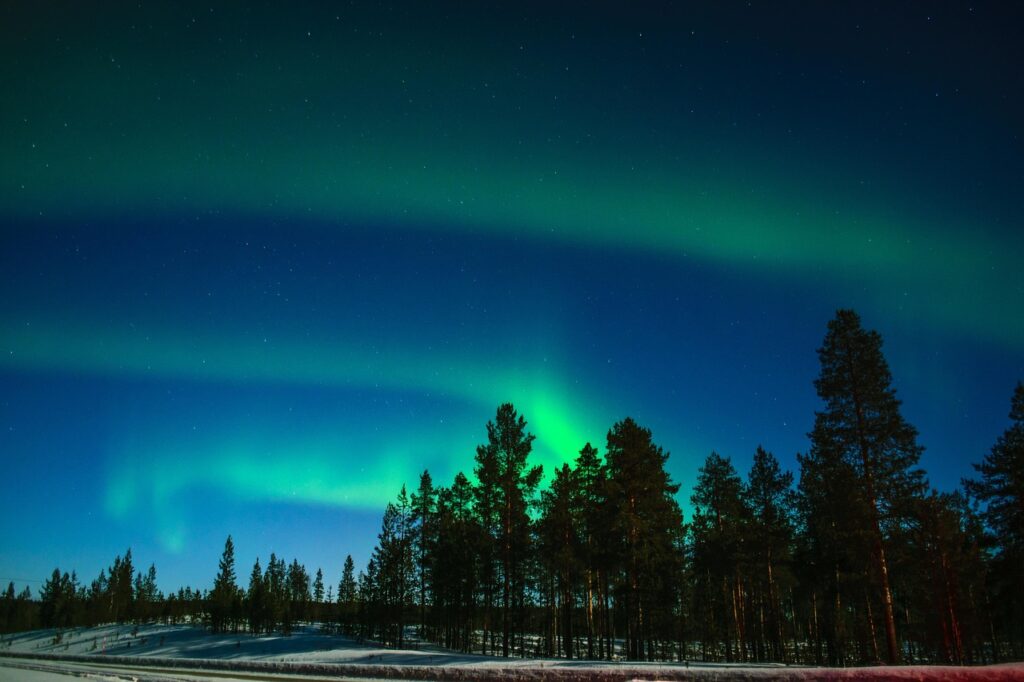
Rovaniemi is the official hometown of Santa Claus, sits directly on the Arctic Circle, and from December 4, 2026, is newly reachable on a first-ever direct flight from London Gatwick. It’s also one of the most reliable places on Earth to see the Northern Lights — and a genuinely cold, genuinely expensive trip to plan properly. Here’s what actually matters: timing, getting there, what to do, what to pack, and what it really costs.
Quick Answer
- Best time for the Northern Lights: late August through mid-April, with September-October and December-February offering the darkest, clearest viewing windows
- Best time for Santa Claus Village: December, for the full festive atmosphere — book lodging and tours months ahead
- New for winter 2026: British Airways launches its first-ever direct London Gatwick–Rovaniemi route on December 4, 2026, flying twice weekly
- Arctic Circle line: runs directly through Santa Claus Village, about 8 km (5 miles) north of central Rovaniemi
- Minimum trip length: 3-4 days covers Santa Claus Village and one or two Arctic activities without rushing
- Budget reality: this is not a cheap trip — Arctic accommodation, guided excursions, and winter gear add up fast compared to a typical European city break

A reindeer herd in the snow outside Rovaniemi, Lapland
Why Is Rovaniemi Suddenly Easier to Reach From the UK?
Starting December 4, 2026, British Airways’ Gatwick-based subsidiary BA Euroflyer begins the airline’s first-ever nonstop route between London Gatwick and Rovaniemi, flying twice weekly on Mondays and Fridays. It sits alongside BA Euroflyer’s existing winter route to Ivalo, giving British Airways two direct points of entry into Finnish Lapland for the first time. Flight times and the exact end date of the winter schedule have varied slightly across early reporting, so confirm the specifics on British Airways’ own booking site before locking in dates.
If you’re not flying from London, the more established route is via Helsinki: Finnair and Norwegian both fly Helsinki–Rovaniemi year-round, a roughly 80-minute hop with multiple daily departures in winter. VR also runs a daily overnight train from Helsinki to Rovaniemi via Oulu and Kemi — a slower but scenic alternative that skips a second flight entirely. Rovaniemi Airport itself sits about 10 km from the city center, with taxis, an airport bus, and a seasonal Santa Claus Village shuttle covering the transfer.
When Is the Best Time to Visit Rovaniemi for the Northern Lights?
The aurora season in Rovaniemi runs roughly from late August to mid-April, and on a clear night, locals estimate the lights are visible about one night in three. Two windows tend to perform best: September-October and February-March, both near the equinoxes, when geomagnetic activity is often stronger on average. December and January have the longest, darkest nights of the year, but Lapland’s interior also sees more cloud cover during the deep winter months, so “darkest” doesn’t always mean “clearest.”
Practical viewing tips that hold up across most local guides: aim for the hours between 10 PM and 2 AM local time, get away from Rovaniemi’s town lights, and book an aurora tour for your first night rather than your last — that leaves room to try again if clouds roll in. Dry inland air tends to give clearer skies than coastal Lapland, and glass igloo stays let you watch from bed without standing outside in the cold at all.
What Is Santa Claus Village, and Is It Worth Visiting?
Santa Claus Village is a small cluster of shops, cafes, and attractions built directly on the Arctic Circle line, about 8 km north of central Rovaniemi. The city holds the official “hometown of Santa Claus” designation, and the village is the reason most families end up here in the first place: a marked Arctic Circle line to stand on and photograph, a year-round Santa Claus office where you can meet Santa, a post office that forwards letters with an Arctic Circle postmark, and reindeer and husky rides just outside. December is peak season by a wide margin — it’s also when the village is busiest and priciest, so book accommodation and any Santa meet-and-greet slots well ahead if that’s your main goal.
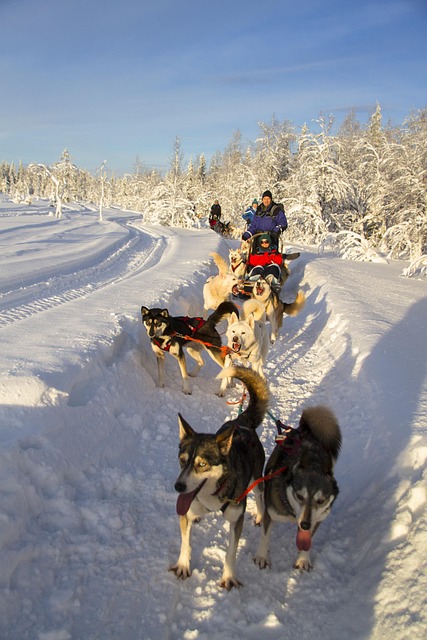
A husky sled team running a snow trail outside Rovaniemi
What Can You Actually Do in Rovaniemi?
Beyond Santa Claus Village, most Rovaniemi itineraries build around a handful of Arctic activities, nearly all of which run as guided excursions:
- Husky sledding: drive your own sled team (or ride as a passenger) through snow-covered forest trails — one of the most consistently highly-rated Lapland activities, typically 1-3 hours.
- Reindeer sleigh rides and farm visits: a slower, quieter alternative to huskies, often paired with meeting a Sami reindeer herder and learning about the animals’ role in Lapland culture.
- Snowmobile safaris: half-day or full-day guided rides into the wilderness, sometimes combined with an aurora-hunting stop after dark.
- Guided Northern Lights tours: a driver takes you away from town light pollution to a forecasted clear patch of sky, usually with hot drinks and a backup night built into multi-night packages.
- Glass igloos and ice hotels: a splurge-tier overnight option that lets you watch for the aurora from a heated bed under a glass or ice ceiling.
- Finnish sauna and ice swimming: genuinely local, not just a tourist add-on — many lodges pair a wood-fired sauna with a hole cut in the ice for a very short, very cold dip.
Northern Lights Odds in Rovaniemi by Month
| Month | Darkness | Aurora Odds | Notes |
|---|---|---|---|
| September | Moderate, lengthening nights | Good | Equinox window, often clearer skies than midwinter |
| October | Long nights begin | Good | Snow typically arrives; fewer crowds than December |
| November | Very long | Fair | Increasing cloud cover inland |
| December | Longest of the year | Fair | Santa Claus Village peak season; book far ahead |
| January | Longest of the year | Fair-Good | Coldest month; skies often clear after cold fronts pass |
| February | Long, shortening | Good | Popular with aurora-focused travelers; lower crowds than December |
| March | Shortening fast | Good | Second equinox window; daylight returning for daytime activities |
What Should You Pack for Arctic Lapland?
Rovaniemi winter temperatures typically sit between -5°C and -20°C, and January-February cold snaps can drop well below -30°C with windchill. This is not a destination where a city winter coat is enough.
Layering, not one heavy coat: a thermal base layer, an insulating mid layer, and a waterproof, windproof outer shell. Indoor spaces run warm, so you’ll be adding and shedding layers constantly.
Feet first: insulated, waterproof winter boots rated for sub-zero cold, plus wool or thermal socks — cold feet end an outdoor day faster than anything else.
Hands, head, and face: mittens (warmer than gloves), a hat or balaclava, and a scarf or neck gaiter for wind protection.
What you probably don’t need to buy: most husky, reindeer, snowmobile, and aurora tours include an insulated Arctic overall, boots, and mittens in the price — check each tour’s inclusions before over-packing. A swimsuit is worth packing regardless, for sauna and ice-swimming stops.
Electronics: cold drains batteries fast. Keep phones and cameras in an inside pocket against your body and carry a power bank.
Is Rovaniemi an Expensive Trip?
Yes, honestly — more than most first-time visitors expect. Finland isn’t a budget destination to begin with, and Lapland’s winter season adds an Arctic premium on top: glass igloo and ice hotel stays routinely cost several times a standard hotel room, guided excursions (husky, snowmobile, aurora tours) are priced per person and add up quickly if you do more than one or two, and flights into Rovaniemi itself — whether via the new Gatwick route, Helsinki, or a connecting city — tend to run higher than equivalent Western European routes given limited capacity. Short winter daylight also pushes most visitors toward paid guided experiences rather than independent exploring, which is convenient but not cheap. Budgeting generously, and booking lodging and popular tours (especially anything in December) well in advance, makes for a far less stressful trip than assuming prices will be similar to a typical city break.
Booking Husky, Reindeer & Aurora Tours
Most of Rovaniemi’s signature activities — husky sledding, reindeer farms, snowmobile safaris, and guided Northern Lights hunts — are easiest to book as a package that includes Arctic gear and pickup.
Staying Connected in the Arctic
Mobile coverage in central Rovaniemi is solid, but a local eSIM is worth setting up before you fly — useful for navigating transfers, checking the aurora forecast, and avoiding international roaming charges on a multi-country Nordic trip.
Airport Transfers From Rovaniemi Airport
If you’d rather not deal with buses or taxi queues after a long winter flight, pre-booking a transfer gets you straight to your hotel or Santa Claus Village without the wait.
Planning More of the Nordics?
Frequently Asked Questions
What is the best time to visit Rovaniemi for the Northern Lights?
Late August through mid-April is the full aurora season, with September-October and February-March generally offering the clearest skies. December and January have the longest dark hours but more variable cloud cover.
Is Rovaniemi really the official hometown of Santa Claus?
Yes — Rovaniemi holds the official “hometown of Santa Claus” designation, and Santa Claus Village sits directly on the Arctic Circle line just north of the city, with a year-round Santa office and post office.
How do you get to Rovaniemi from the UK?
From December 4, 2026, British Airways flies direct from London Gatwick to Rovaniemi twice weekly, its first-ever nonstop route to the city. The long-standing alternative is connecting via Helsinki, with Finnair or Norwegian covering the roughly 80-minute final leg.
Is Rovaniemi expensive to visit?
Yes, more than a typical European city break. Arctic-season accommodation like glass igloos, per-person guided excursions, and limited-capacity winter flights all carry a premium, so budgeting generously and booking ahead matters.
What should you pack for a winter trip to Rovaniemi?
A three-layer system (thermal base, insulating mid layer, waterproof windproof shell), insulated waterproof boots, wool socks, mittens, and a hat or balaclava. Many guided tours include Arctic overalls and boots, so check inclusions before over-packing.
Final Thoughts
Rovaniemi earns its reputation honestly — the Arctic Circle running through Santa Claus Village, genuinely strong Northern Lights odds across a seven-month season, and now a direct link from London make it an easier trip to reach than it used to be. It’s not, however, a cheap or casual add-on to a Europe itinerary: the cold is real, the guided activities aren’t optional extras so much as the main way most visitors experience the wilderness, and the prices reflect both. Plan for it honestly — the right gear, a few nights minimum, and a realistic budget — and it delivers an Arctic experience most of Europe simply can’t.
Keep Exploring
More destination guides, packing lists, and itinerary breakdowns to help plan your next trip.