
In 2026, searches for Christchurch have jumped 200% according to Expedia’s Unpack ’26 travel report, making it one of the fastest-rising destinations worldwide — and the rest of New Zealand is riding the same wave. Here’s how to time a trip, what actually splits the North and South Islands, and what a realistic itinerary and budget look like.
Quick Answer
- Best time to visit: September-November (spring, best value) or March-May (autumn, mild and quiet); December-February is peak summer with the highest prices
- Currency: New Zealand Dollar (NZD)
- Language: English and Te Reo Māori, both official
- Getting around: rental car or campervan — New Zealand drives on the left, and public transport between towns is limited
- Entry: most visitors need an NZeTA (NZ$17 via app) plus the NZ$100 International Visitor Levy, valid for stays up to 3 months
- Typical daily budget: roughly NZ$250-350 per person for a mid-range trip, more in December-February

Queenstown and Lake Wakatipu, framed by the Remarkables mountain range on the South Island
Best Time to Visit New Zealand
New Zealand sits in the Southern Hemisphere, so its seasons run opposite to North America and Europe — summer falls in December-February and winter in June-August. That reversal is worth planning around, especially for travelers used to booking a “summer trip” in July.
Spring (September-November) is the standout value window: milder temperatures, thinner crowds, and fares and accommodation typically 20-30% cheaper than peak summer. October is a favored month to visit Milford Sound specifically, with lower visitor numbers than the December-February rush. Autumn (March-May) is the other shoulder-season sweet spot — April in particular delivers reliable weather without summer pricing.
Summer (December-February) is peak season: January averages a high around 19°C (66°F) with roughly 15 hours of daylight, making it the warmest, busiest, and most expensive stretch of the year. Winter (June-August) belongs to skiers and snowboarders heading to the Southern Alps — July is typically the snowiest month for the South Island’s ski fields.
North Island vs. South Island: What to Expect
| Factor | North Island | South Island |
|---|---|---|
| Main draw | Auckland, Rotorua geothermal areas, Māori culture, Bay of Islands | Queenstown, Milford Sound, Southern Alps, glaciers |
| Pace | More cities and day-trip culture | More road-trip and wilderness driving |
| Best for | First-time visitors on a shorter trip | Adventure travel, hiking, scenic road trips |
| Typical stay | 4-6 days | 7-10 days |
A first full New Zealand trip of 2-3 weeks realistically covers highlights on both islands, usually connected by a short domestic flight rather than the inter-island ferry, which takes roughly 3.5 hours and is more weather-dependent.
Top Experiences on a New Zealand Trip
- Milford Sound cruise: the signature Fiordland experience, taking in Mitre Peak and the waterfalls cascading off the cliffs.
- Queenstown bungy jumping: the Kawarau Bridge site is widely credited as the birthplace of commercial bungy jumping.
- Hobbiton Movie Set, Matamata: the preserved Lord of the Rings and Hobbit film set, a North Island day-trip staple.
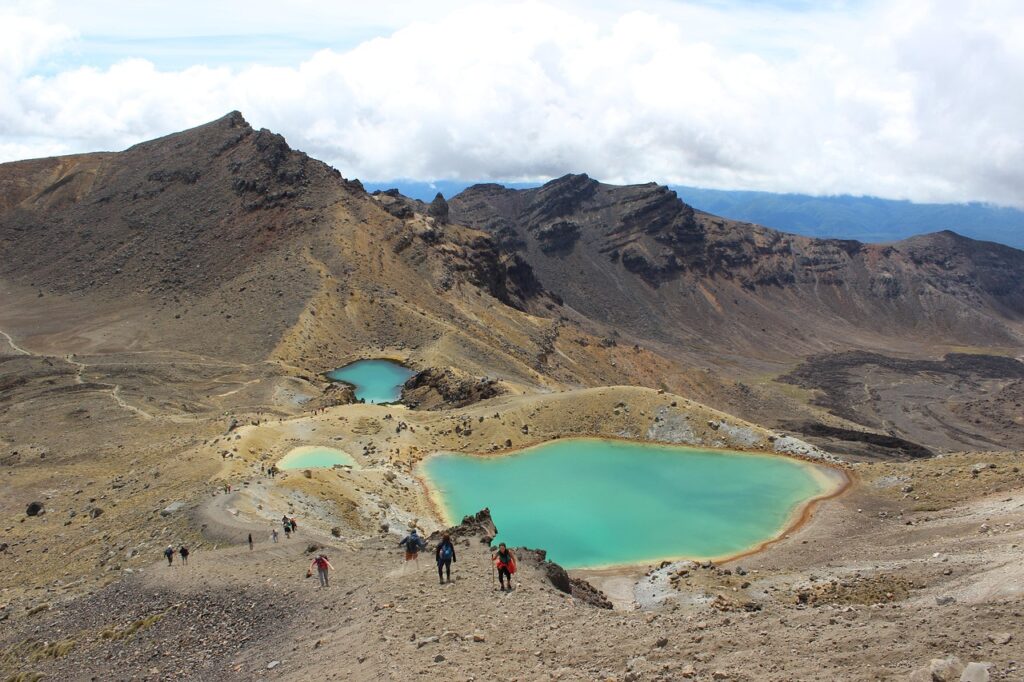
- Tongariro Alpine Crossing: a 19.4km volcanic day hike on the North Island, ranked among the world’s best one-day treks.
- Rotorua geothermal parks: bubbling mud pools, geysers, and Māori cultural experiences in one North Island hub.
- Franz Josef or Fox Glacier: South Island glacier valleys accessible by short hike or scenic flight.

A calm inlet near Milford Sound, framed by Fiordland’s snow-capped peaks and rainforest
Christchurch’s 2026 Resurgence
Christchurch’s rise on 2026 travel-search charts lines up with real momentum on the ground. In March 2026, New Zealand First pledged an additional NZ$15 million toward restarting construction on the long-stalled Christ Church Cathedral, which drew roughly 700,000 visitors a year before the 2011 earthquakes closed it. A newly announced staged reopening plan — starting with the tower, nave, and the cathedral’s rose window — is expected to catalyze further redevelopment around the city center.
Beyond the cathedral, Christchurch has spent the past decade rebuilding into a genuinely walkable city: the Riverside Market food hall, the Ōtākaro Avon River precinct, and the container-mall-turned-permanent Re:START district are all products of that rebuild. It’s also the main gateway to the South Island for international flights, making it a natural first or last stop on a South Island loop rather than just a layover.
Queenstown: New Zealand’s Adventure Capital
Queenstown built its reputation on bungy jumping — the AJ Hackett Kawarau Bridge Bungy is widely credited as the birthplace of commercial bungy jumping — and the town has only added to the list since: the Shotover Jet through a narrow canyon, the Skyline Gondola and luge above the town, and jetboat and canyon-swing operators clustered around the waterfront. It’s also a genuine four-season base: skiing at Coronet Peak and The Remarkables in winter, hiking and mountain biking in summer.
Queenstown sits on Lake Wakatipu, ringed by the Remarkables range, and functions as the natural staging point for day trips to Milford Sound and Fiordland — though the drive itself, at roughly 4-5 hours round trip through Te Anau, is a full-day commitment worth planning for rather than squeezing in.
Milford Sound: Fiordland’s Signature Landmark
Milford Sound is technically a fiord, carved by glaciers rather than a river, and it’s one of the wettest places on Earth — that rainfall is what feeds the hundreds of temporary waterfalls cascading off its cliffs after a downpour, alongside permanent fixtures like Stirling Falls. Because of that, Fiordland genuinely doesn’t have a bad season: a clear day shows off Mitre Peak rising straight out of the water, while a rainy one multiplies the waterfalls. Most visitors see it by scenic cruise, which is the easiest way to take in the scale of the cliffs without a multi-day hike.
Getting There, NZeTA, and Getting Around
Most visitors from the roughly 60 visa-waiver countries — including the US, UK, Canada, and most of the EU — need to apply for an NZeTA (New Zealand Electronic Travel Authority) before flying in. It costs NZ$17 through the mobile app or NZ$23 via the website, plus a separate NZ$100 International Visitor Conservation and Tourism Levy that funds conservation and tourism infrastructure. Processing is usually done within minutes but can take up to 72 hours, so it’s worth applying at least a few days before departure. The NZeTA is valid for two years and allows stays of up to 3 months per visit (6 months for UK citizens). Australian citizens don’t need one at all.
Once on the ground, New Zealand drives on the left, and a rental car or campervan is close to essential outside the main cities — intercity buses exist but run infrequently, and there’s no national rail network built for tourism the way parts of Europe have. Petrol runs around NZ$2.76 per liter as of 2026, and distances on winding roads take longer than they look on a map.
What a Trip Actually Costs
Daily budgets in New Zealand vary widely by travel style. Backpacker-style travel (hostel dorms, self-catering, buses) runs roughly NZ$130-240 per day. A mid-range trip — motels or Airbnbs, café meals, a rental car, and paid activities like a Milford Sound cruise — lands around NZ$250-350 per person per day. Luxury travel with boutique lodges, private transfers, and heli-tours starts around NZ$450+ per day. Traveling in the shoulder seasons (September-November or March-May) typically cuts costs by 20-30% compared to the December-February peak.
Renting a Car for the Road Trip?
A rental car or campervan is the practical way to link Queenstown, Milford Sound, and the rest of the South Island — book ahead for peak summer (December-February) when fleets sell out fastest.
Booking a Milford Sound Cruise?
Scenic cruises through Milford Sound run rain or shine and are worth locking in ahead during the September-November and December-February windows.
Planning Adventure Activities in Queenstown?
Bungy, jetboating, and canyon swings routinely sell out same-day slots in peak season — booking ahead avoids missing out on arrival.
Planning More Adventure Travel?
Frequently Asked Questions
What is the best time to visit New Zealand?
September-November (spring) offers the best value with fewer crowds and reliable weather; March-May (autumn) is the other shoulder-season sweet spot. December-February is peak summer with the warmest weather, highest prices, and biggest crowds.
Do I need a visa to visit New Zealand?
Travelers from around 60 visa-waiver countries, including the US, UK, Canada, and most of the EU, need an NZeTA (NZ$17-23) plus a NZ$100 International Visitor Levy before arrival. It’s valid for two years and allows stays of up to 3 months per visit. Australians are exempt.
Why is Christchurch trending for 2026?
Expedia’s Unpack ’26 report found Christchurch searches up 200%, coinciding with fresh momentum on the city’s earthquake rebuild — including a March 2026 funding pledge to restart construction on the Christ Church Cathedral, which drew about 700,000 annual visitors before it closed in 2011.
Should I visit the North Island or South Island?
The North Island suits shorter trips built around cities, geothermal areas, and Māori culture; the South Island suits road trips and outdoor adventure around Queenstown, Milford Sound, and the Southern Alps. A 2-3 week trip can realistically cover both, usually linked by a short domestic flight.
Do you need a car in New Zealand?
Yes, for most itineraries. New Zealand drives on the left, and intercity public transport is limited outside the main cities, so a rental car or campervan is the practical way to reach trailheads, small towns, and Milford Sound.
How much does a trip to New Zealand cost?
Budget travelers spend roughly NZ$130-240 per day; a mid-range trip with a rental car and paid activities runs about NZ$250-350 per day; luxury travel starts around NZ$450+ per day. Shoulder-season travel is typically 20-30% cheaper than the December-February peak.
Final Thoughts
New Zealand’s 2026 surge isn’t just a search-trend blip — Christchurch’s rebuild is genuinely reshaping the South Island gateway, while Queenstown and Milford Sound keep their reputations as some of the most reliably spectacular adventure and scenery destinations anywhere. Time a trip for spring or autumn shoulder season, sort the NZeTA and a rental car well ahead of arrival, and budget more driving time than the map suggests — the country rewards the slow route.
Keep Exploring
More destination guides, packing lists, and itinerary breakdowns to help plan your next trip.