
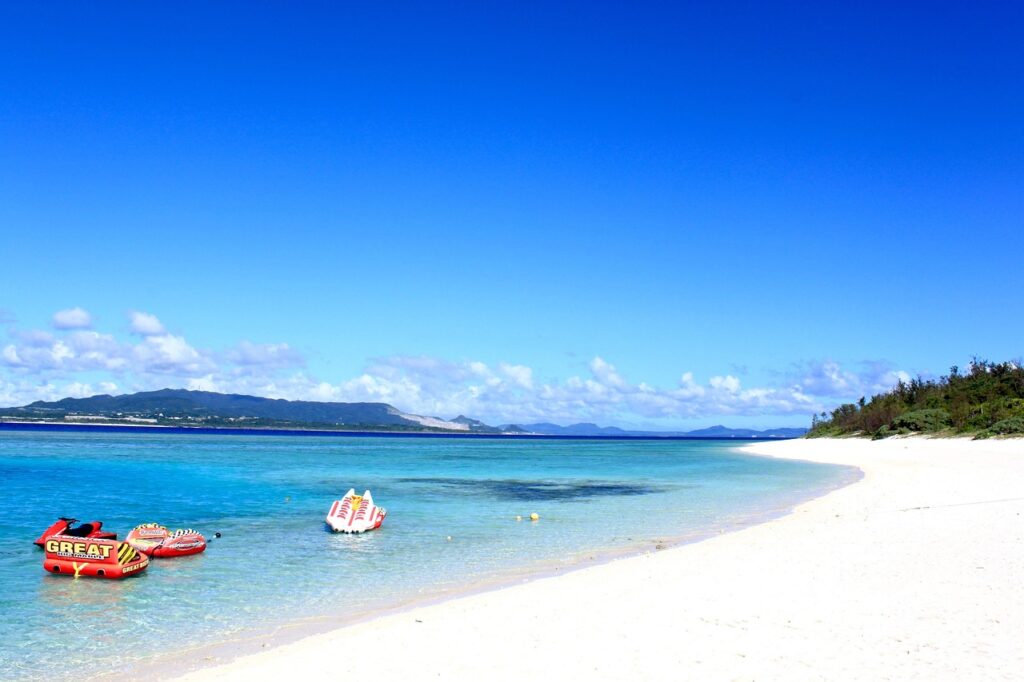
Okinawa landed at #2 on Expedia’s Unpack ’26 list of the world’s trending destinations, driven by a 71% year-on-year jump in flight and hotel searches — concrete evidence that travelers are finally looking past Tokyo and Kyoto toward Japan’s own tropics. Here’s what actually earns a spot on an Okinawa itinerary, and how to time it.
Quick Answer
- Best time to visit: February-March and October-November — warm, calm seas, and outside typhoon season
- Avoid if possible: July-September, when the Pacific typhoon season peaks and can cancel ferries and boat tours
- Getting there: fly into Naha Airport (OKA) — about 2 hours 35 minutes nonstop from Tokyo Haneda, with roughly 30 daily departures
- Getting around: a rental car on Okinawa Honto; a short domestic flight or ferry to reach Miyako or Ishigaki
- Currency: Japanese yen (¥) — same as mainland Japan
- Minimum trip length: 5-7 days to properly combine Okinawa Honto with one outer island group

Cape Manzamo’s elephant-trunk rock arch on Okinawa Honto’s west coast, shaped by centuries of wave erosion
Why Is Okinawa Trending for 2026?
Okinawa isn’t a single island — it’s a prefecture of more than 160 islands, roughly 50 of them inhabited, strung between the Pacific Ocean and the East China Sea. That geography alone sets it apart from the mainland Japan itinerary most first-time visitors default to: instead of temples and train timetables, the pitch here is coral reefs, subtropical jungle, and a culture that spent four centuries as its own kingdom rather than part of Japan.
Expedia’s 2026 trend data backs up what airlines and hoteliers have been reporting anecdotally — interest in Okinawa is accelerating faster than almost anywhere else in Japan, and it’s arriving from travelers who’ve already done Tokyo and Kyoto once and want something that doesn’t look like every other Japan trip report.
Part of the surge is simply access: Naha Airport now handles more domestic connections than at any point in recent years, and English signage on the Yui Rail monorail and around Naha’s main tourist areas has improved noticeably, lowering the logistical barrier that used to push travelers toward more established mainland routes. Okinawa’s own tourism board has leaned into the “different from the rest of Japan” pitch rather than fighting it, marketing the prefecture on its own terms — islands, reefs, and Ryukyu heritage — instead of as a mainland add-on.
When Is the Best Time to Visit Okinawa?
February-March and October-November hit the best balance: daytime temperatures in the low-to-mid 20s°C, calm seas good for boat tours, and none of the storm risk that defines Okinawan summer. October in particular tends to run 22-26°C with settled conditions well-suited to diving and inter-island ferries.
June through August is hot and humid (28-31°C) and also the heart of Pacific typhoon season, which peaks July-September and can ground boats and flights with little notice — worth building slack into any itinerary booked in that window. Winter (December-February) stays mild by regional standards but is too cool for most people to swim comfortably.
Anyone booking a summer trip anyway should build in at least one buffer day before flying home, since a typhoon can cancel the Naha-Ishigaki or Naha-Miyako leg of a domestic connection with only a day or two of warning. Travel insurance that explicitly covers typhoon-related cancellations is worth checking for July-September bookings specifically — standard trip protection doesn’t always include it.
What Are the Best Things to Do in Okinawa?
Shuri Castle, Kerama Islands diving, Cape Manzamo, Ishigaki’s Yaeyama Islands, Miyako’s beaches, and Naha’s Kokusai Dori market top the list of things to do in Okinawa — a mix of Ryukyu history, reef diving, and island food that doesn’t overlap with a typical Tokyo or Kyoto trip.
- Shuri Castle: the former royal palace of the Ryukyu Kingdom, ruling seat for roughly 450 years until 1879. The 2019 fire destroyed the main hall, and full reconstruction is targeted for around 2026, but the grounds, gates, and surrounding UNESCO World Heritage walls are open now and worth the visit regardless.
- Kerama Islands diving and snorkeling: water so clear it has its own name, “Kerama Blue” — visibility that averages 20-30 meters and can exceed 50 meters on calm summer days, across reefs holding more than 250 coral species and regular sea turtle sightings.
- Cape Manzamo: a dramatic natural rock arch on the west coast of Okinawa Honto, one of the most photographed viewpoints on the main island.
- Ishigaki and the Yaeyama Islands: a short flight or ferry from Okinawa Honto, with Iriomote’s mangrove jungle reachable by a ferry that runs only a handful of times a day — worth planning around, not improvising.
- Miyako Island: famous for the Irabu Bridge and Yonaha Maehama Beach, consistently ranked among the best sand in Japan.
- Kokusai Dori and Makishi Public Market: Naha’s main shopping street and adjoining fresh market, the easiest introduction to Okinawan food and crafts without leaving the capital.
- Churaumi Aquarium: one of the largest aquariums in the world, built around a whale shark tank that draws visitors on its own merits.
Why Does Okinawa Feel So Different From Mainland Japan?
For a little over 400 years, Okinawa was an independent country: the Ryukyu Kingdom, a trade bridge between China and Southeast Asia that developed its own language, music, dance, and spiritual traditions before Japan annexed it in 1879. That history is still visible everywhere — in the red-tiled roofs and stone gate walls, in shisa guardian statues perched on rooftops to ward off evil, and in an architectural and culinary style that owes more to centuries of Chinese trade than to the samurai-era traditions most visitors associate with Japan.
Okinawa is also one of the world’s five recognized Blue Zones, regions with an unusually high concentration of residents living past 100, and locals often credit the traditional diet: goya champuru (bitter melon stir-fried with pork and tofu), umibudo (“sea grapes,” a briny seaweed eaten fresh), purple sweet potato, and awamori, a distilled rice spirit found nowhere else in Japan. The food is generally lighter and less oily than mainland Japanese cuisine, a legacy of the island’s climate and its centuries-old pork culture rooted in Ryukyu-era trade with China.
The performing arts carry the same distinct lineage. The sanshin, a three-stringed instrument covered in snakeskin, is the Ryukyu ancestor of the mainland shamisen and still anchors Okinawan folk music today, while Eisa — a drum-and-dance tradition performed at summer festivals across the islands — draws crowds well beyond the local community. Textile and craft traditions like bingata dyeing (vivid, hand-stenciled patterns) and Ryukyu glasswork are also distinctly Okinawan, sold throughout Kokusai Dori and Makishi Market rather than in mainland-style souvenir shops.

A shisa guardian figure — the lion-dog statues found on gateways and rooftops across Okinawa, believed to ward off misfortune
Okinawa Honto, Miyako, or Ishigaki: Which Should You Visit?
| Island group | Best for | How to reach it |
|---|---|---|
| Okinawa Honto (main island) | Shuri Castle, Naha, Churaumi Aquarium, Cape Manzamo | Fly into Naha Airport (OKA) |
| Miyako Islands | Yonaha Maehama Beach, the Irabu Bridge, quieter resorts | ~50-minute domestic flight from Naha |
| Ishigaki & Yaeyama Islands | Kabira Bay, Iriomote’s jungle, top-tier diving | ~1-hour domestic flight from Naha, then inter-island ferry |
Trying to cover all three in under a week usually means seeing none of them properly — most travelers do better picking Okinawa Honto plus one outer group rather than island-hopping across all three. A common split is three to four nights on Okinawa Honto for Naha, Shuri Castle, and the Kerama day trip, then three nights on Ishigaki or Miyako for the beaches and diving, with a short domestic flight or ferry connecting the two.
How Do You Get Around Okinawa?
Naha Airport (OKA) is the gateway for almost every itinerary, connected to Tokyo Haneda by roughly 30 flights a day at around 2 hours 35 minutes each way — short enough that Okinawa works as a standalone trip or a tacked-on extension to a mainland Japan itinerary. On Okinawa Honto itself, a rental car is close to essential; public transport is limited to a single monorail line in Naha, and the best beaches, viewpoints, and villages are spread along a coastline that doesn’t work well on foot. Reaching Miyako or Ishigaki means a short domestic flight or a longer ferry crossing, and once there, a rental scooter or small car is the easiest way to cover ground on islands built for a slower pace.
Budget-wise, a realistic daily spend runs from around $75 for a budget-minded traveler (hostel dorm, convenience-store and market meals, monorail or bus) up to roughly $145 for a mid-range trip with private rooms and sit-down meals. Car and scooter rental, ferry tickets, and any diving or snorkeling trips sit on top of that daily figure, so it’s worth pricing those separately rather than folding them into a per-day average.
Booking a Kerama Islands Snorkeling or Diving Trip
Kerama Blue visibility and sea turtle sightings make this the single most-booked day trip out of Naha — slots fill up fast in the October-November shoulder season.
Visiting Shuri Castle or Touring Naha?
Skip-the-line tickets and guided city tours cover the castle grounds and Kokusai Dori without losing a morning to logistics.
Renting a Car for Okinawa Honto?
With public transport limited to Naha’s monorail, a rental car does more for an Okinawa Honto trip than any other single booking.
Planning More of Japan and Asia?
Frequently Asked Questions
What are the best things to do in Okinawa?
Shuri Castle, Kerama Islands diving and snorkeling, Cape Manzamo, Ishigaki and the Yaeyama Islands, Miyako’s beaches, and Naha’s Kokusai Dori and Makishi Market top most visitors’ lists.
What is the best time to visit Okinawa?
February-March and October-November offer the best balance of warm weather, calm seas, and lower typhoon risk. July-September is Okinawa’s peak typhoon season and can disrupt ferries and boat tours.
How do you get to Okinawa?
Fly into Naha Airport (OKA), reachable in about 2 hours 35 minutes nonstop from Tokyo Haneda, with roughly 30 daily flights on the route.
Do you need a car in Okinawa?
On Okinawa Honto, practically yes — public transport is limited to a single monorail line in Naha, and the best sights are spread along the coast. On smaller islands, a rental scooter or small car covers ground the local buses don’t.
Is Okinawa part of mainland Japan culturally?
Administratively yes, but culturally Okinawa was the independent Ryukyu Kingdom for over 400 years before Japan annexed it in 1879, and it retains a distinct language, cuisine, architecture, and set of traditions from mainland Japan.
How many days do you need in Okinawa?
Five to seven days is enough to properly combine Okinawa Honto with one outer island group, such as Miyako or Ishigaki, without rushing between them.
How much does a trip to Okinawa cost?
A daily budget of roughly $75 covers a budget-minded traveler, while a mid-range trip with private rooms and sit-down meals runs closer to $145 a day, before adding car rental, ferries, or diving trips.
Final Thoughts
Okinawa rewards travelers who treat it as its own destination rather than a side trip — the Ryukyu history, the food, and the reef quality don’t resemble the rest of Japan, and that’s precisely the point. With Expedia flagging it as the second-fastest-growing travel search on its 2026 list, this is a good window to visit before the crowds catch up to the search data.
Keep Exploring
More destination guides, packing lists, and itinerary breakdowns to help plan your next trip.