
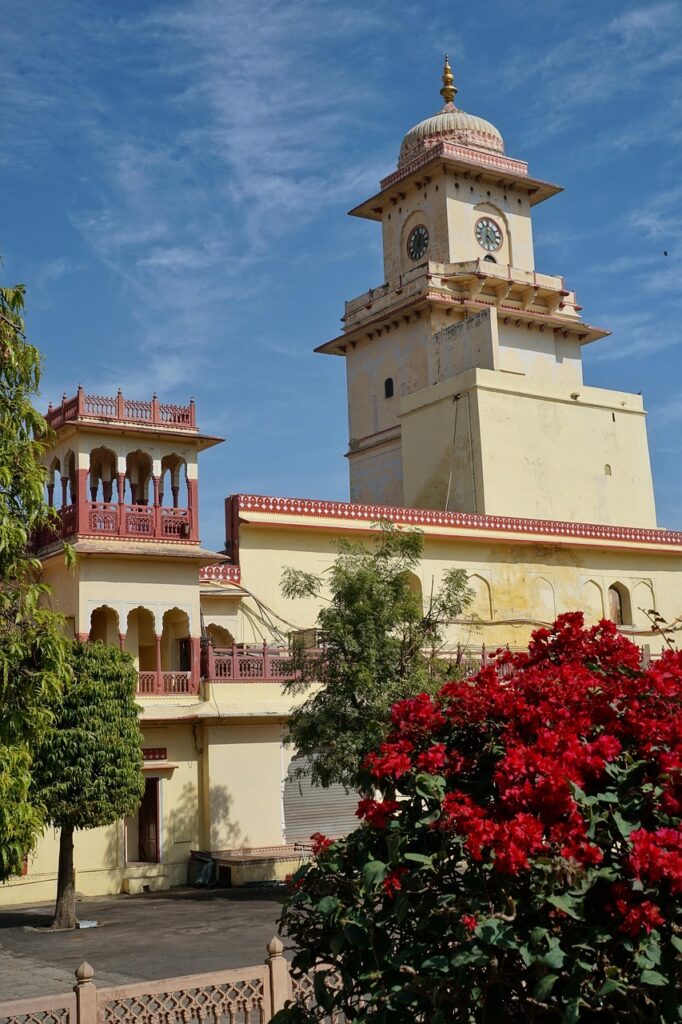
Jaipur’s old city is painted almost entirely in a single shade of terracotta pink, a color code ordered for a royal visit in 1876 and repainted ever since. Searches for Jaipur jumped 109% year-over-year, according to Skyscanner’s 2026 Travel Trends report — second only to Límon, Costa Rica among the platform’s fastest-rising destinations worldwide. Here’s what’s actually drawing that interest, and how to plan around it.
Quick Answer
- Best time to visit: October to March, when daytime temperatures sit around 20-30°C instead of summer’s extreme heat
- Currency: Indian Rupee (INR) — carry some cash, since bazaar stalls often skip cards
- Visa: most nationalities need an e-Visa before arrival — apply online, no embassy visit required for eligible passports
- Getting around: auto-rickshaws are the default; ride-hailing apps and a short metro line cover the rest
- Minimum trip length: 2-3 days for Jaipur alone; 6-8 days if combining it with Delhi and Agra on the Golden Triangle

The Amber Fort wall trail tracing the ridgeline above Jaipur, with the town spreading out below
When Is the Best Time to Visit Jaipur?
October through March is the accepted window, and for good reason — Jaipur sits on the edge of the Thar Desert, and summer (April to June) regularly pushes past 40°C, which makes walking between the City Palace, Hawa Mahal, and the bazaars genuinely unpleasant. Winter days run mild, roughly 20-30°C, with cooler mornings and evenings in December and January worth packing a layer for.
Two festival windows are worth timing a trip around specifically: Diwali, usually falling in October or November, lights up the old city’s havelis and markets, and Holi in March brings Jaipur’s most famous color-throwing celebrations. Both push hotel prices up and book out popular guesthouses early.
The one stretch worth actively avoiding is monsoon season, roughly July through September, when humidity climbs and sudden downpours can turn a day of fort-hopping into a washout. Rajasthan’s monsoon is lighter than tropical India’s, but visibility from Amber Fort and Nahargarh’s hilltop viewpoints drops noticeably on overcast days, which is part of why the desert state markets itself so heavily on its winter season instead.
What Are the Top Things to Do in Jaipur?
- Amber Fort: a hilltop fortress-palace 11 km outside the city center, one of six sites making up the UNESCO-listed Hill Forts of Rajasthan — arrive early to beat both the heat and the tour groups.
- Hawa Mahal: the five-story “Palace of Winds,” its pink sandstone facade punctured by 953 small windows originally built so royal women could watch street life below unseen.
- City Palace: still partly home to Jaipur’s former royal family, with courtyards, museums, and armories open to visitors in the heart of the old city.
- Jantar Mantar: an 18th-century observatory of 19 astronomical instruments built by Jaipur’s founder, Sawai Jai Singh II, including the world’s largest stone sundial — a UNESCO World Heritage Site in its own right.
- Jaigarh Fort: perched above Amber Fort, built to guard it and now home to Jaivana, reportedly the world’s largest cannon on wheels.
- Nahargarh Fort: a hilltop fort overlooking the entire city, quieter than Amber Fort and one of the best spots to watch the sun set over Jaipur’s pink rooftops.
- Albert Hall Museum: Rajasthan’s oldest museum, housed in an Indo-Saracenic building inside Ram Niwas Garden, with collections spanning miniature paintings, metalwork, and an Egyptian mummy.
- Johari Bazaar and the old city markets: Jaipur’s gem and jewelry trade runs through here, alongside textiles, block-printed fabric, and leather juttis.

Hawa Mahal’s honeycomb facade of 953 small windows, glowing at dusk in the old city
Where Should You Stay in Jaipur?
The old walled Pink City puts you inside the action — Hawa Mahal, City Palace, and Johari Bazaar are all walkable, but the lanes are narrow, noisy, and busiest of the city’s neighborhoods. It suits a shorter stay where proximity to the sights matters more than quiet nights.
C-Scheme and Civil Lines, just south and west of the old city, offer a calmer base with a wider spread of mid-range and boutique hotels, still a short auto-rickshaw ride from the main monuments. For a splurge, Jaipur’s heritage and palace hotels — several converted from actual royal residences — add a night of genuine Rajput architecture and hospitality to the itinerary, usually at a price well above the mid-range options in Civil Lines.
Why Jaipur Is Called the Pink City
The old city’s buildings were painted terracotta pink in 1876 to welcome the Prince of Wales, and the color has been maintained by law ever since — making the walled city one of the few places anywhere with a legally protected paint scheme. In July 2019, UNESCO inscribed Jaipur’s walled city as a World Heritage Site, the 42nd in India, recognizing not just individual monuments but the entire planned urban layout designed by Sawai Jai Singh II in the 1720s on Vedic architectural principles.
That heritage status runs alongside two separate UNESCO listings that also touch Jaipur: the Hill Forts of Rajasthan (which includes Amber Fort) and Jantar Mantar itself, giving the city three overlapping layers of World Heritage recognition within a few kilometers of each other.
Jaipur and the Golden Triangle
Jaipur is the third point of India’s classic Golden Triangle circuit, alongside Delhi and Agra (home to the Taj Mahal). Delhi to Agra runs about 230 km, coverable in roughly 3-4 hours by road or about 100 minutes on the Gatimaan Express, one of India’s faster intercity trains. Agra to Jaipur is the longer leg, around 240 km and roughly 5 hours by car. Most itineraries cover the full loop over 6-8 days total, with Jaipur usually the final or opening stop.
The same October-to-March window that suits Jaipur suits the whole circuit, since Agra’s summer heat is just as extreme and the Taj Mahal’s marble surfaces are far more pleasant to walk around before midday heat sets in.
Travelers short on time sometimes compress the loop into a long weekend, but rushing Jaipur specifically tends to backfire — Amber Fort alone is worth a half-day, and the old city’s bazaars reward slow, unhurried wandering rather than a checklist pace.
What Should You Eat in Jaipur?
Rajasthani cuisine leans hearty, shaped by a desert climate that historically limited fresh vegetables. Dal baati churma — lentil curry, baked wheat dumplings, and a sweet crumbled wheat mixture — is the dish most associated with the region, and versions of it turn up everywhere from street stalls to sit-down thalis. Laal maas, a fiery mutton curry built on Mathania red chilies, is Jaipur’s signature non-vegetarian dish.
For street food, start with pyaaz kachori (a deep-fried, onion-stuffed pastry that doubles as breakfast across the old city) and mirchi vada (large green chilies stuffed with spiced potato and fried in gram-flour batter). Finish with ghewar, a disc-shaped, honeycomb-textured sweet tied to the Teej and Makar Sankranti festivals but sold year-round in the city’s sweet shops.
How Do You Get Around Jaipur?
Auto-rickshaws are the default way to get around and are everywhere — agree on a fare or ask for the meter before setting off. Ride-hailing apps like Ola and Uber operate throughout the city and tend to be more predictable on price for longer trips, including the ride out to Amber Fort. A short metro line (the Pink Line) connects parts of the city but doesn’t yet reach most tourist sites directly, so it’s more useful for locals than for a sightseeing itinerary.
Inside the old city, walking is genuinely the best way to see Johari Bazaar and the lanes around Hawa Mahal — distances between the main sights are short enough to cover on foot. Traffic doesn’t reliably stop for pedestrians, though, so crossing wider roads takes the same alert, gap-finding approach as most of urban India rather than waiting for a clear signal.
What Currency Does Jaipur Use, and How Much Should You Budget?
India uses the Indian Rupee (INR), trading at roughly 94 INR to the US dollar through 2026. UPI QR codes are now nearly universal across Jaipur’s bazaars — even small stalls selling bangles or street food typically have one taped to the counter — but international cards are rarely accepted outside hotels and larger shops, and where they are, a 2% surcharge is common. It’s worth carrying roughly ₹5,000-10,000 (about $52-$104) in cash for vendors, auto-rickshaws, and smaller purchases that skip digital payment entirely. Foreign-card ATM withdrawals typically carry a ₹150-300 fee per transaction, so withdrawing larger amounts less often helps minimize that cost.
Tipping isn’t mandatory but is customary and appreciated: roughly 10% at sit-down restaurants that don’t already add a service charge, ₹50-100 for a half-day guide, and small notes (₹20-50) for hotel porters or drivers. Rounding up an auto-rickshaw fare rather than counting exact change is the norm rather than the exception.
| Travel Style | Daily Budget (approx.) | Covers |
|---|---|---|
| Backpacker | ₹1,200 ($14) | Hostel dorm, street food, auto-rickshaws |
| Mid-range | ₹6,000-9,000 ($65-$100) | 3-star hotel, sit-down meals, private guide for one site |
| Luxury | ₹13,500+ ($162+) | Heritage hotel or palace stay, private driver, fine dining |
Booking Amber Fort & City Tours
Amber Fort and the old city’s monuments get busy fast once tour buses arrive mid-morning — booking a guided tour or skip-the-line entry ahead of time avoids the worst of the queues.
Skip-the-Line Monument Tickets
City Palace, Amber Fort, and Jantar Mantar all sell tickets on-site, but booking ahead avoids the ticket-counter lines that build up once the day’s tour groups arrive.
Driving the Golden Triangle?
Some travelers cover Delhi, Agra, and Jaipur with a rental car and driver instead of trains, trading a fixed schedule for the flexibility to stop at smaller sights along the way.
Planning More of Asia?
Frequently Asked Questions
What is Jaipur famous for?
Jaipur is known as the “Pink City” for the terracotta-painted buildings of its old walled city, a UNESCO World Heritage Site since 2019. Its main draws are Amber Fort, Hawa Mahal, City Palace, and the Jantar Mantar observatory.
When is the best time to visit Jaipur?
October to March, when daytime temperatures run 20-30°C. Summer (April-June) regularly exceeds 40°C and is best avoided for sightseeing.
Do I need a visa to visit Jaipur?
Most travelers need an Indian visa, and nationals of around 166 countries can apply for an e-Visa online rather than visiting an embassy. Passports should have at least six months of validity remaining.
How many days do you need in Jaipur?
2-3 days covers Amber Fort, Hawa Mahal, City Palace, and Jantar Mantar without rushing. Add extra time if combining Jaipur with Delhi and Agra on the Golden Triangle circuit.
What currency does Jaipur use?
The Indian Rupee (INR). UPI QR payments are widely accepted in bazaars, but carrying roughly ₹5,000-10,000 in cash covers vendors and transport that don’t take cards.
Is Jaipur part of the Golden Triangle?
Yes — Jaipur is the third stop on India’s Golden Triangle circuit alongside Delhi and Agra, home to the Taj Mahal. The loop is typically done over 6-8 days by car or train.
Final Thoughts
Jaipur rewards a slower pace than most Golden Triangle itineraries allow it — Amber Fort’s hilltop walls and the old city’s terracotta bazaars both hold up to a full unhurried day each, and with searches up 109% heading into 2026, the crowds at each site are only going to get thicker from here.
Keep Exploring
More destination guides, packing lists, and itinerary breakdowns to help plan your next trip.