
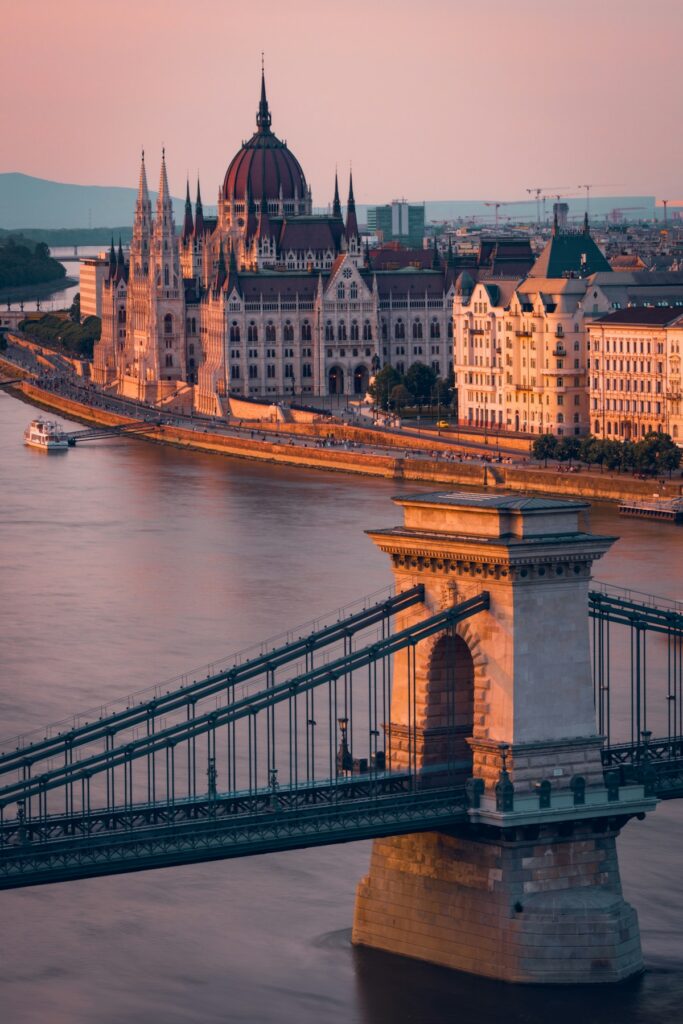
Budapest splits neatly into two: Buda’s castle district on one bank, Pest’s grand boulevards and thermal baths on the other, with the Danube and its bridges tying them together. It’s one of several Eastern European capitals seeing a real surge in 2026 travel interest — here’s how to time it and what to actually build a trip around.
Quick Answer
- Best time to visit: April-May and September-October for weather and prices; January for a genuinely different thermal-bath experience with snow falling outside
- Currency: Hungarian Forint (HUF) — Hungary has not adopted the euro
- Minimum trip length: 3-4 days covers the core sights comfortably
- Thermal baths: Széchenyi (from ~13,200 HUF weekdays) is the biggest and most famous; Lukács (~7,000 HUF) is one of the cheapest major baths
- Booking tip: book thermal bath tickets online to skip the queue

Buda Castle, the historic royal palace complex on Castle Hill
When Is the Best Time to Visit Budapest?
April-May and September-October offer the best weather-to-crowd ratio — mild temperatures and thinner crowds than the summer peak. Summer brings the busiest months and the highest prices, especially around the thermal baths and river cruises.
January is the real insider pick for one specific experience: floating in a steaming outdoor thermal pool while snow falls around you. Winter overall brings lower prices and fewer tourists, if you don’t mind the cold between bath visits.
Top Things to Do in Budapest
- Hungarian Parliament Building: a neo-Gothic landmark on the UNESCO-listed Danube bank with over 500 rooms — interior tours require advance booking.
- Fisherman’s Bastion: a neo-Romanesque terrace on Castle Hill with some of the best sunset views over the Parliament and the river.
- Buda Castle & Castle Hill: the historic royal palace complex, alongside Matthias Church and the Budapest History Museum.
- Széchenyi Thermal Bath: one of the largest natural hot-spring spas in Europe, with grand yellow neo-baroque architecture around the outdoor pools.
- Széchenyi Chain Bridge: the 19th-century suspension bridge connecting Buda and Pest, especially striking lit up at night.
- Ruin bars: Budapest’s signature nightlife scene, built into crumbling pre-war buildings in the Jewish Quarter.

Fisherman’s Bastion on Castle Hill, one of the best viewpoints over the Danube
Budapest’s Main Thermal Baths Compared
| Bath | Weekday Price (from) | Known For |
|---|---|---|
| Széchenyi | ~13,200 HUF ($35) | Biggest, most famous, grand architecture |
| Rudaš | ~5,000-7,000 HUF ($14-20) | Historic Ottoman-era dome, rooftop pool |
| Lukács | ~7,000 HUF ($19) | Cheapest of the major baths, local favorite |
Gellért and Király are under renovation through parts of 2026 — check current status before planning a visit around either.
What Currency Does Budapest Use?
Hungary uses the Forint (HUF), not the euro — bring or withdraw local currency rather than assuming euros are accepted everywhere, since exchange rates offered for euro cash payments in tourist areas are often poor. Cards are widely accepted across Budapest, including at the thermal baths.
Booking Thermal Baths & Tours
Booking Széchenyi or Rudaš tickets online skips the queue — especially worth doing on weekends and in peak season.
Need an eSIM for Your Trip?
An eSIM covers Budapest and the rest of a wider Eastern Europe itinerary without needing a local SIM card.
Booking an Airport Transfer?
A pre-booked transfer from Budapest Ferenc Liszt Airport avoids taxi-rank pricing after a long flight.
Skip-the-Line Bath & Attraction Tickets
Booking Parliament tours and thermal bath entry ahead avoids the same queues that build up at the ticket counters on weekends.
Seeing Multiple Sights?
A city attraction pass can be worth it if the itinerary covers several of Budapest’s paid sights beyond the baths.
Arriving Before Check-In?
Dropping bags near the Danube means starting sightseeing straight off an early train or flight, rather than waiting on a hotel room.
Booking Flights to Budapest?
Comparing fares across airlines before locking in dates usually beats booking direct on a single carrier’s site.
Worried About Flight Delays?
EU261 entitles passengers to compensation for many delayed or cancelled flights into Budapest — most travelers never bother to claim it.
Catching a Show in Budapest?
Ruin-bar concerts, the Hungarian State Opera, and touring acts at the larger arenas sell out fast in peak season — worth booking ahead rather than hoping for door tickets.
Planning a Day Trip?
Lake Balaton and the Danube Bend are both an easy drive from Budapest — a rental car gives more flexibility than a tour bus schedule.
Planning More of Europe?
Frequently Asked Questions
What are the best things to do in Budapest?
The Hungarian Parliament Building, Fisherman’s Bastion, Buda Castle, Széchenyi Thermal Bath, and the Chain Bridge consistently top first-time visitors’ lists.
What is the best time to visit Budapest?
April-May and September-October offer the best balance of weather and crowds. January is a unique choice for the thermal baths specifically, with snow falling around the outdoor pools.
How much do Budapest’s thermal baths cost?
Széchenyi starts around 13,200 HUF (~$35) on weekdays; Lukács is one of the cheapest major baths at around 7,000 HUF (~$19).
What currency does Budapest use?
The Hungarian Forint (HUF) — Hungary has not adopted the euro. Cards are widely accepted, including at thermal baths.
How many days do you need in Budapest?
3-4 days covers the Parliament, Castle Hill, and at least one thermal bath comfortably without rushing.
Final Thoughts
Budapest rewards splitting your time evenly between Buda’s hilltop history and Pest’s grand riverside architecture — and building in at least one unhurried afternoon at a thermal bath, which is less a tourist activity here than a genuine local ritual.
Keep Exploring
More destination guides, packing lists, and itinerary breakdowns to help plan your next trip.